

You can find an organic option for almost anything these days -- food, shampoo, fabric, even toys. With so many different companies using -- and abusing -- the word, it can be difficult to figure out just what organic means.
But if you're a gardener, organic isn't a gimmick: It's the heart of the soil from which your garden grows.
A little history
When chemists use the word "organic," they're referring to a chemical that contains carbon. In the early 1900s, an English researcher named Albert Howard began to use the term to refer to a system of agriculture in which chemicals containing carbon from natural sources -- such as manure and dead plants -- were turned into the soil to make it better able to grow healthy plants.
Later, J.I. Rodale, one of the most famous organic activists, latched onto the term and popularized it through his magazine, Organic Gardening, as well as a number of books such as "The Organic Front." Published in 1948, this not-so-lighthearted treatise on the evils of industrial farming focused on how synthetic fertilizers were damaging our soil.
Since Howard and Rodale's time, many different meanings have been assigned to the word organic. But for gardeners, the most important meaning is the one intended by these pioneers: Get carbon into your soil.
A little science
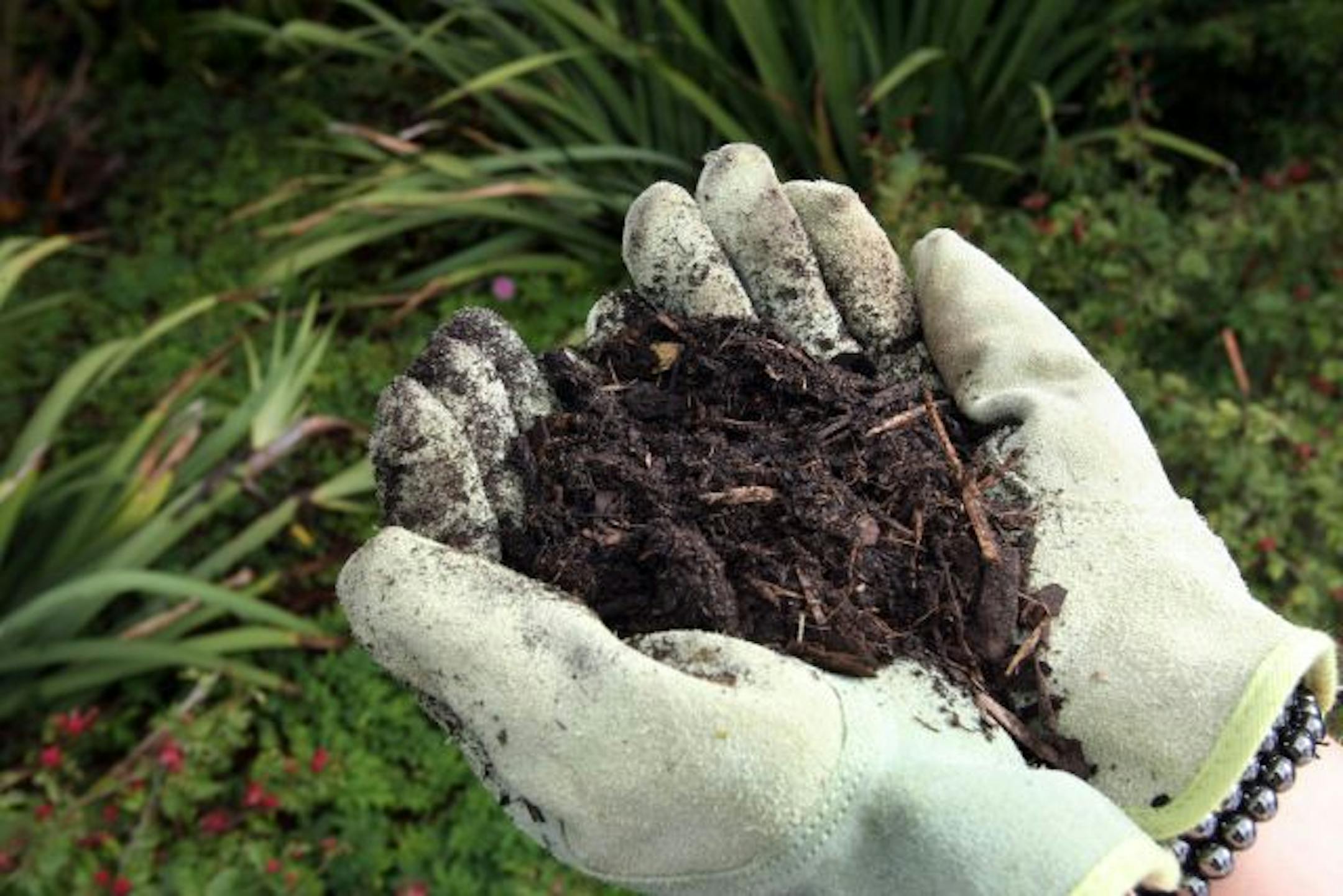
Many chemicals contain carbon, from carbon dioxide to pesticides and medicines. We gardeners are mostly concerned with sugars and other carbohydrates that are formed when plant material is broken down by microscopic creatures in the soil. This broken-down dead stuff, which gardeners call "organic matter," is a necessary constituent of healthy soil.


