

A crown of streaming clouds flowed off the cone of Costa Rica's Arenal volcano. A sound like thunder shook the air.
Standing in a lava field about 2 miles from the mountainside, I watched boulders the size of Chevy Suburbans fly out of the clouds and tumble down the gray and black slope.
Oddly, the volcano's audience treated the spectacle with casual curiosity. A dozen Dutch and German tourists sat or leaned on black pumice boulders, chatting while they scoped the geological show with their binoculars.
"Doesn't this make you a little nervous?" I asked my guide, Alexander Araya.
"A little. See that lake?" he pointed to a body of water a couple of miles behind us. "The old town of Arenal is under there. It was destroyed when the volcano blew up in 1968. This thing has been active every day since. It can throw a boulder 5 or 6 kilometers."
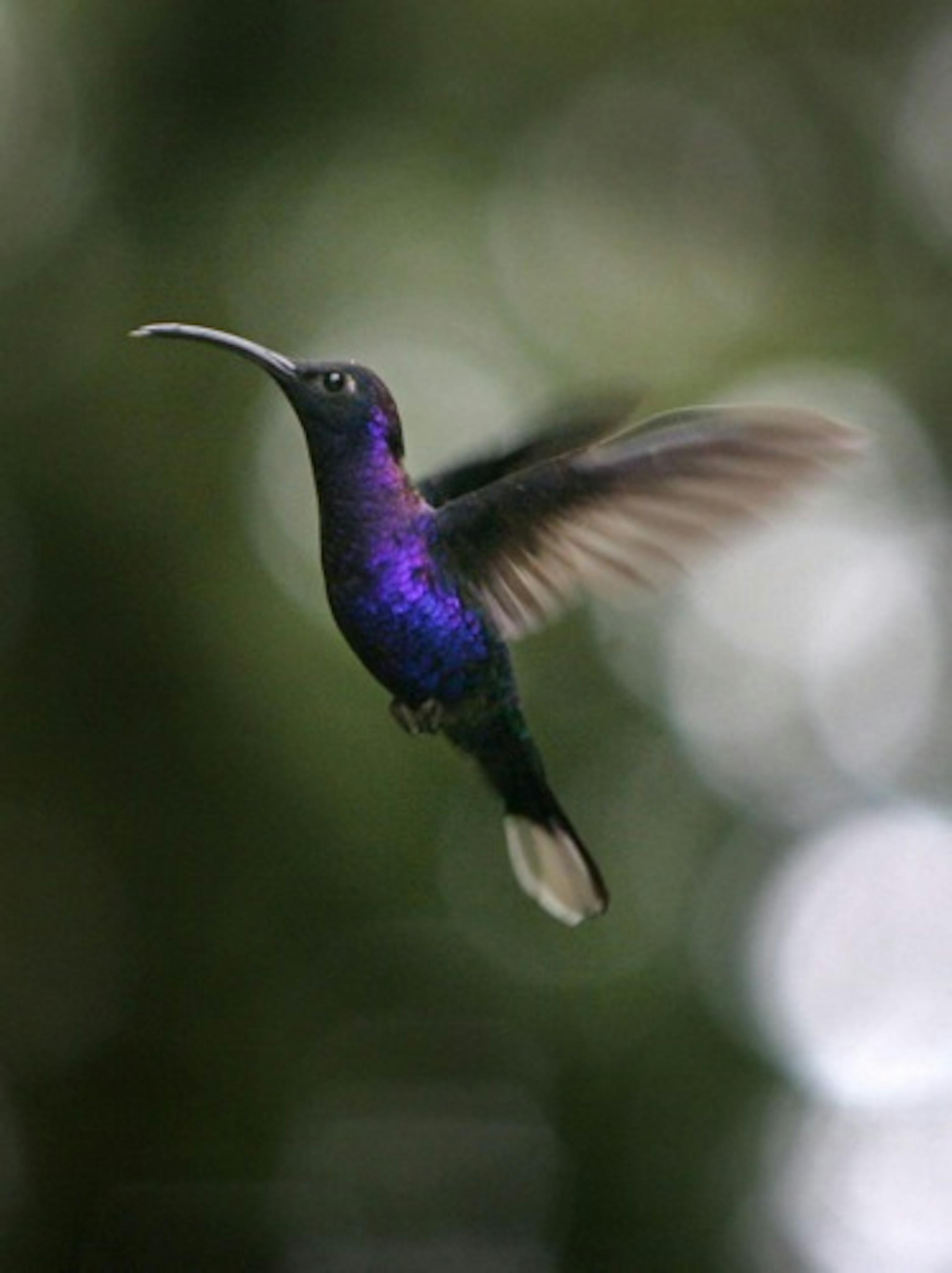
During a four-day excursion across Costa Rica's interior, I often had the feeling that I was watching a special-effects-laden movie instead of experiencing reality. Maybe it was suddenly going from the gray world of Minnesota winter to the saturated colors of the equatorial tropics, but everything -- the exploding volcano, the cloud forest as viewed while flying down a steel cable, a flock of iridescent hummingbirds -- seemed too extravagant to be true.
Araya, 31, added to the sense of disassociation. Perpetually clad in wrap-around shades, he told outrageous stories with disarming nonchalance and an utter lack of irony. When we checked into a hotel near the volcano, he told me not to get too close to bushes or trees with my camera because of the abundance of poisonous snakes.
"The fer-de-lance is the only aggressive one. If he sees you coming, he'll come out toward you," Araya said. "My uncle got bit by one. Blood comes out your eyes and pores. He was in the hospital six months, but don't worry, he survived it."


