

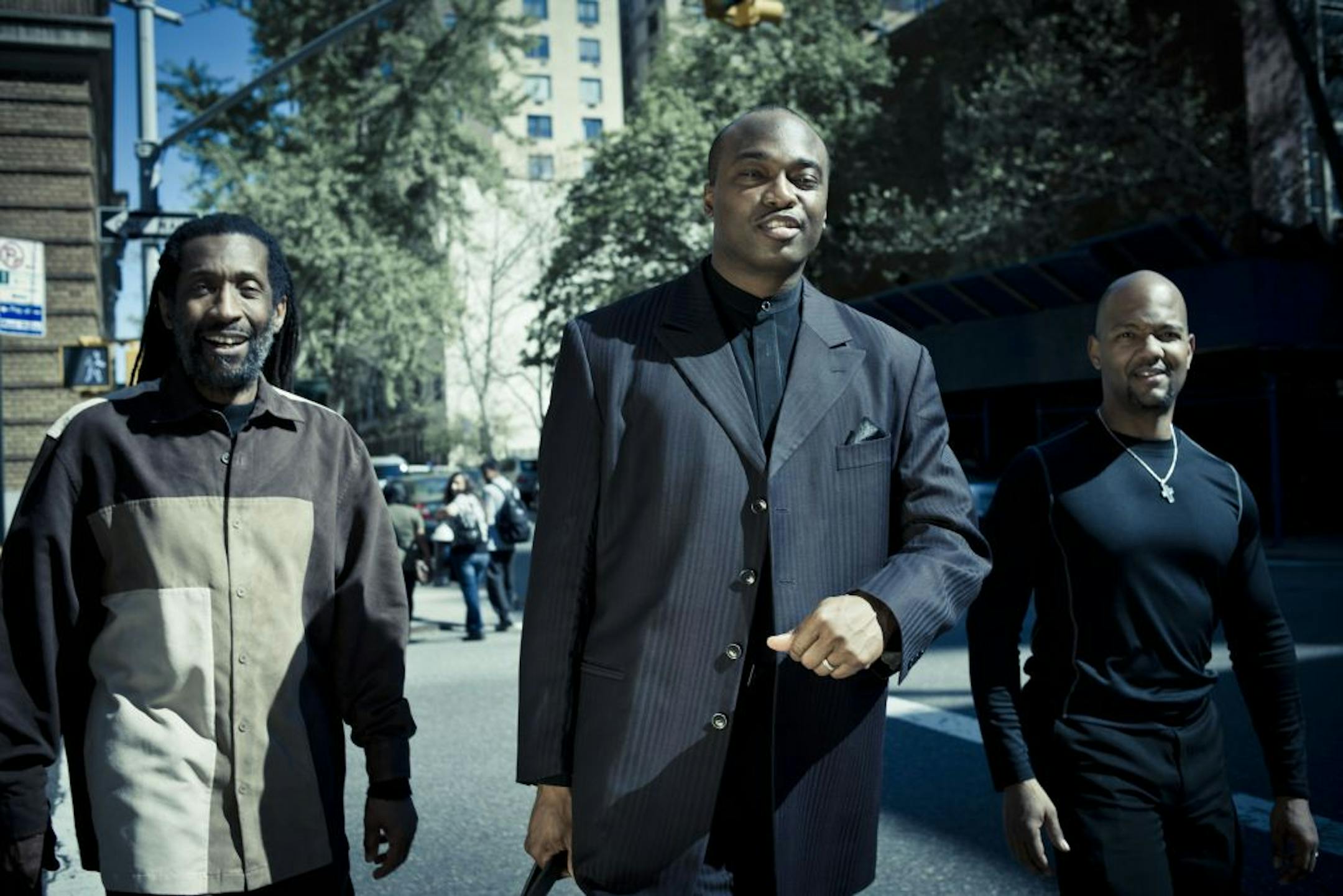
When saxophonist James Carter talks about the childhood roots that inform the organ trio he will bring into the Dakota Jazz Club on Sunday, the serious-minded, scholarly mien that has characterized his phone persona slowly but surely gives way to something giddier.
"It comes together with this group because all three of us are from Detroit. As far as that organ aspect, well, of course it comes from the church. But there are also the memories, when I hear [seminal jazz organist] Jimmy Smith, I think of the older folks I grew up with cooking out. There'd be ribs and barbecue and folks would be going, 'Hey babe, pass me some more of that!'" Carter said enthusiastically, affecting a woman's high-pitched voice.
"So it is traveling on both sides of the road of the black experience, which is why we called our last record 'At the Crossroads.'"
Released last October, "At the Crossroads" does indeed mine the fierce devotion of the church and the idle joy of the cookout. There are versions of the Duke Ellington spiritual "Come Sunday," and the gospel standard "'Tis the Old Ship of Zion," along with feel-good tracks like Big Maybelle's "Ramblin' Blues" and "Walking the Dog," composed by the late organist Jack McDuff, a longtime Minneapolis resident.
But what ultimately distinguishes the James Carter Organ Trio is the ability to extend its style beyond the customary spirituals and barbecue-flavored soul-jazz. Now 43, Carter is able to incorporate his increasingly multi- faceted musical résumé as one of the more accomplished and intrepid artists in jazz.
Live, the trio is apt to play "Nuages," the Django Reinhardt gypsy-swing standard. Or it will launch into a unique rendition of "The Hard Blues" by the late, prickly saxophonist/composer Julius Hemphill -- hardly the first person one thinks of in an organ-jazz context. Or it will dip into its trove of originals for "Lettuce Toss Yo' Salad," by drummer Leonard King Jr., which evolves from a hard-bop toe-tapper into a vehicle for Carter's horn to blow the roof off with a series of torrid phrases, squeals and depth-charged low notes.
This, too, is part of Carter's roots. A prodigy who toured with Wynton Marsalis when he was just 17, Carter earned another career breakthrough by impressing renowned Art Ensemble of Chicago trumpeter Lester Bowie during a gig in Detroit. A feisty iconoclast who was no stranger to squawks and squeals himself, Bowie invited Carter east in 1988 to join what became his New York Organ Ensemble.
"I had visited my aunt and uncle in Spanish Harlem, but that was the first time that I arrived in New York as a musician," he recalled. He cut an acclaimed debut under his own name in 1993 (released a year earlier in Japan) and cemented his place in the jazz vanguard with a dazzling, prolific string of discs -- including conceptual tributes to Reinhardt, Billie Holiday and electric-era Miles Davis.


