

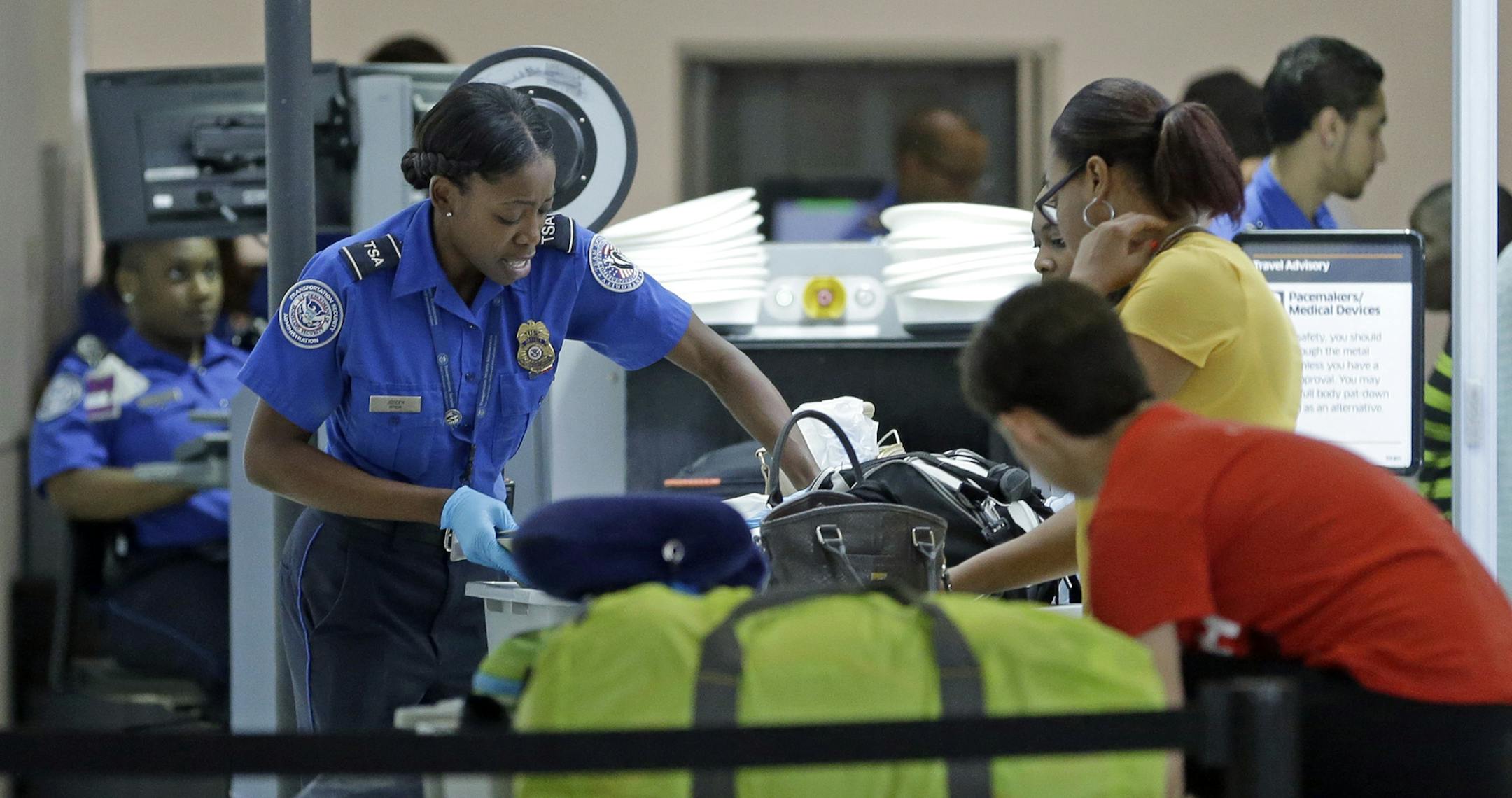
Despite being a frequent flier, I recently made a rookie mistake and left a small bottle of water in my carry-on during TSA screening at the Minneapolis-St. Paul International Airport's Humphrey Terminal. When the agent at the X-ray monitor pulled my bag aside, I immediately knew what the potential threat was and congratulated him on finding it. Why did I pay him a compliment? Because their job is not as easy as you might think.
How do I know that? I am a board-certified radiologist with 30 years of experience. I spend my days systematically interpreting thousands of images of the body looking for tiny offending "lesions," sometimes cleverly disguised by nature to get through my screening process. Despite four years of medical school and at least five to six years of specialty training, a radiologist misses an abnormality on a scan up to 20 percent of the time. Most of these "misses" are inconsequential (just like my water bottle), but some, unfortunately, are not. The reasons for failure are numerous and have been studied extensively in the medical literature. Despite formalized efforts, the "miss rate" for radiologists has improved only modestly. I suspect these quality pitfalls are similar for TSA X-ray screeners.
There has been outrage expressed in the media about the TSA failure to identify thousands of potentially dangerous items every month. But I am sympathetic and in no way surprised by their imperfection. I am certain that the screeners do not have 10 years of intensive training, and I suspect that "bad guys" are doing their best to disguise potentially dangerous items. (Of course, this brings the efficacy of the screening process itself into question, but others can debate that.)
Dr. Kevin Gustafson, Eden Prairie
RED WING's COLLEGE HOPES
Already home to a fine two-year college, which could be a partner
We read with interest the May 31 story about Red Wing recruiting a four-year college to locate a satellite campus in the town ("A plea to colleges: Come to Red Wing"). It bears mentioning that Red Wing already has a world-class college: Minnesota State College — Southeast Technical.
A member of the Minnesota State Colleges and Universities system, Southeast Technical is a two-year public college offering liberal arts and sciences coursework as well as technical education. Our Red Wing campus is world-renowned for its musical instrument repair programs; we draw students from across the U.S. and many foreign countries to study band instrument repair, violin repair, and guitar repair and construction. We also have high concentrations of students in nursing, early-childhood education and criminal justice.
We are constantly seeking ways to improve our service to the region, such as expanding our programs to better suit the needs of students who are preparing for transfer to four-year institutions. Our customized training division works closely with area manufacturers to determine what types of training are most needed and provide professional instruction, either on campus or on-site.
Should the Red Wing Area Higher Education Partnership succeed in attracting a four-year college, we hope to work in harmony with it to provide two-plus-two transfer agreements and other beneficial partnerships. Our college students bring a unique energy and vibrancy to Red Wing, and we are very proud to serve their needs.
Dorothy Duran, Red Wing, Minn.
The writer is president of Minnesota State College — Southeast Technical.


