

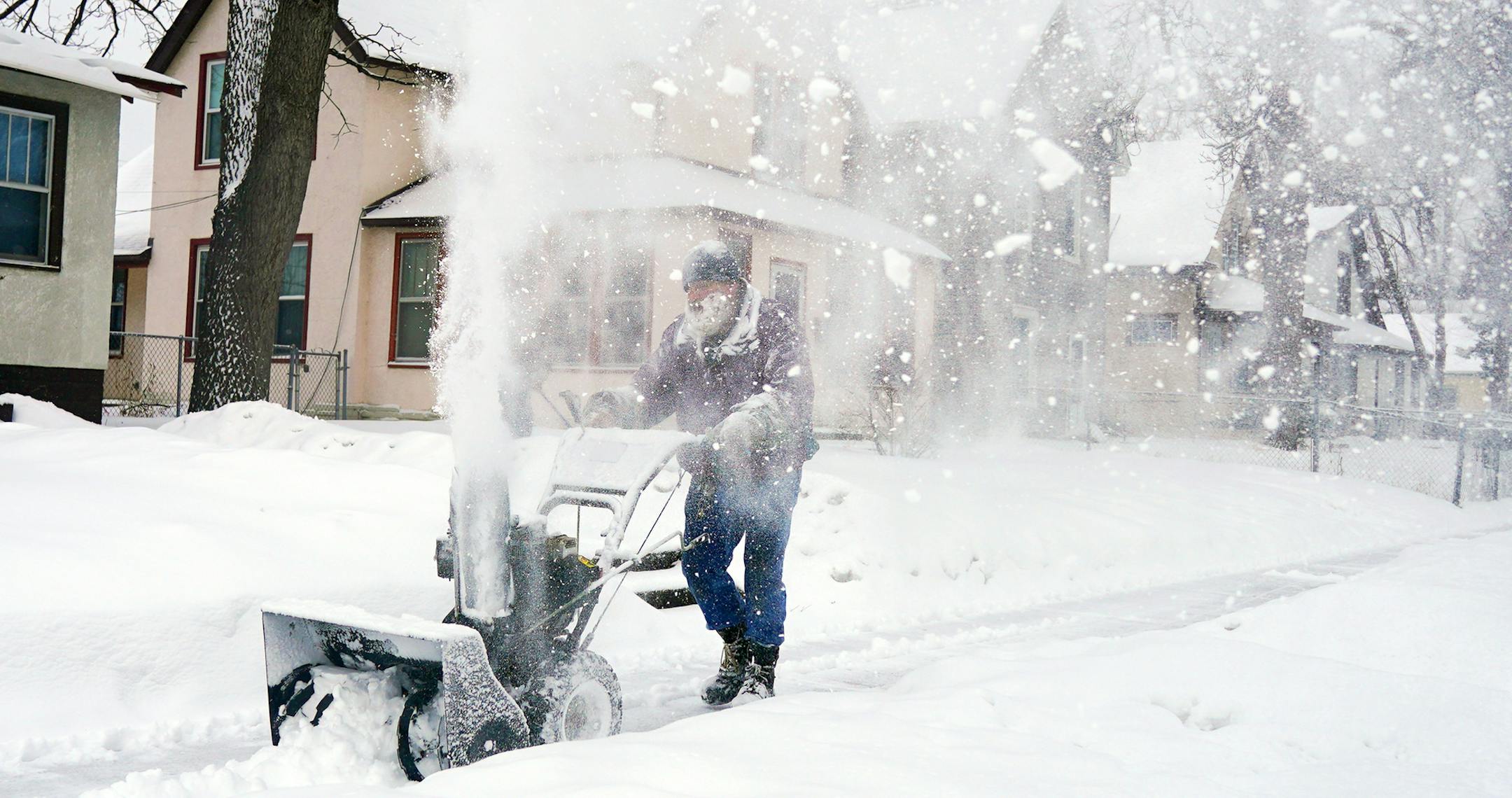
As a 66-year-old native Minnesotan and avid fan of our winter seasons, I found Ron Way's Feb. 18 opinion piece, "Hyped-up weather reports cause unnecessary drama," a joy to both read and share. I can't agree more about the growing sensationalization of our broadcast weather reports — do we really need to know how many people will be "affected" by our normal, we-have-them-every-year snowstorms or how many days remain until spring (and is that meteorological or astronomical spring)?
Even though I agree it is difficult to accurately quantify a "feels like" temperature, I think it does help those of us who enjoy going outside in the elements to have an idea what to expect for the "suffer index" or, more practically speaking, the "how many layers must I put on so I won't die" index. The old Norwegian saying that there is no such thing as bad weather, just a bad choice of clothing, has always been my mantra for many years along with my grandmother's saying, "Wear cotton for comfort and leather for looks, but if it's warmth you want, put on the wool."
Bob Joyce, Lakeville
WHAT THEY'RE LEARNING
Government standards were certainly not what inspired me
Gary Martin Davison ("Public school students aren't learning the 'wrong' thing," Opinion Exchange, Feb. 18) really nails it.
I still have scars on my stomach from knots of stage fright endured as a 9-year-old when coerced into playing the role of Christopher Columbus in a classmate's school play. As for learning anything in 1957 about Columbus' role in America's history, the "facts" I was taught have been shown to be mostly frauds.
Plutarch, in "Moralia," had the right idea 2,000 years ago: "The correct analogy for the mind is not a vessel that needs filling, but wood that needs igniting."
My ignition came while hitchhiking through France as an architecture student in 1971. I could easily read roadside signs, in French, warning against off-road wandering due to unexploded ordnance from World War I, thanks to my school district's enlightened program teaching French starting in the second grade.
I wanted to learn more about both world wars thanks to a 1969 lecture by history Prof. Harvey Goldberg, attended almost accidentally at the University of Wisconsin. Goldberg was such a superb storyteller that he routinely received standing ovations from his students.
After 50 years of woodenheaded combustion, my love of reading history burns on. It's safe to say that no "standard" imposed by the feds or locals could have measured or ensured that my bucket was sufficiently filled in grade school, high school or ever.


