

The rapid evolution of the coronavirus into an alphabet soup of subvariants presents a vexing challenge to health officials: They must make far-reaching policy decisions based on little biological certainty of which viral variants will be dominant this fall or winter.
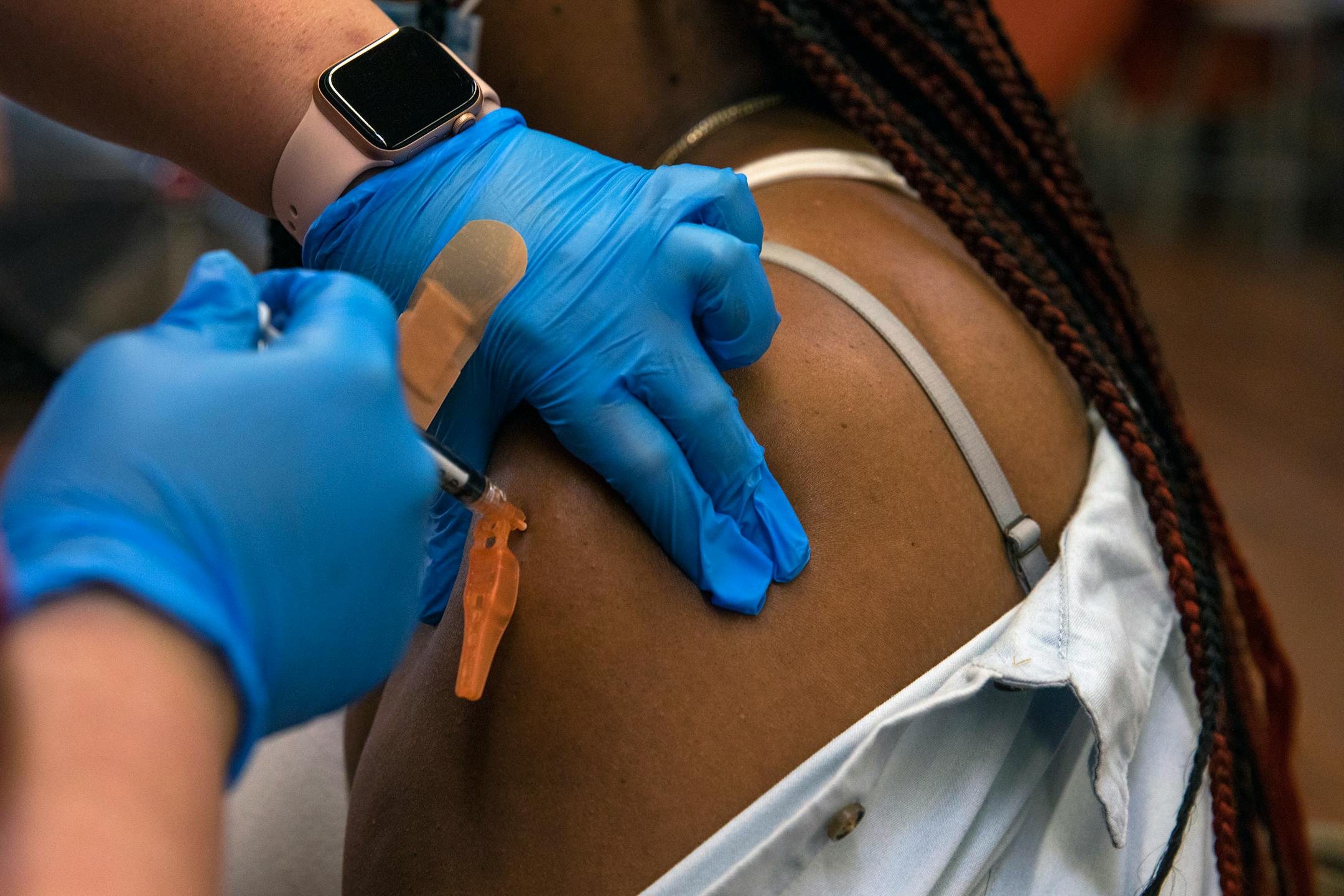
The Food and Drug Administration said at the end of June that it would update virus vaccines for a booster campaign in the fall targeting highly contagious omicron subvariants. But the ground is shifting beneath its feet.
In just eight weeks, the subvariant known as BA.5 has gone from a blip in U.S. case counts to the dominant version of the virus, now making up more than three-quarters of new cases. Perhaps the most transmissible subvariant yet, it is pushing up positive tests, hospitalizations and intensive care admissions across the country,
There is no evidence that BA.5 causes more severe disease, but the latest metrics certainly bust the myth that the virus will become milder as it evolves.
"None of us has a crystal ball, and we are trying to use every last ounce of what we can from predictive modeling and from the data that we have to try to get ahead of a virus that has been very crafty," Dr. Peter Marks, a top vaccine regulator at the FDA, said after an advisory committee recommended that the agency prioritize vaccines specific to the omicron subvariants. "For something that's only nanometers in size, it's pretty darn crafty. We're trying to make our best judgment here."
Omicron and its offshoots have dominated for about six months, and whatever incarnation of the virus comes next is more likely to be tied to the omicron family than to earlier versions, said Jerry Weir, a senior FDA regulator.
That assumption is the best calculation that can be made at this time, according to outside experts not on the FDA expert panel.
"Viruses like SARS-CoV-2 are always evolving, and it's a near certainty that new mutants will emerge in any given six-month time frame," said Jesse Bloom of the Fred Hutchinson Cancer Center in Seattle. "But as long as these mutants are descendants or close relatives of BA.2 or BA.4/BA.5, then a vaccine booster based on BA.4/BA.5, as the FDA has recommended, should be a much better match to them than the current vaccine, even if it's not a perfect match."


