

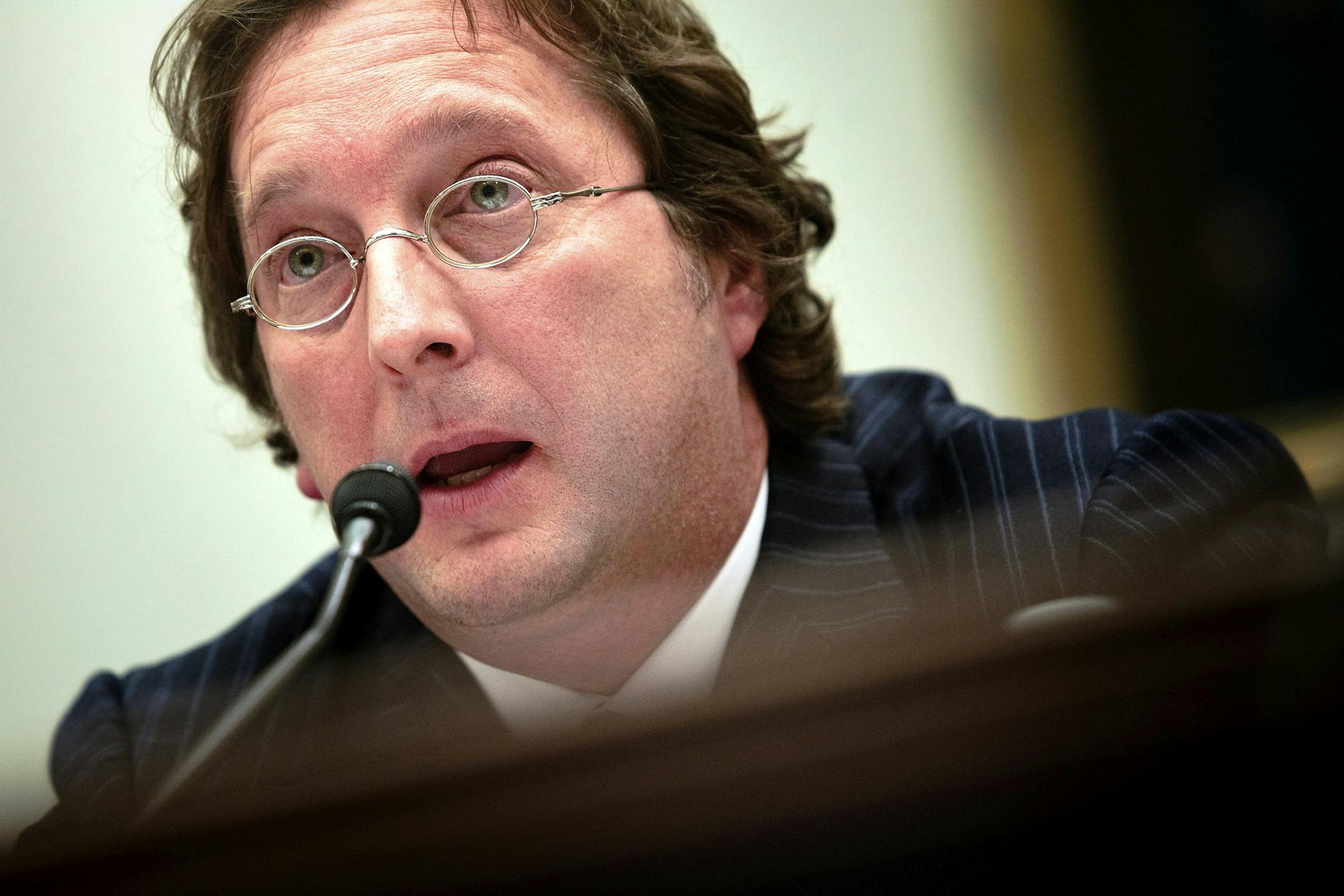
The future of billionaire hedge-fund manager Philip Falcone was up in the air after a proposed $18 million settlement with the Securities and Exchange Commission was rejected by its chairwoman, Mary Jo White, as too lenient, according to two people with knowledge of the matter.
White, a former Wall Street defense lawyer, and Democrats Luis Aguilar and Elisse Walter, in a 3-1 vote, were concerned that Falcone wasn't barred from serving as officer or director of a public company, said the sources, asking not to be named because the deliberations aren't public. The SEC informed Falcone's Harbinger Capital Partners of the decision Thursday, according to a filing from Harbinger Group Inc.
Under the agreement, Falcone would have been barred for two years from investing client money to settle claims that he improperly borrowed money from his fund to pay personal taxes. It would have allowed Falcone to remain chief executive officer of Harbinger Group, a company he modeled on Warren Buffett's Berkshire Hathaway Inc.
Falcone grew up in Chisholm, Minn., where hockey was a way of life, and his prowess on the ice landed him at Harvard University, where he skated on the varsity squad and majored in economics.
His Iron Range roots were never far away from Falcone as he maintained his association with hockey as a minority owner of the Minnesota Wild.
But Falcone also thrived in the New York limelight as he made a fortune predicting the collapse of the subprime mortgage market and subsequently made headlines for a bounteous lifestyle.
On May 9, Harbinger disclosed the terms of the agreement before the commission had voted on it and about one month after White was sworn in as SEC chairwoman, pledging to run a "bold and unrelenting" enforcement program.
"It is very unusual for the commission to reject the staff's recommendation to settle a matter," said Bradley Bondi, a former counsel to two SEC commissioners who is now a partner at law firm Cadwalader, Wickersham & Taft. "The aggressive move may signal that the commission thinks more of its chances than the staff actually does, or that the proposed settlement is somehow insufficient to the commission, or some combination of both."



