

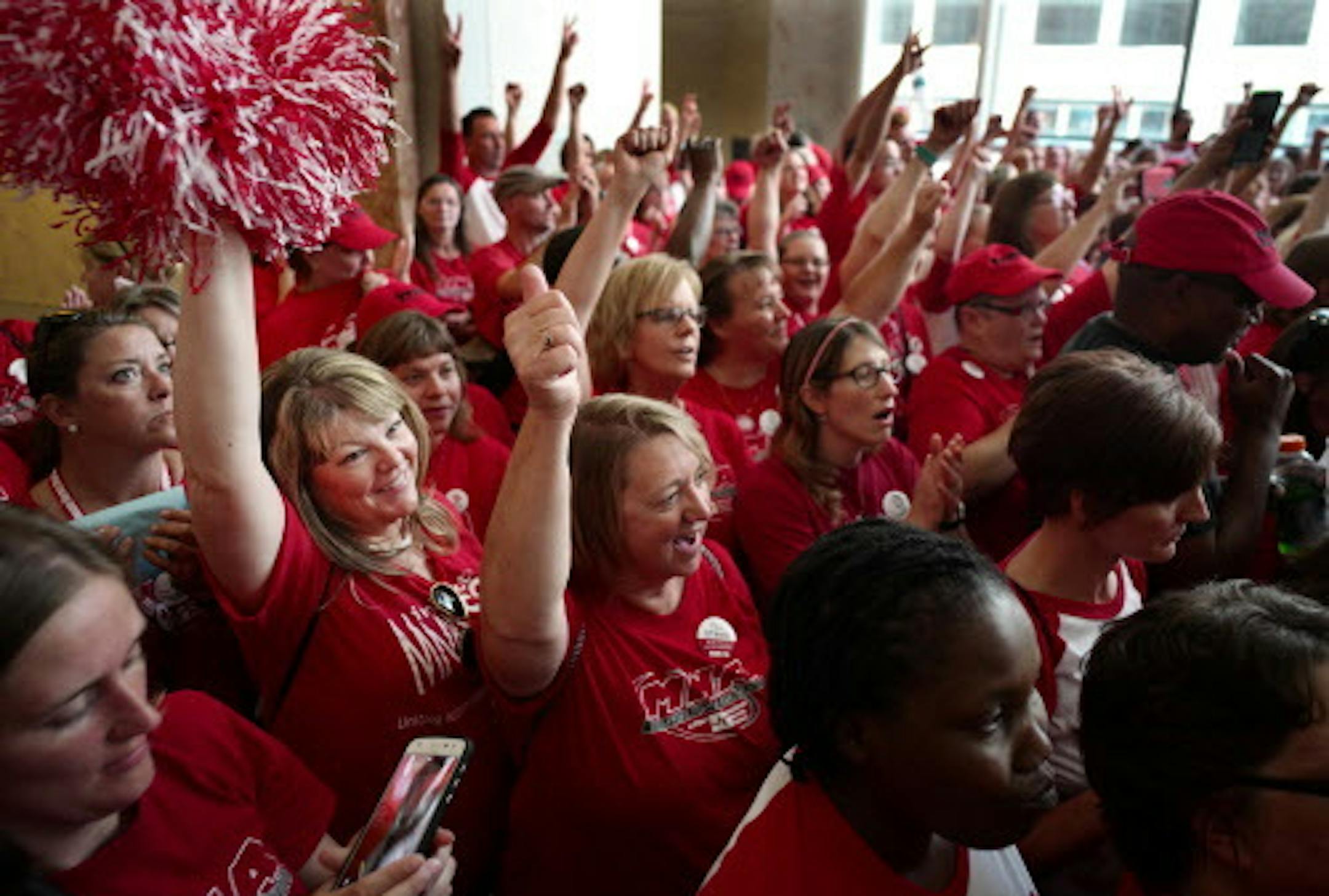
As their strike against Allina Health enters week four, hospital nurses have found unexpected ways to pay their bills — discovering that their people skills, arm strength and endurance are useful in all kinds of professions.
"We lift 400-pound patients. We wrestle patients who are going through detox," said Lisa Kielas, who has cobbled together income by helping the local stagehands' union take down exhibits at the Minneapolis Convention Center, then did some food testing for FPI Testers, then starting giving plasma twice a week at $50 per visit. And starting Tuesday, she will join hundreds of Allina nurses in hospitality roles at the Ryder Cup golf tournament.
The rush to find replacement work has increased despite the hopeful sign of negotiations resuming Tuesday. A federal mediator on Friday ordered both sides back to bargaining for the first time since the strike began on Labor Day. When they last talked, the two sides had reached agreement on most issues, but deadlocked over the amount of control the nurses wanted over the future cost and quality of their health care benefits.
The economic toll since then has emerged in several ways. Allina reported on Monday that 567 of more than 4,800 union nurses have decided to return to work, while the Minnesota Nurses Association reported that some nurses have left Allina for good in frustration.
"It was hard," said nurse Kim Mattson, who switched from the operating room at Unity Hospital in Fridley to a comparable position at Maple Grove Hospital. "I consider all the people I work with [at Unity] to be family. We were a tight-knit unit in that operating room."
The prospect of losing their health insurance on Oct. 1 also has pushed striking nurses to temp jobs, while others have turned to the union for support. A union committee met last week to review 200 hardship requests and issued $130,000 in checks.
One applicant had a spouse in cancer treatment and needed money to compensate for lost health benefits, said Mary Turner, union president. Others were young nurses saddled with student loans.
"They're just as strapped" as veteran nurses with families, she said.


