

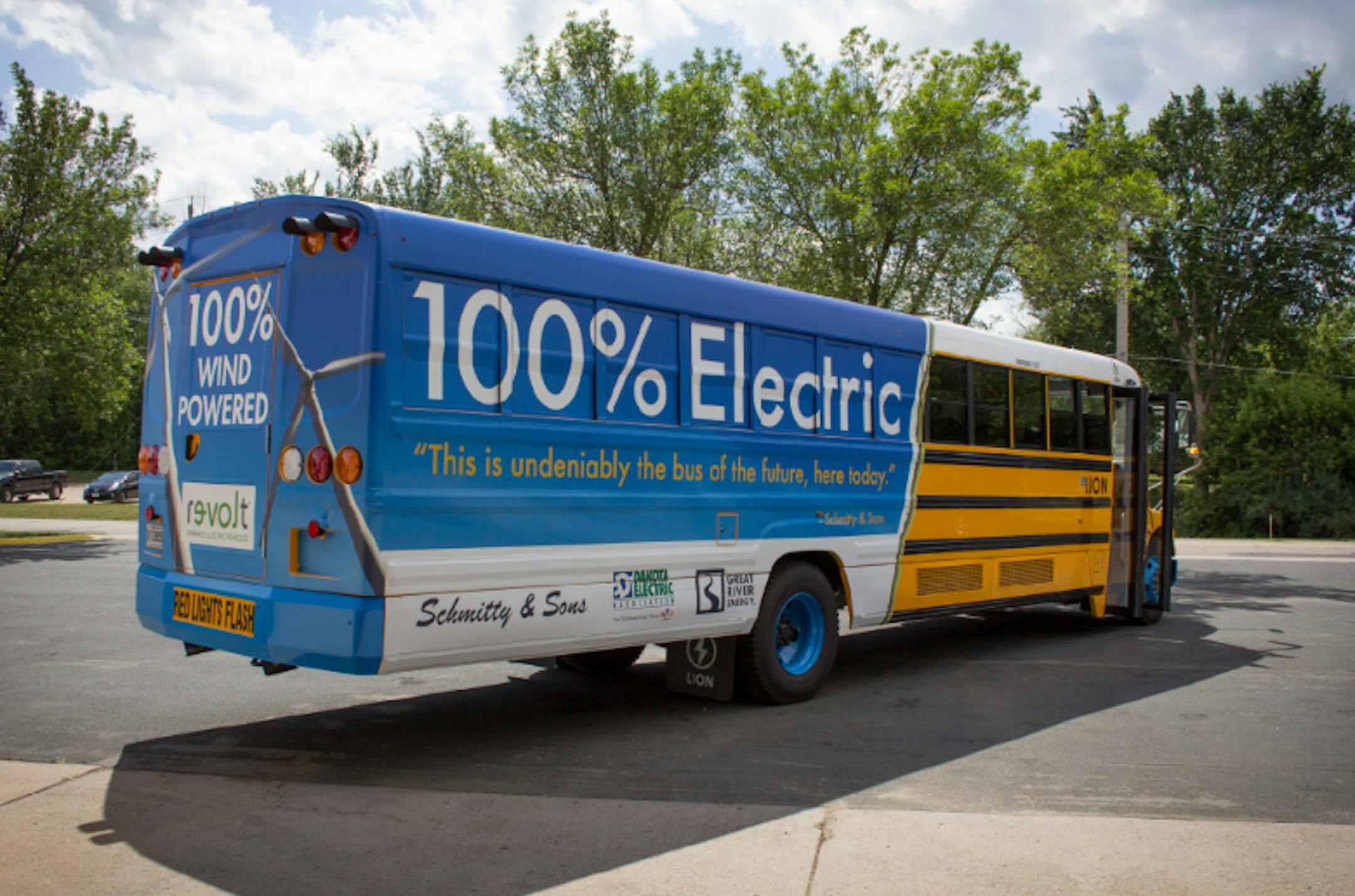
A group of south metro residents is trying to get the word out about the benefits of electric school buses in hopes that the vehicles will eventually serve students across Minnesota.
MN350 South Metro, a local arm of a larger environmental advocacy group, is holding an online forum Tuesday to share information about battery-powered buses in Minnesota with anyone who's interested, from parents to school board members.
"We thought that this is something that the community should be engaged with," said Dan Trajano, an MN350 South Metro member. "I think the timing is right."
The south metro is home to the state's first electric school bus, which hit the road in late 2017. The wind-powered bus, purchased through a partnership between Dakota Electric Association, Schmitty & Sons and Great River Energy, continues to serve the Lakeville school district.
Joe Miller, Dakota County Electric public relations director, said there haven't been discussions about expanding the Lakeville pilot beyond the one bus. The goal, he said, was to raise awareness.
"It's been successful," he said, "because now we have others talking about doing it."
Electric school buses are gaining traction in Minnesota and nationwide, often with financial incentives — they cost up to three times more than traditional diesel buses, and those run upward of $100,000. But the operations and maintenance costs for electric buses are about $12,000 less each year, according to Great River Energy, which has tracked the performance of the Lakeville bus over time.
Replacing diesel buses with electric ones also reduces greenhouse gas emissions — a long-term goal for the state. According to the Minnesota Pollution Control Agency (MPCA), replacing one diesel bus is the equivalent of getting six passenger vehicles off the road.


