

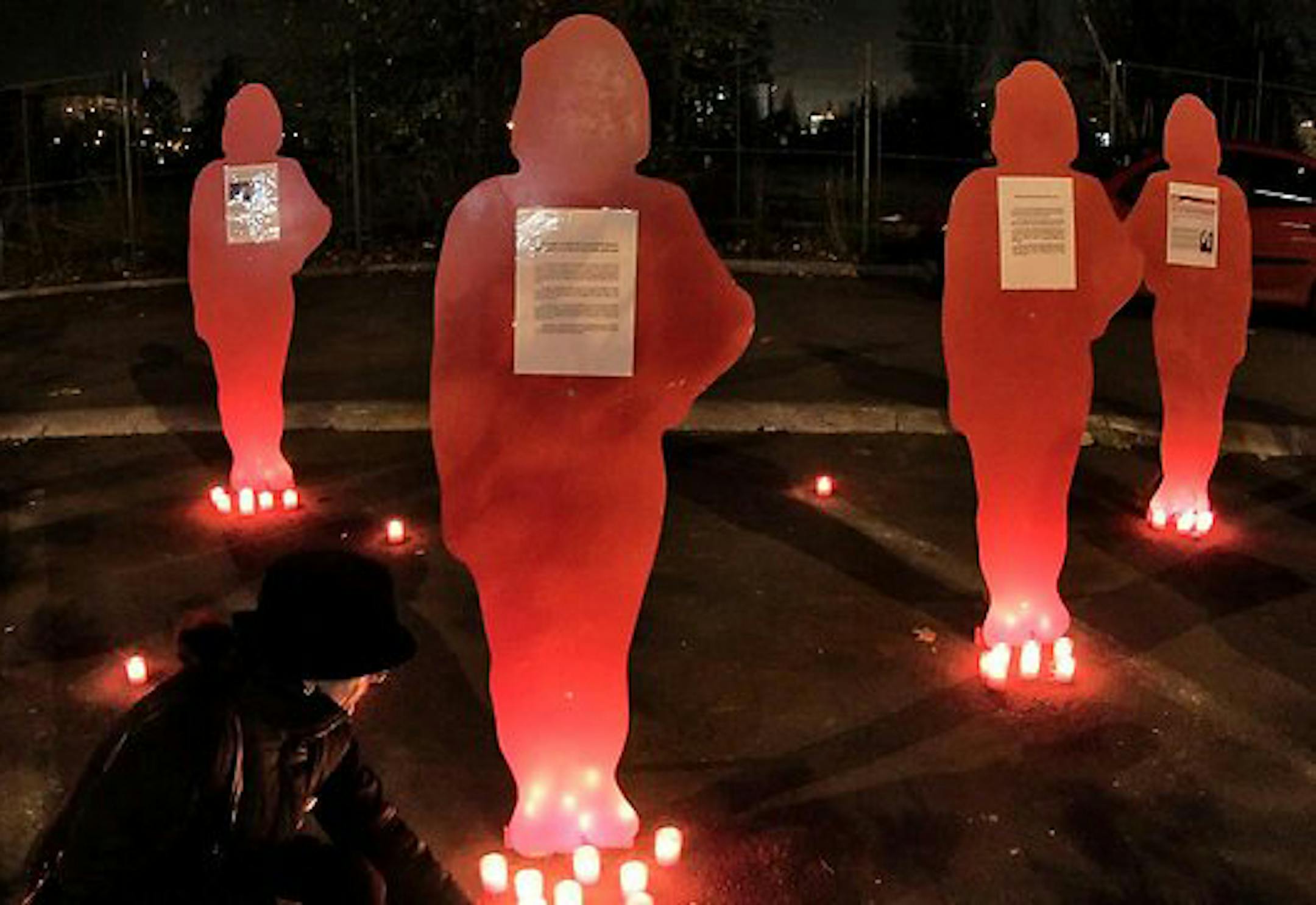
The progress made over the past two decades in reducing domestic violence is remarkable given that throughout most of human history, such violence often hasn't even been considered a crime.
But since 1994, as growing awareness efforts encouraged people to stop averting their eyes and start seeing the danger, the overall rate of violence involving "intimate partners" decreased nationally by a stunning 64 percent, according to a 2012 U.S. Department of Justice special report. The number of officially tallied "victimizations" stood at 2.1 million in 1994. In 2010, it had dropped to 907,000.
That's a significant step forward, but there are still far too many people, mostly women, in harm's way because of a relationship. A spring turned tragic in Minnesota by the confirmation of the deaths of two women potentially linked to domestic violence — Kira Steger and Danielle Jelinek — was a sad reminder of this crime's ongoing toll and the need to find innovative ways to reduce it. Another Minnesota woman, Mandy Matula, who is still missing after she was last seen with a former boyfriend, is also feared to be a victim of this type of abuse.
Minnesota has long been at the forefront of finding new, thoughtful approaches to stem domestic violence. The "Duluth Model" pioneered a communitywide approach to halt batterers. The St. Paul Police Department's "Blueprint for Safety" has been another significant step forward.
Now, Stearns County is building upon this admirable foundation to make the state even more of a standout. Its "Repeat Felony Domestic Violence Court'' has garnered accolades recently and should become a new national model for holding abusers accountable and helping break the emotional, financial and legal ties that can make victims too frightened to leave.
The court, which began formal operation in St. Cloud in 2009, is believed to be the first of its kind nationally to focus on what prosecutors and law enforcement officers sometimes refer to as "frequent fliers," the repeat, felony-level domestic offenders who get arrested, get released, threaten their partners again and keep cycling through the legal system. They often show in court for other violations, such as drunken driving or thefts, making them one-person crime waves.
These are the guys (at this point all the abusers in the court program have been male) who "don't believe the rules apply to them,'' said Stearns County Attorney Janelle Kendall, who is one of the program's most forceful champions.
The offenders are also some of the county's most dangerous. Kendall and other officials involved in the initiative's founding — from courts and law enforcement to victims' advocates, probation and Legal Aid, among others — were originally asked to review ways to reduce jail crowding.


