

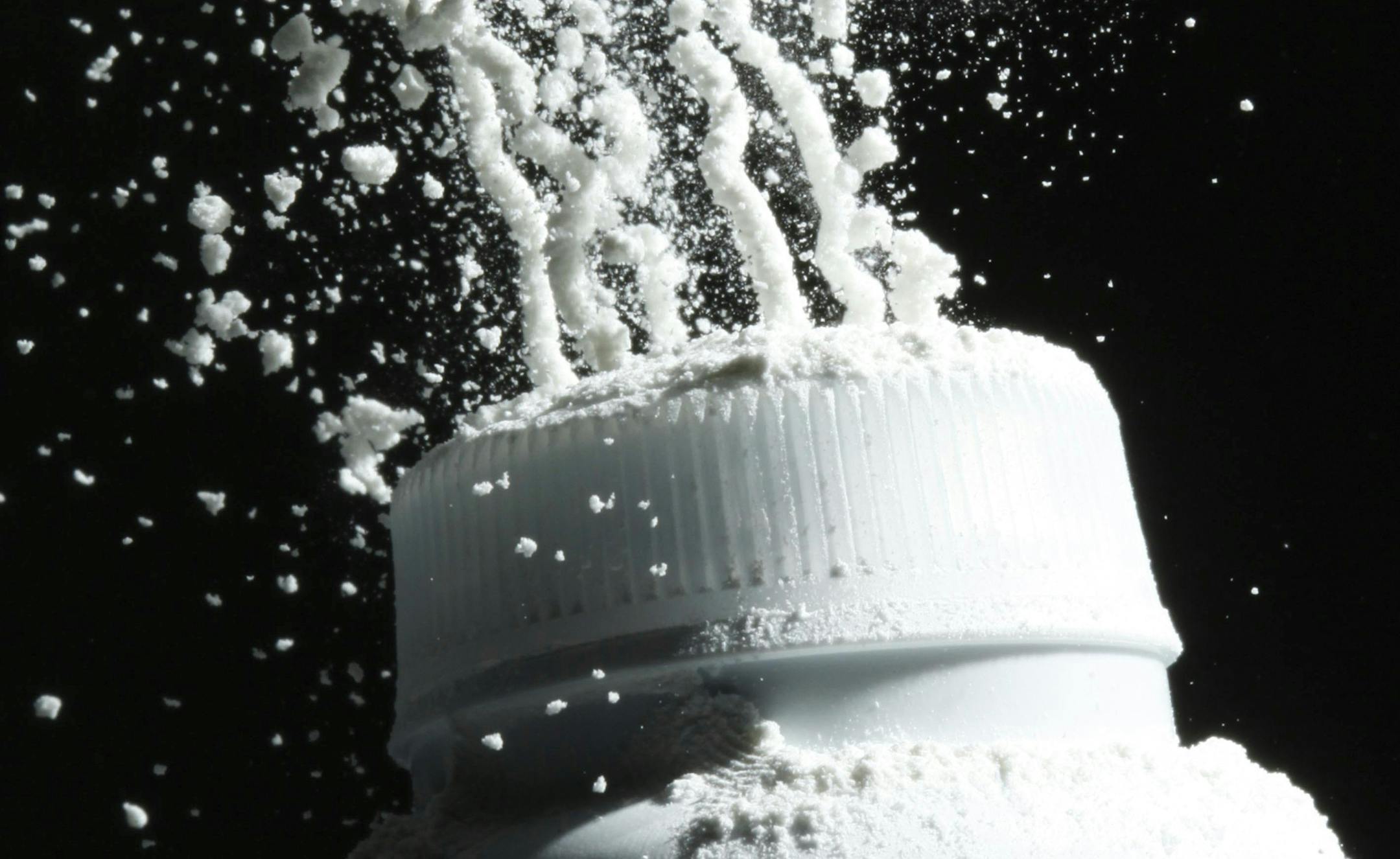
A study of more than 250,000 women found that those who used talc or other personal-hygiene powders weren't significantly more likely to develop ovarian cancer, news that will affect thousands of legal claims against drugmaker Johnson & Johnson over the products.
The U.S. government-sponsored study, published in the Journal of the American Medical Association on Tuesday, is one of the biggest to date to examine whether women who used the powder products on their genitals are at increased risk of developing the deadly cancer years later.
While the study has some limitations and couldn't rule out the powders as a cause, the findings suggest that if a risk exists, it's quite small.
"Overall, women can be very reassured by this," said Dana Gossett, chief of obstetrics and gynecology at the University of California, San Francisco, who co-authored an editorial accompanying the new research. "The use of genital powders is unlikely to cause a significant increase in ovarian cancer risk."
Health products giant Johnson & Johnson is facing nearly 17,000 lawsuits contending that asbestos-tainted, talc-based personal hygiene products caused women's ovarian cancers and other malignancies. While the research won't eliminate the company's legal exposure, it may help bolster J&J's argument that the link between talc and ovarian cancer found in some previous studies isn't beyond dispute.
"Another study has found there is no statistically significant association between use of talc for feminine hygiene and ovarian cancer," said Kimberly Montagnino, a J&J spokeswoman.
The lawsuits have hurt J&J shares as investors weighed the billions of dollars in potential legal risk to the New Brunswick, N.J.-based company.
The new research pooled data from four studies that followed more than 250,000 women for over a decade. Eventually, 2,168 of the women developed ovarian cancer.


