

Opinion editor’s note: Star Tribune Opinion publishes a mix of national and local commentaries online and in print each day. To contribute, click here.
•••
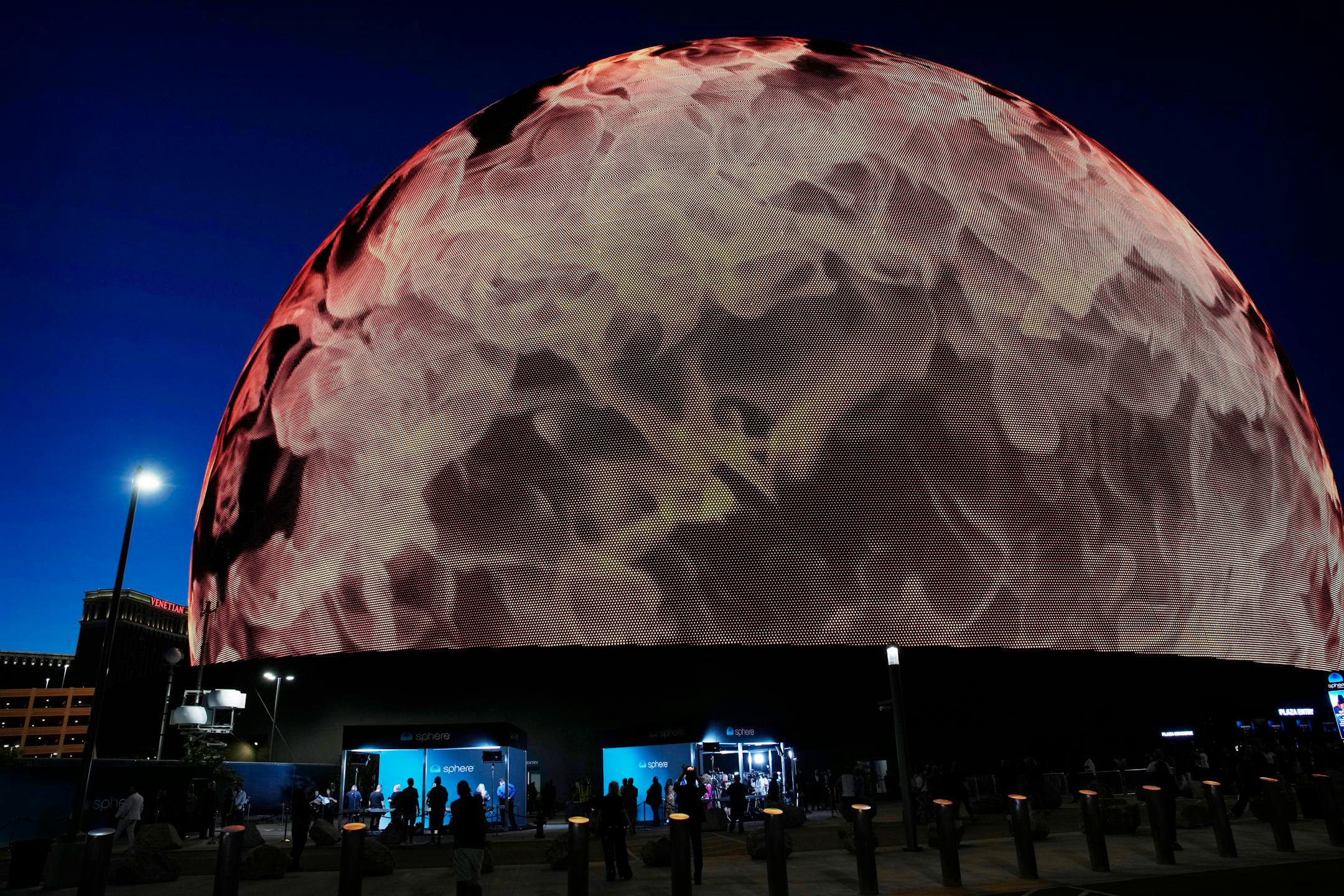
With its 1.2 million LED lights shining brightly against the Las Vegas night, the Sphere may well be the ultimate symbol of 2020s excess. But that gigantic entertainment venue — which doubles as the world’s biggest screen — is also something else: a symbol of the coming collision between our climate goals and our seemingly insatiable appetite for stuff.
In the 1990s, when multicolor LED lights were invented by Japanese scientists after decades of research, the hope was that they would help to avert climate catastrophe by greatly reducing the amount of electricity we use. It seemed perfectly intuitive. After all, LED lights use 90% less energy and last around 18 times longer than incandescent bulbs.
Yet the amount of electricity we consume for light globally is roughly the same today as it was in 2010. That’s partly because of population and economic growth in the developing world. But another big reason is there on the Las Vegas Strip: Instead of merely replacing our existing bulbs with LED alternatives, we have come up with ever more extravagant uses for these ever-cheaper lights, from immersive LED art installations and carpets that glow to basketball courts that can play video. As technology has advanced, we’ve only grown more wasteful.
There’s an economic term for this: the Jevons Paradox, named for the 19th-century English economist William Stanley Jevons, who noticed that as steam engines became ever more efficient, Britain’s appetite for coal increased rather than decreased.
We’ve known about the Jevons Paradox for years, but it’s becoming a more troubling problem now that governments have pledged to eliminate their net carbon emissions to slow global warming. A significant part of that carbon reduction is expected to come from using more efficient products, be they electric motors instead of internal combustion engines, or LED lights instead of traditional bulbs. But the logic of Jevons is that instead of banking the efficiency savings we make as technology advances, we go out and spend it.
Climate activists are dismayed by the Jevons Paradox, since fossil fuel companies invoke it as an excuse to carry on digging and drilling. But we are unlikely to achieve our climate goals until we acknowledge, and work with, this feature of human nature.


