

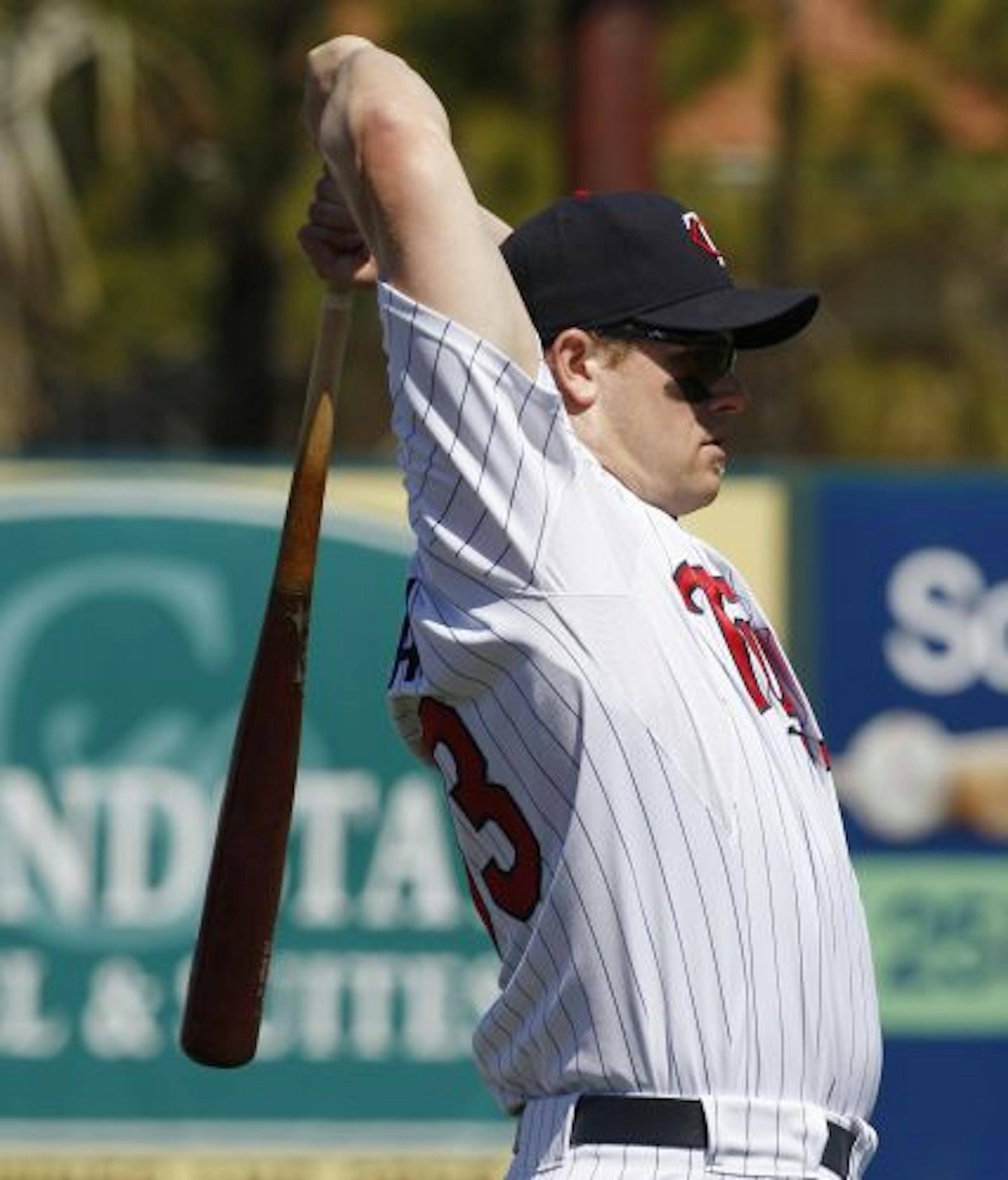
TORONTO - Tonight at Rogers Centre, in one of those elegant, literary moments that punctuate every baseball season, Justin Morneau will play his first big-league game since he suffered a concussion in the same stadium July 7.
His story is redolent of meaning and emotion. He is a symbol of the modern athlete's newfound recognition of the dangers of head injuries. He is a proud Canadian returning as one of the national lions in his sport. He is a star, a team leader, trying to regain his confidence at the beginning of a promising season.
Morneau also is proof that the Twins often win not only because of the 25 players introduced along the foul line on Opening Day, but because of those left behind in Florida, and others not currently employed by his franchise.
Because baseball fans embrace Opening Day as a national holiday, we sometimes forget that the composition of the Opening Day roster is more a Scrabble board than a painting.
When the Twins assemble along the first-base foul line tonight, we would do well to remember that absent and under-appreciated players could determine the outcome of the season, as they have so often before.
In 2002, the Twins won the division in part because of surprises such as a Rule 5 draftee named Johan Santana, who entered the rotation and became a dominating starting pitcher; a journeyman reliever named Tony Fiore, who earned 10 of his 12 big-league victories in that one season; and a journeyman outfielder named Dustan Mohr, who hit 12 homers while platooning with Bobby Kielty, once Opening Day right fielder Brian Buchanan lost his job.
In 2003, they won the division because once again Santana shifted from the bullpen to the rotation and dominated, and because the front office traded Kielty for Shannon Stewart in July.
In 2004, the Twins won the division because Lew Ford gave the Twins his one, good, full big-league season and Morneau replaced a fading Doug Mientkiewicz during the season.


