

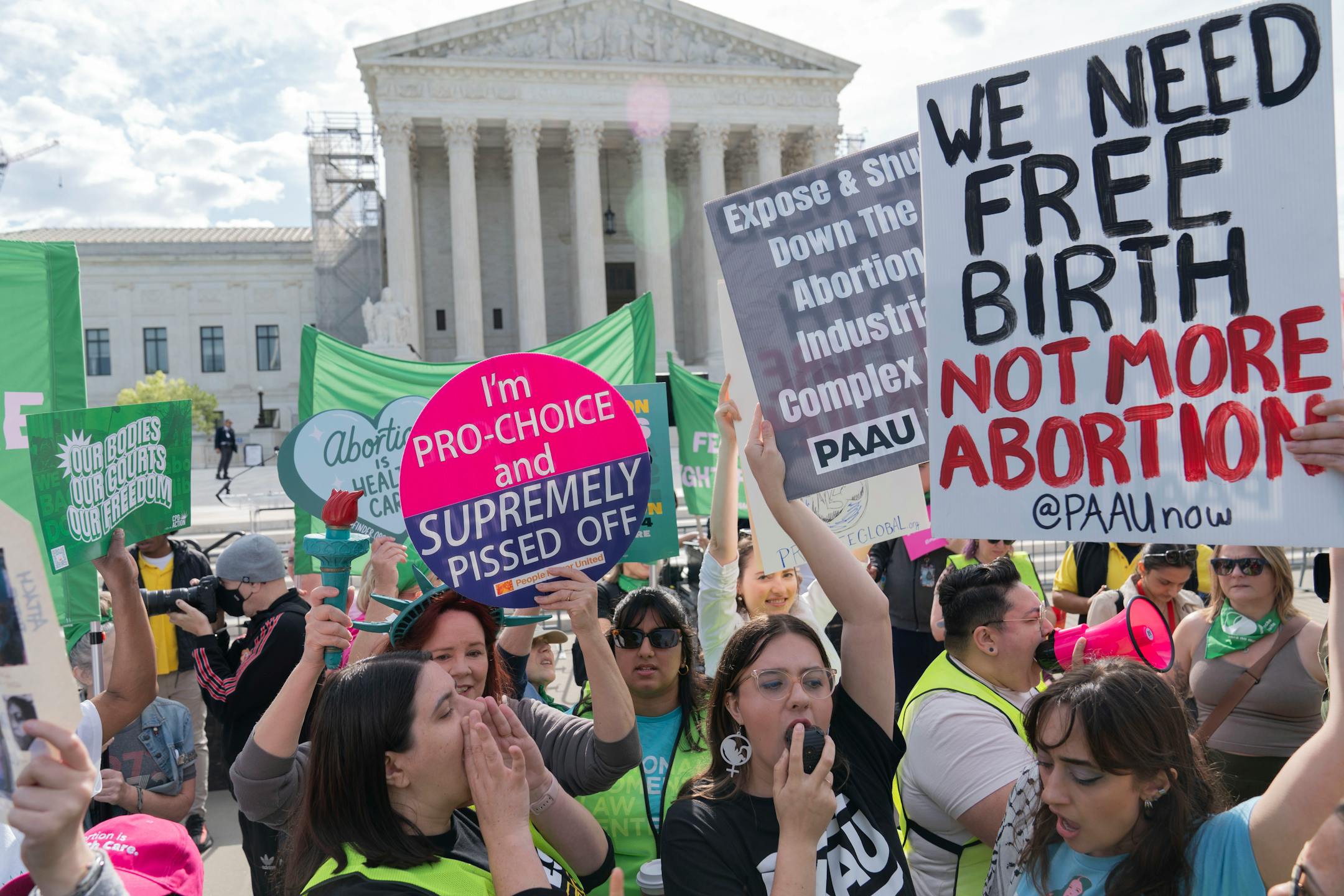
WASHINGTON — The Supreme Court cleared the way Thursday for Idaho hospitals to provide emergency abortions, for now, in a procedural order that left key questions unanswered and could mean the issue ends up before the conservative-majority court again soon.
The order was briefly posted on the court's website accidentally on Wednesday and abruptly removed. By a 6-3 vote, it reverses the court's earlier order that had allowed an Idaho abortion ban to go into effect, even in medical emergencies.
Abortion is an animating issue in the 2024 election campaign, a direct result of the court's seismic ruling two years ago that overturned the nationwide right to abortion. But in this decision and another that preserved access to abortion medication, the court stopped short of issuing broader rulings.
The Idaho order doesn't answer key questions about whether doctors can provide emergency abortions elsewhere, a significant issue as most Republican-controlled states have moved to restrict the procedure.
In Texas, for example, an appeals court has sided with the state, finding federal health care law does not trump a state ban on abortion. Complaints of pregnant patients being turned away from emergency rooms in Texas immediately spiked following the Supreme Court's 2022 decision to overturn Roe v. Wade, according to federal documents obtained by The Associated Press.
The Supreme Court took up the Idaho case after the Biden administration sued to allow abortions in emergency cases where a woman's health was at serious risk. Idaho had argued that its law does allow life-saving abortions and the federal government was wrongly pushing for wider exceptions.
But the contours of the issue have changed in the months since the court agreed to hear it, Justice Amy Coney Barrett wrote in a concurrence joined by Chief Justice John Roberts and Justice Brett Kavanaugh.
''I am now convinced that these cases are no longer appropriate for early resolution,'' Barrett wrote, pointing to revisions Idaho made to its abortion ban and the Biden administration making clear it was only seeking to allow emergency abortions in rare cases. Kavanaugh and Barrett were both part of the majority who voted to overturn Roe v. Wade.


