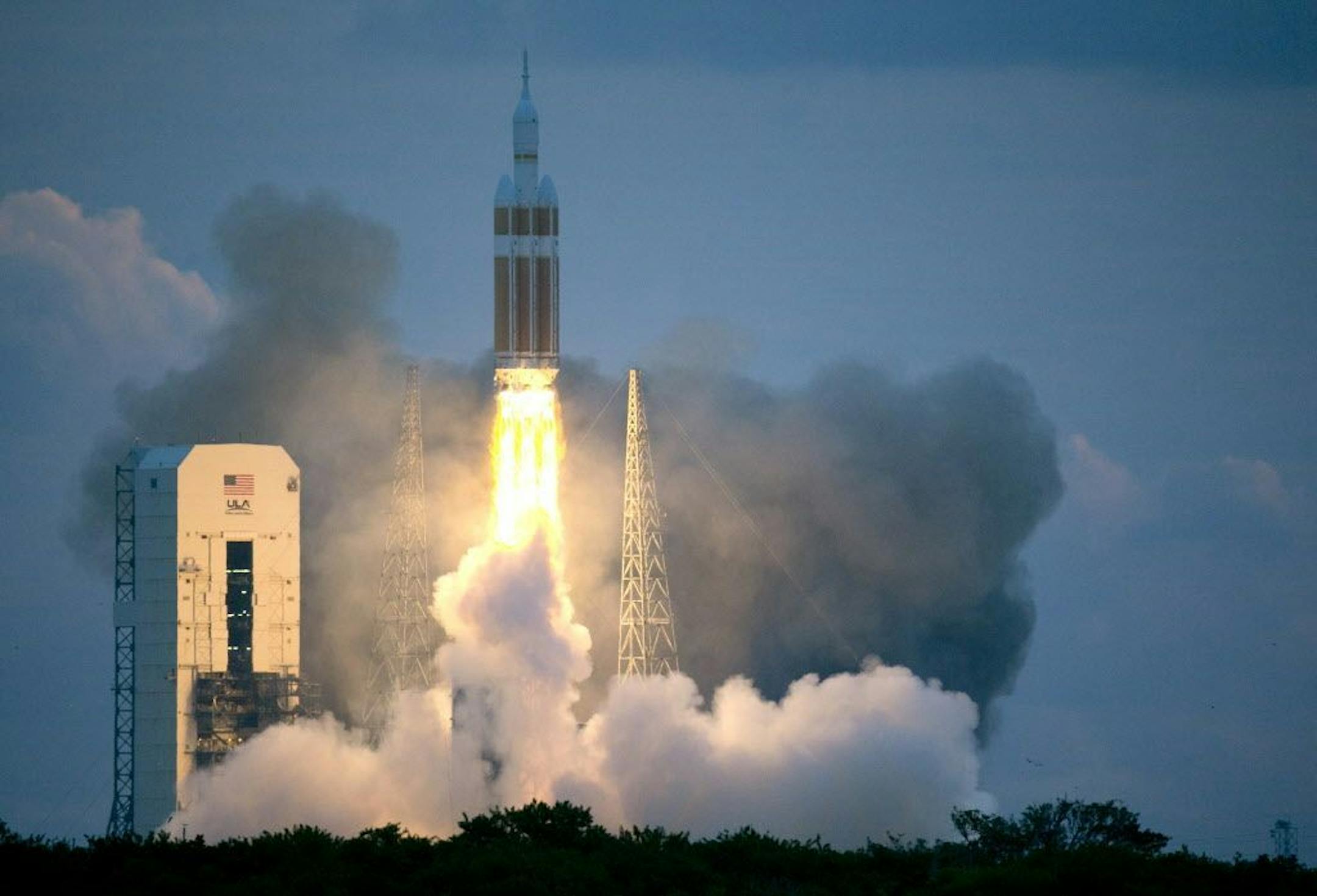
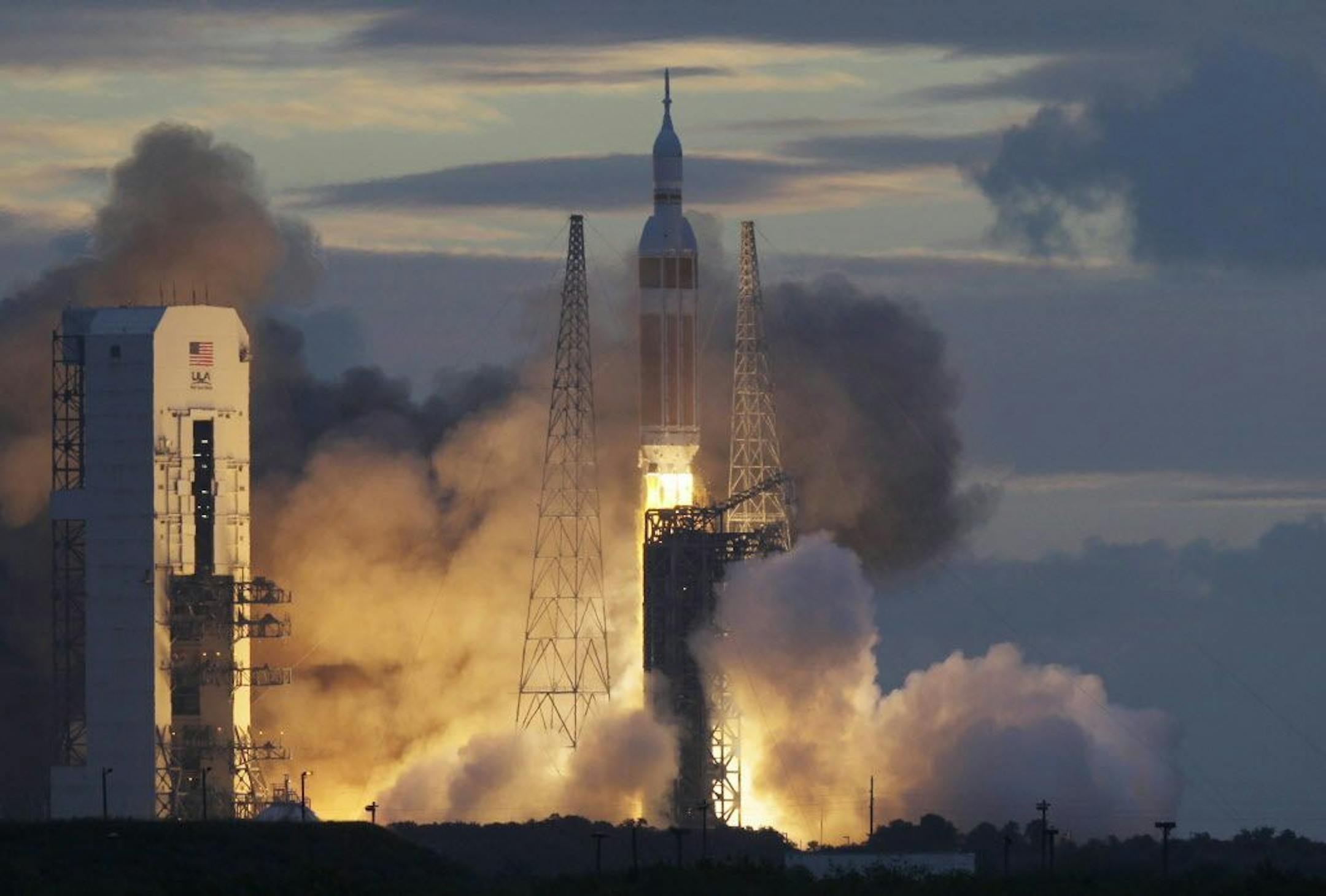
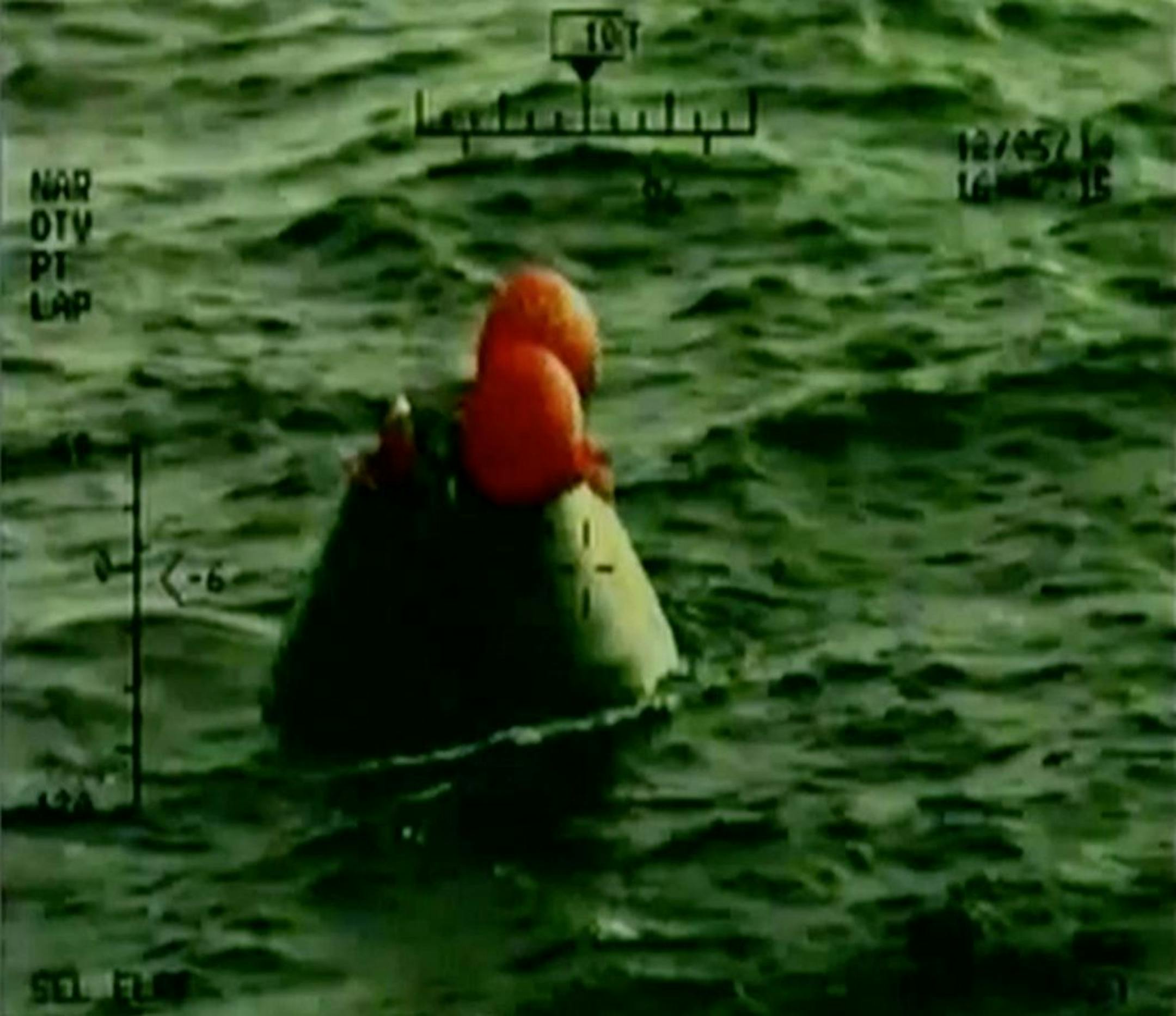
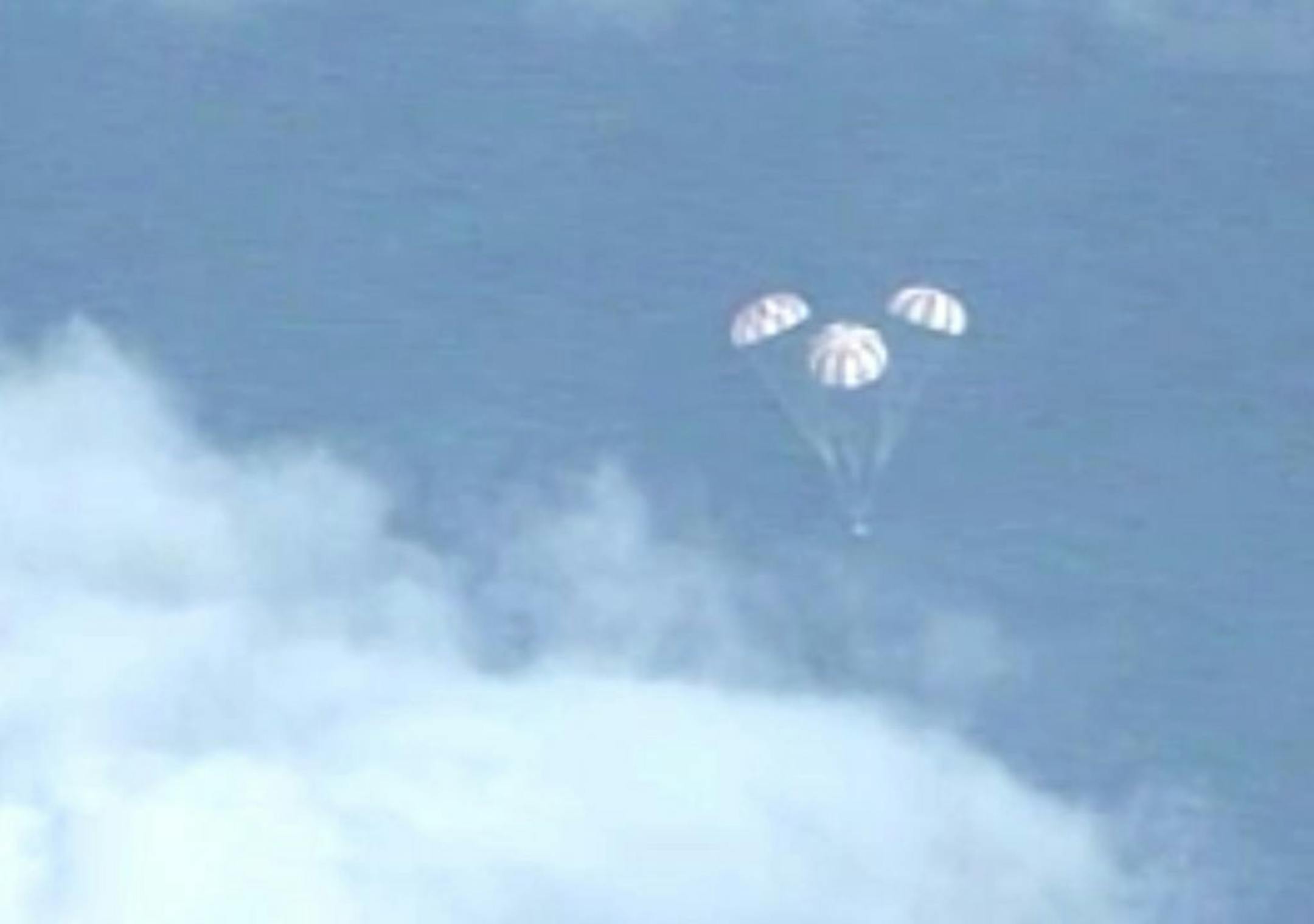
CAPE CANAVERAL, Fla. — NASA's new Orion spacecraft made a "bull's-eye" Pacific splashdown Friday following a dramatic journey 3,604 miles beyond Earth. The achievement opens a new era of human exploration aimed at putting people on Mars.
The unmanned, 4½-hour test flight set at least one record: flying farther and faster than any capsule built for humans since the Apollo moon program.
"There's your new spacecraft, America," Mission Control commentator Rob Navias said as the Orion capsule neared the water 270 miles off Mexico's Baja peninsula.
NASA is counting on future Orions to carry astronauts beyond Earth's orbit in the decades ahead, to asteroids and ultimately the grand prize: Mars.
The lead flight director, Mike Sarafin, was emotional as he signed off from Houston.
"We challenged our best and brightest to continue to lead in space," Sarafin said. "While this was an unmanned mission, we were all on board Orion."
The agency quickly reported positive results: Not only did the capsule arrive intact, all the parachutes deployed and onboard computers withstood the intense radiation of the Van Allen belts surrounding Earth.
The capsule reached a peak altitude more than 14 times farther from our planet than the International Space Station. No spacecraft designed for astronauts had gone so far since Apollo 17 — NASA's final moon shot — 42 years ago.