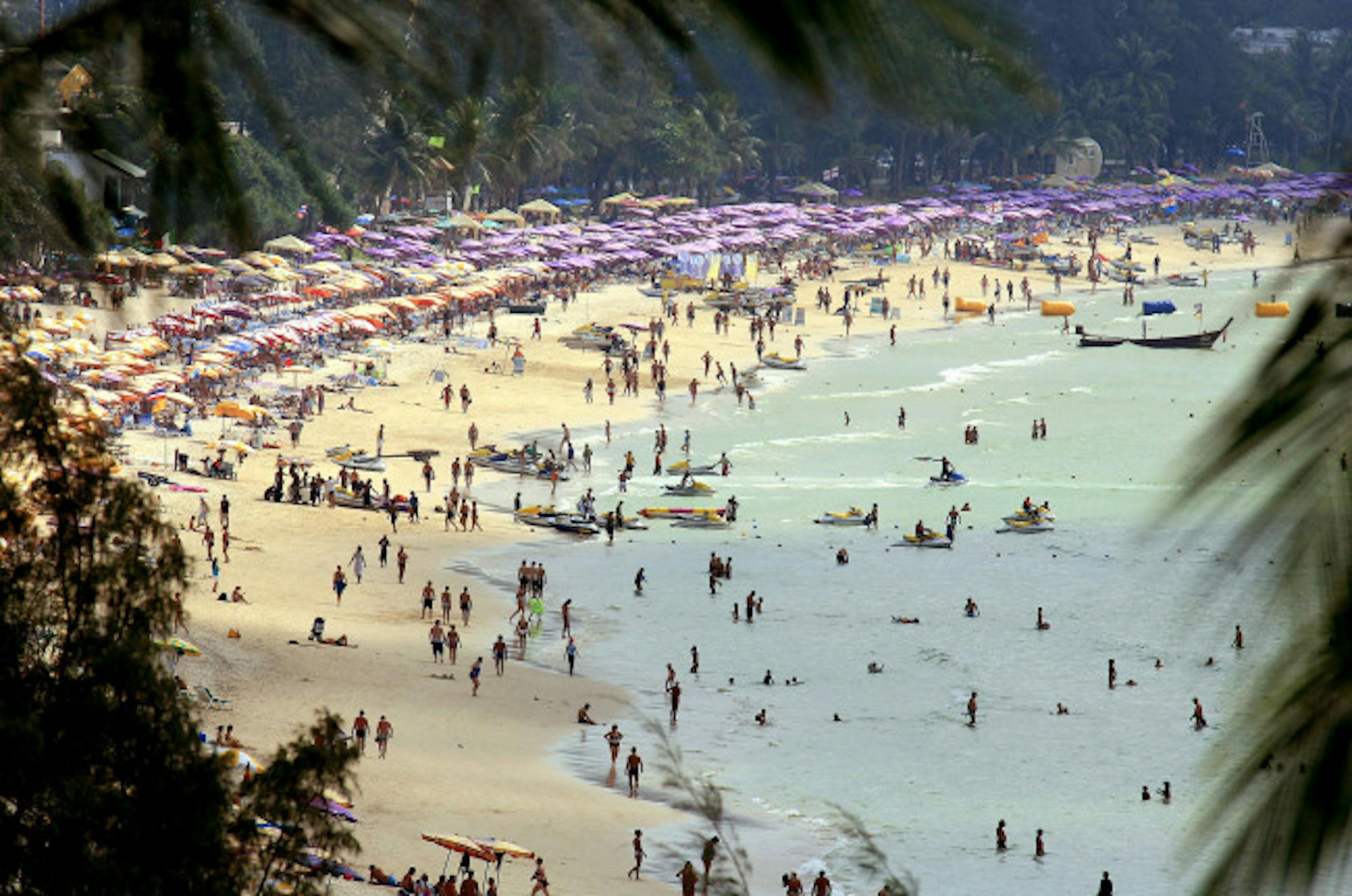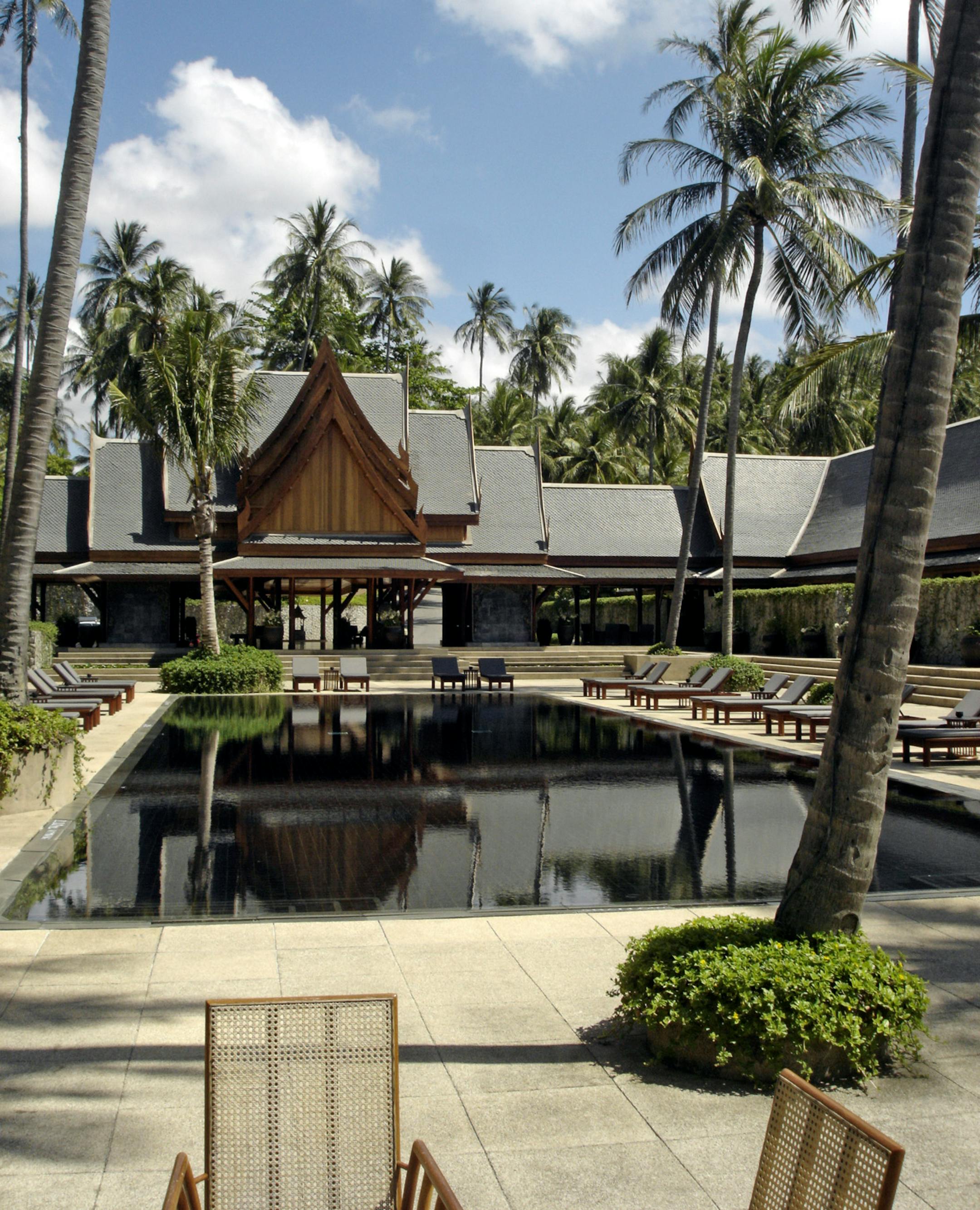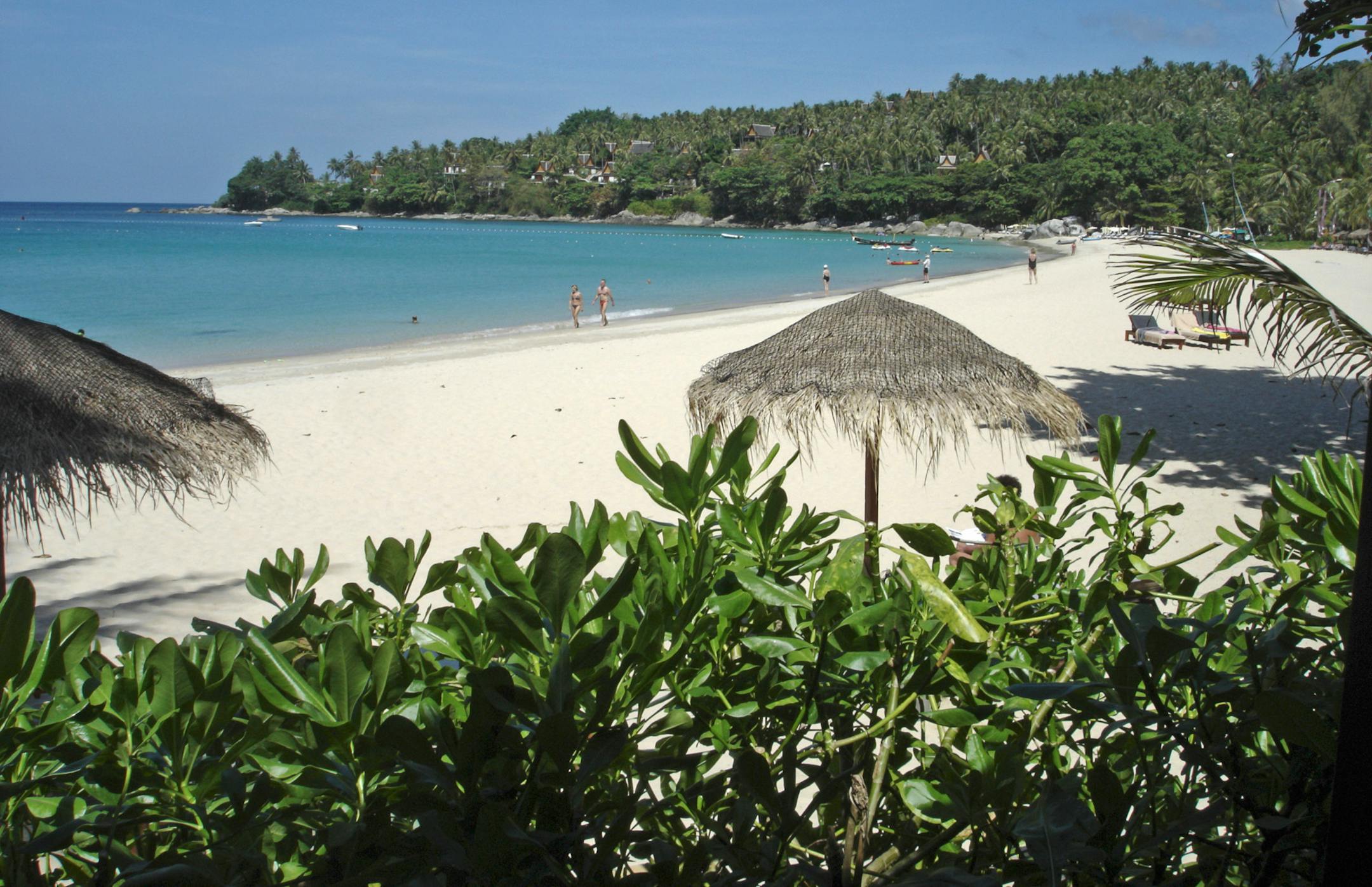
It's midday, and Patong Beach in southern Thailand throbs with an odd combo of relaxation and hyperactivity.
Rows of umbrellas punctuate the tide line for a mile in both directions, casting circles of shade from the tropical sun's unforgiving glare. Sun worshipers from Australia, Sweden and Germany parade at water's edge in varying degrees of undress, and sporting shades of sunburn ranging from rosy to "I should be in urgent care."
Strolling vendors offer iced drinks, spicy cashews, bracelets, sarongs and henna tattoos.
Criss-crossing the gentle waters of the broad bay are traditional long-tailed wooden boats, Jet Skis and hopped-up speedboats, some towing kite riders. Beneath a batik sunshade, tourists sigh their way through a Thai-style, deep-tissue massage: one hour for about $10.
"If someone told me that this town was buried by a tidal wave just three years ago," said a friend, "I would not believe them."
Neither would I.
Frightening scenes of mayhem and destruction circled the world within hours after the tsunami inundated this coastline on the eerily sunny morning of Dec. 26, 2004.
In Thailand alone, at least 8,000 people were reported dead or missing.
Looking around in January 2008, one sees only signs of an extremely vibrant beach resort packed with tourists in high season.
The 2-mile stretch of sand on Patong Bay houses maybe 15,000 beach umbrellas in high season. Backing the beach is a one-way street where minivans, motorbikes, taxis and tuk-tuks (open air, diesel-belching tourist-transport devices) spill forward in a continuous stream. (Note to Patong Beach elders: Install a traffic light or two to give flip-flop-wearing pedestrians a fighting chance.)
After the tsunami
Residents here, and the Thai government, reacted to the tsunami as though their lives depended on it. Which they do. The tropical island of Phuket, 500 miles south of Bangkok, has about 300,000 residents, and about 5 million annual visitors. More than one-third of Phuket residents work in tourism-related jobs.
Phuket, less devastated than such other Thai tourist spots as Phi Phi island to the east and Khao Lak to the north, rebounded quickly. Much repair work in Patong Beach was finished in just a few months, and the place was up and running in time for the high season less than a year later.