

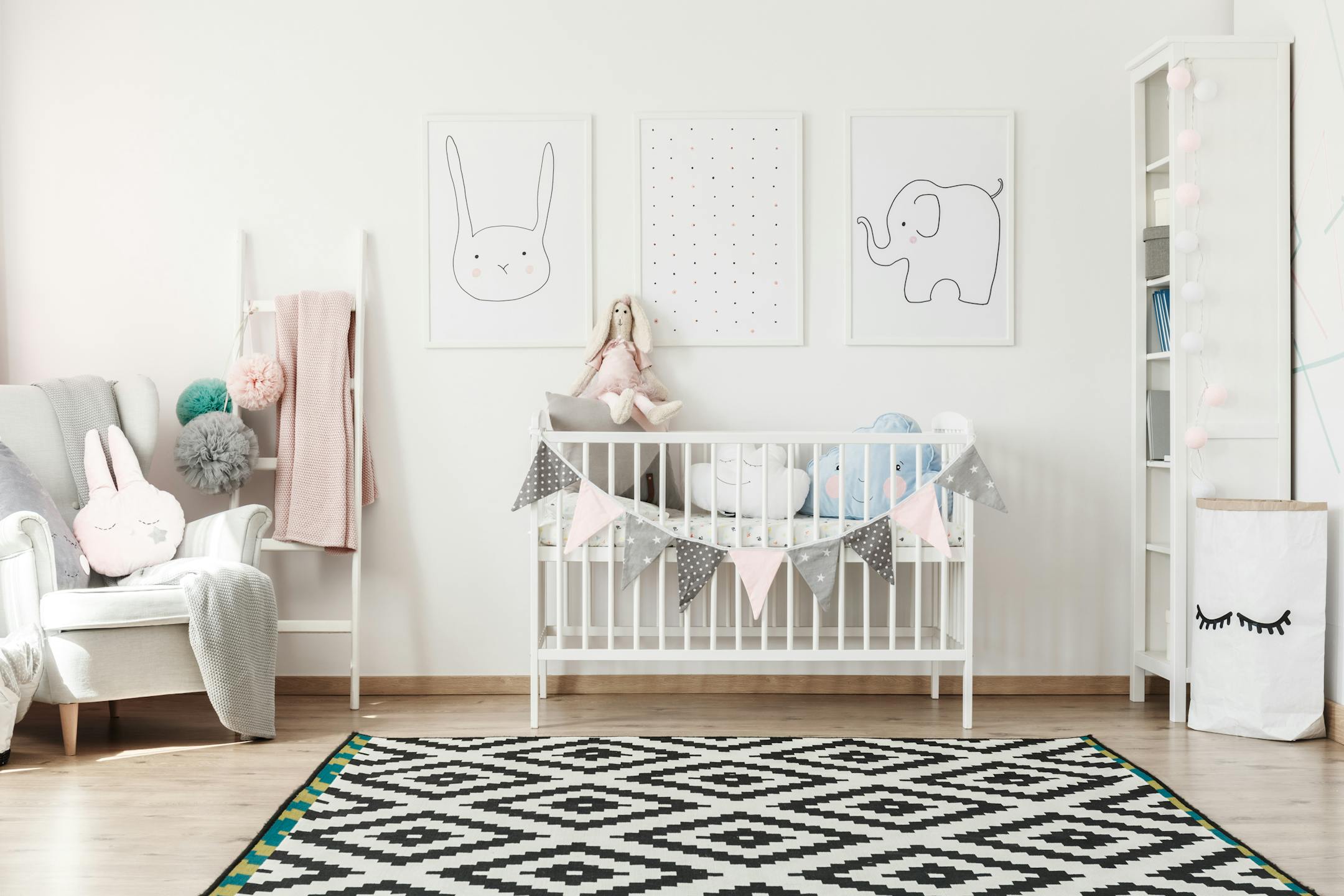
As children grow from newborns to toddlers to elementary school and beyond, their rooms need to change with them. From a crib to a twin bed, from a changing table to a desk for homework, the room transforms with your child.
Designer Sharon McCormick gave some tips and tricks on how to save money while your child’s bedroom grows with them.
“There’s no doubt that the anticipation of having a baby brings out the nesting instincts of new parents, but while exciting, decorating a nursery from scratch can be expensive,” she said. “A little forward thinking can ensure that this investment will last from infancy through the teen years.”
Bedrooms will need flexible spaces for storage, play, sleep and study, so design and functionality need to go hand-in-hand, she suggested. Smart organization can save valuable floor space for play without compromising on the creativity of a fun and personalized haven.
One way to accomplish this, McCormick said, is multi-functional furniture in neutral colors.
“White furniture is a classic for baby furniture, but can easily be painted bright colors in the future. Rather than purchasing a changing table, a dresser with a removable changing top provides flexibility. Once the baby becomes potty-trained, the top of the dresser can be used for a lamp and mementos,” she said.
Cribs which can convert to twin beds are very popular as well. Daybeds with trundles lend themselves to sleepovers as well as functioning like a sofa for teen hangouts. Alternatively, beds with built-in drawers create much-needed storage for toys or out-of-season clothing. Last but not least, a bunk bed can be a practical option for an older child, leaving space below for a desk or play area, she said.
Glider chairs are a perennial favorite for parents. Some styles come with slipcovers that can update the look, especially if the chair is moved to a more common space in the future and out of the bedroom. A storage ottoman can store blankets, books, and supplies.


