

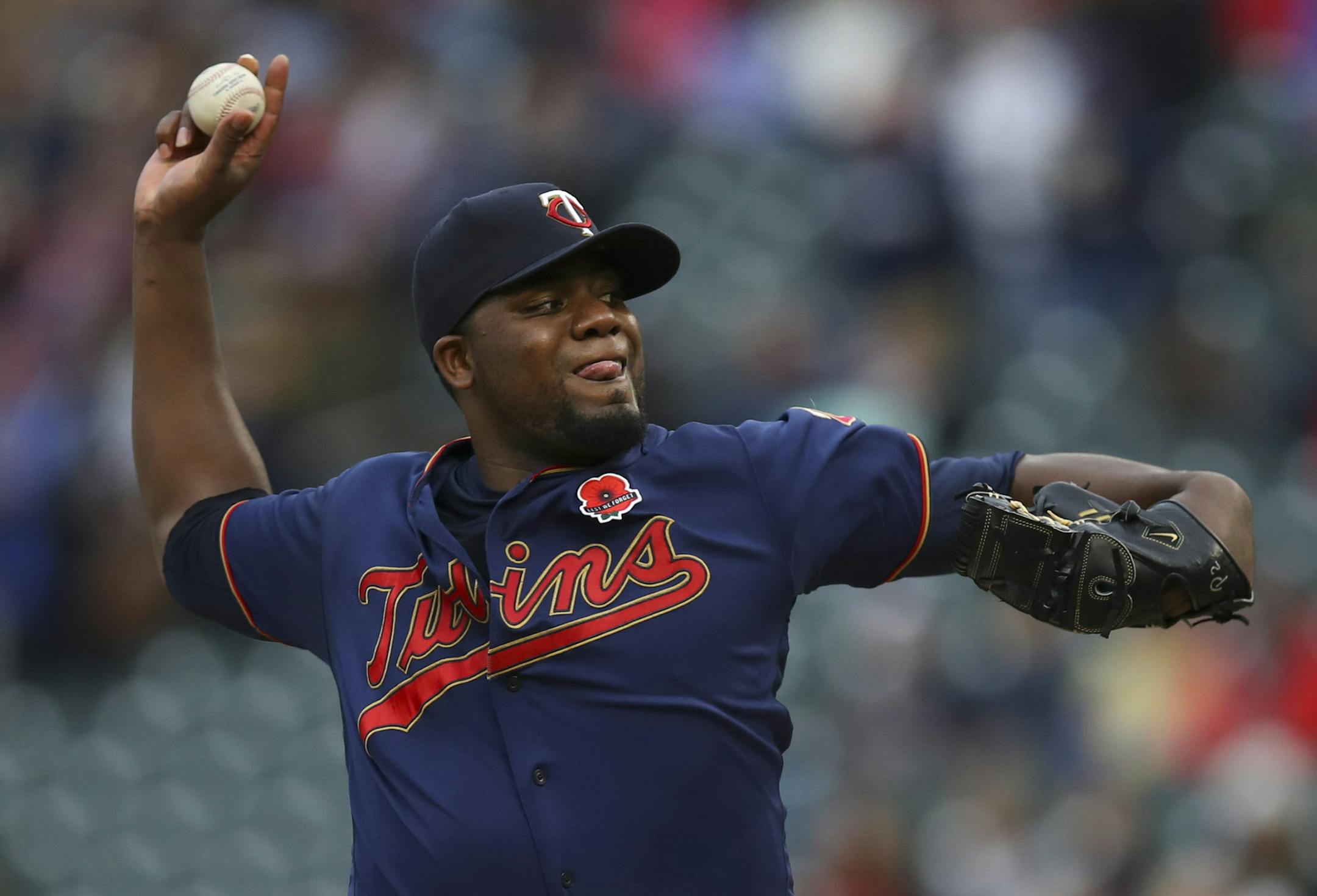
When a first-place team loses a member of its starting rotation to the injured list, especially the day after he retired 18 of the 21 batters he faced, it would be easy to portray it as a crisis.
For the Twins? Routine maintenance.
Michael Pineda, fresh off producing five 1-2-3 innings against the Brewers one night earlier, went on the injured list Tuesday — not with any urgent medical condition, but with the desire to avoid one. Pineda's right knee, which required arthroscopic surgery last September, has been annoying him for a couple of weeks, and the Twins, mindful that a 6-8, 280-pound athlete figures to have knee issues, have been planning to give him a break to let the soreness subside.
With two days off scheduled for the next week, minimizing Pineda's absence, this struck the Twins as an opportune time to give him a midseason vacation.
"This is more a maintenance issue for us going forward," Twins manager Rocco Baldelli said. "It's not in response to anything that's happened over the last day or week or anything like that. It's something that has been on Mike's mind and our minds, something that we knew we would have to take care of."
It also allows the Twins to give a two-day break to the rest of their rotation. By calling up Devin Smeltzer to start Tuesday — he threw six scoreless innings, giving up three hits — Martin Perez's start was pushed back to Thursday, with the rest of the rotation following in order.
Midseason breathers is a concept that has gained currency in other sports, too; LeBron James, another 6-8 athlete with a job that puts stress on his knees, has occasionally taken a week or two to preserve his health and keep any nagging pain from becoming chronic. The Twins have a few other players who might benefit from a week off, too; catcher Jason Castro, for instance, missed five months last season after requiring knee surgery.
But "I would say it's not going to be a routine thing," Baldelli said. "We just try to pay attention to our players, along with our medical staff. … There probably is a little bit more of a preventative thought process these days than there was even 10 or 15 years ago, but it makes a lot of sense."


