

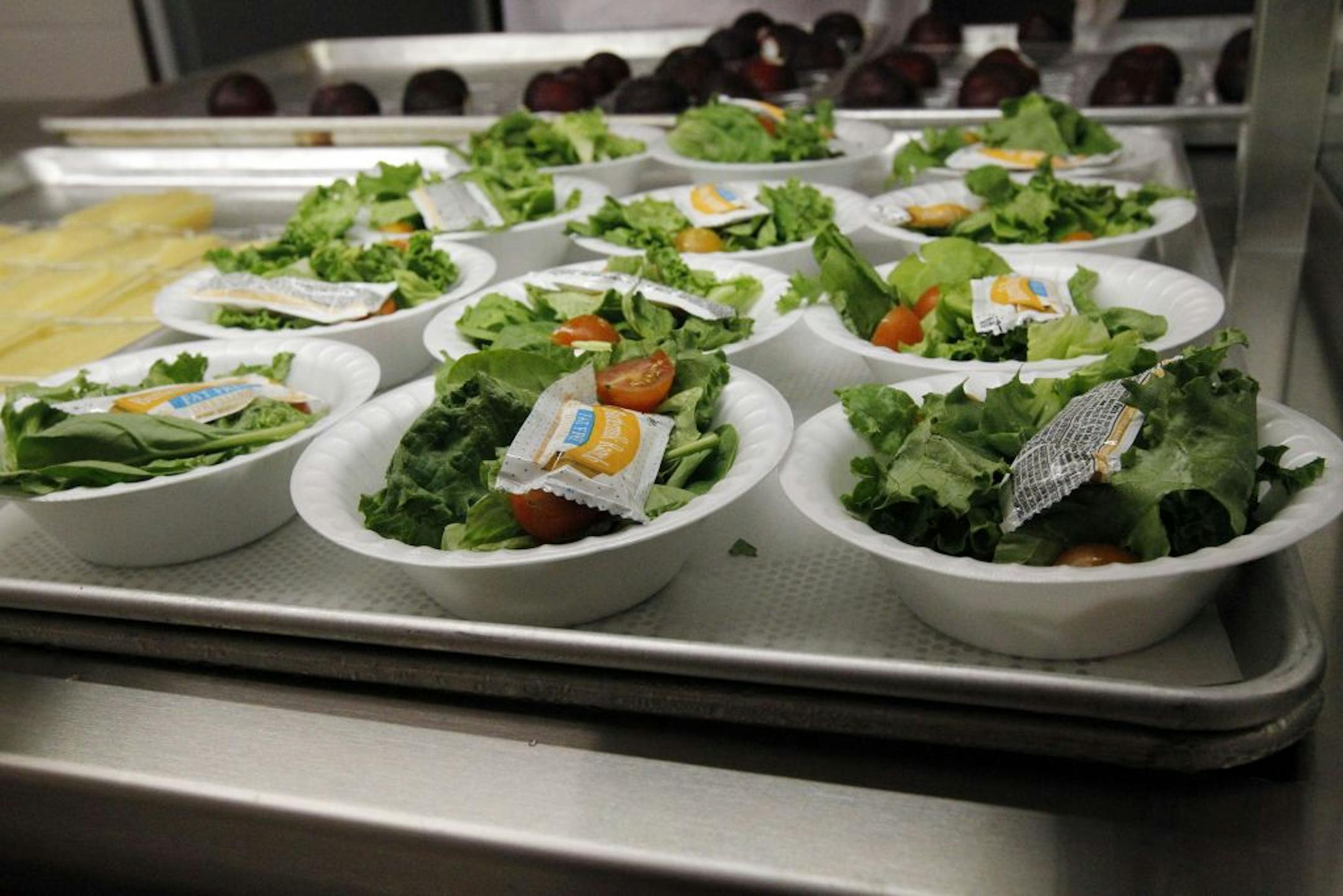
The used lunch trays Emily Fox took home about four years ago from the loading dock outside her elementary school were gross, some still plastered with ketchup.
Emily stacked the trays in piles of 10. She wanted to know just how many polystyrene lunch trays Piney Branch Elementary School students went through in a day. "Three hundred and twenty-five," said Emily, now 12. "And they all go into the incinerator and get burned and it's very unenvironmental."
For more than four years, Emily and other members of the Young Activist Club in Montgomery County, Md., have been asking the board of education for a dishwasher at Piney Branch. They want to phase out foam for something greener, but their lobbying and fundraising, which has netted more than $10,000, have yielded little success.
From Maryland to Illinois to California, environmentally minded students are pushing to remove polystyrene trays from cafeterias and replace them with compostable, reusable or recyclable alternatives. But change has been slow. School districts say that they want to go foam-free but that tight education budgets, infrastructure limitations and the relatively high prices of Earth-friendly materials are often insurmountable hurdles in difficult economic times.
'Very resistant to change'
For decades, environmentalists have shunned polystyrene because it is slow to biodegrade and litters oceans and landfills.
Corporations and municipalities have taken note. McDonald's stopped using foam burger boxes about 20 years ago. Jamba Juice plans to replace foam cups with paper ones in its stores nationwide by the end of 2013. And hundreds of cities and towns have passed laws banning polystyrene food containers. But reform has been spotty for the nation's school systems.
"We tend to be very resistant to change," said David Binkle, director of food services for the Los Angeles Unified School District. "We're very rigid."


