

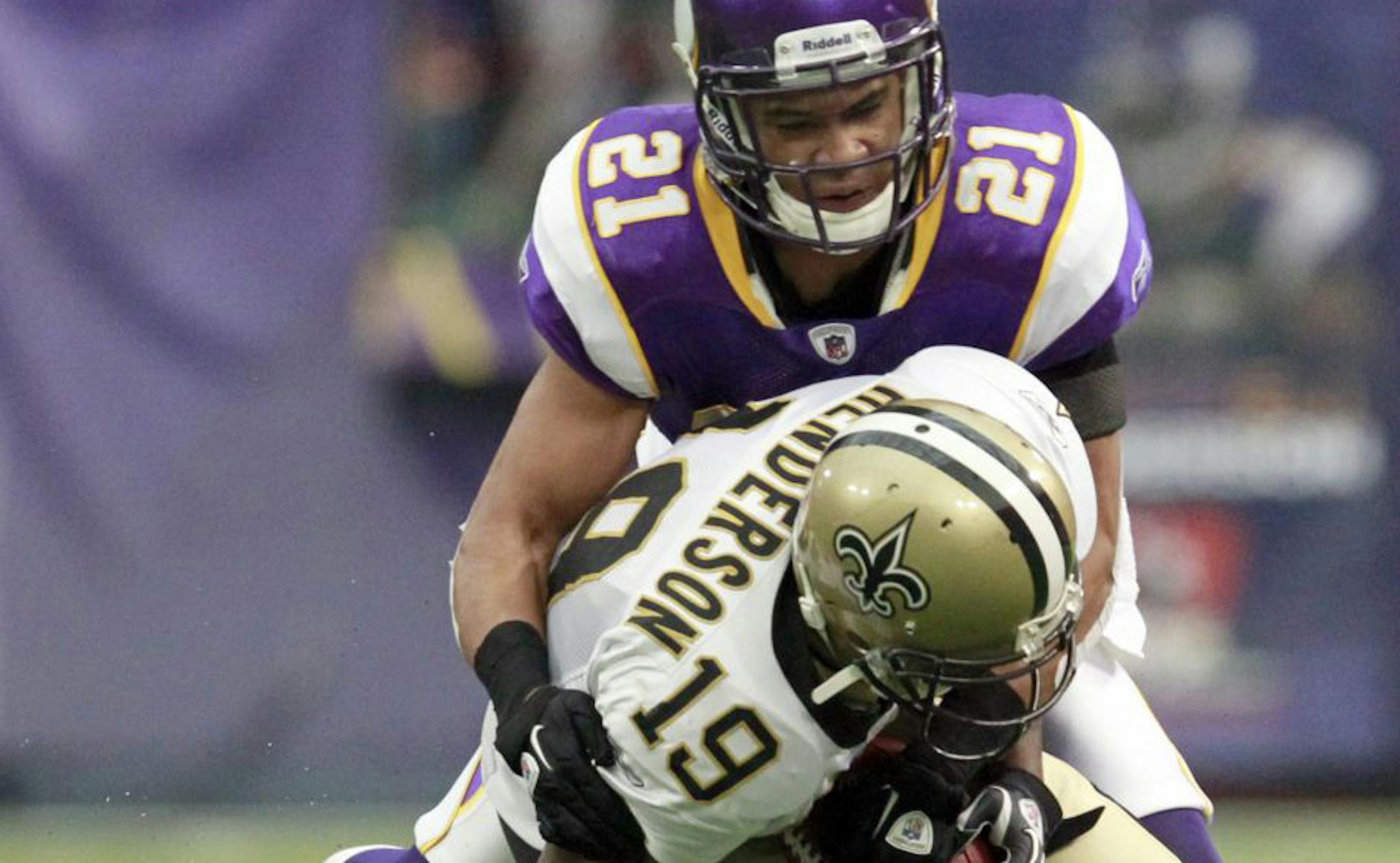
Who knows exactly when Asher Allen suffered his concussion Sunday. Yes, it was some time in the first quarter. Maybe it was on Allen's seemingly routine tackle of Saints receiver Marques Colston, a play that left the Vikings cornerback flat on his back momentarily and feeling a bit off.
But maybe that was just the thump that exacerbated the shot he had taken two plays earlier when bringing down 225-pound running back Chris Ivory.
What Vikings coach Leslie Frazier knows for sure is that when Allen stood up after tackling Colston, he didn't seem all there.
So Frazier called to Allen, trying to get him off the field. Only Allen didn't respond immediately.
"I asked him the other day, 'Could you hear me yelling your name to get off?'" Frazier said Wednesday. "He said, 'I could hear somebody yelling. But I didn't know where it was coming from -- in the stands or where.'"
This is the modern-day NFL, where head injuries might not be significantly more prevalent than they were years back. But they certainly are drawing greater attention -- from all angles.
Thanks to a mini-controversy in Cleveland, where two weeks ago quarterback Colt McCoy wasn't tested for a concussion and continued playing after absorbing a vicious helmet-to-facemask blow from Pittsburgh's James Harrison, the NFL installed yet another safety measure this week to monitor head injuries more closely.
From this point forward, a league-appointed certified trainer will be in the press box of every NFL game, in charge of monitoring head injuries while staying in close contact with both sidelines.


