

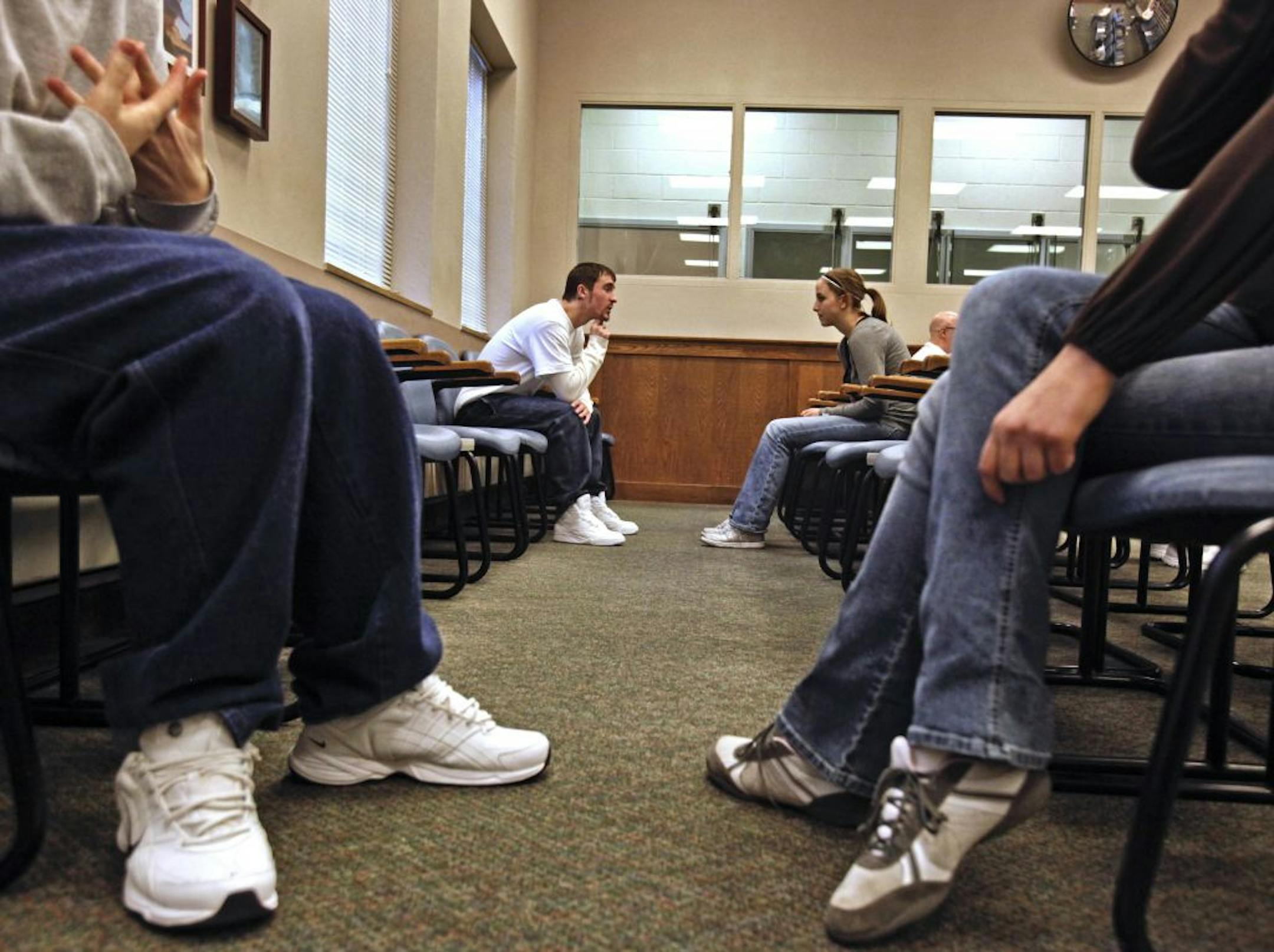
Ezra Ayala, finishing out a prison term for felony theft, placed a quick kiss on his fiancée's cheek, gave her a squeeze and walked off with a memory he could hold into the night and beyond. The smear of her mascara stained his shirt.
Across the visitor's room at the Stillwater Correctional Facility one day last week, about 10 other inmates finished up their visits -- quiet moments spent in the effort to keep relationships intact, figuring out how to pay the heat bill, and shuffling the myriad problems facing families and friends who are kept apart by bars.
"It makes you realize how they expect you to work to get your life back on track," said Ayala, 21. "There are a lot of people here [who] don't know how to connect to anyone because they have no one who comes to visit them. I'm fortunate. I get a visit on every visiting day."
It turns out those visits, though they seem mundane, play a significant role in improving public safety and reducing corrections costs.
Inmates who receive regular visits from family, friends and volunteers are much less likely to be convicted of a felony once they leave prison because they develop strong support networks while imprisoned, according to a study just completed by the state Department of Corrections (DOC).
Although it may seem obvious, the finding could trigger changes across Minnesota's state prison system. It will likely prompt the Corrections Department to extend visiting hours, address decrepit conditions in visiting areas and reach out for volunteers to spend time with prisoners who've been abandoned by family.
"The ability to make a successful transition from prison to rebuilding a normal life can be measured by visits and shows there are significant savings in public safety costs," said Grant Duwe, DOC's director of research. "Just going back to prison for a technical violation of probation violation costs $9,000 a pop, so you can see how it becomes expensive."
Using a sample of 16,400 prisoners released from Minnesota's correctional system between 2003 and 2007, Duwe evaluated the relationship between prisoner visits and recidivism.


