

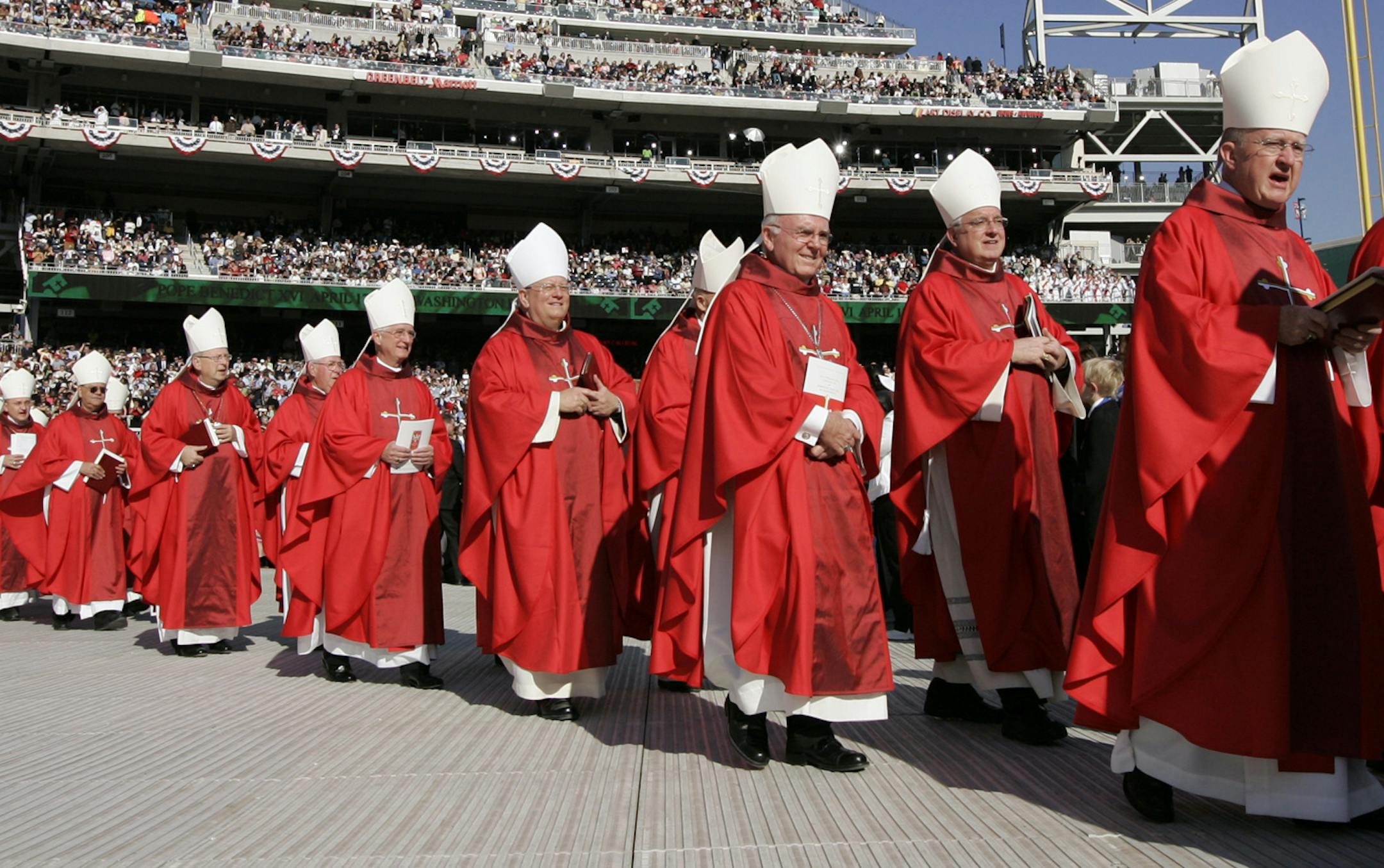
U.S. Catholic bishops have a lot to worry about: the gunning down of children; 11 million undocumented immigrants, many of them Catholic; a warming planet; a chilly economy. Instead they've spent the last year obsessed with contraception.
The bishops are furious over the Affordable Care Act, which generally requires employers to cover contraception. It isn't a novel concept. Nine years ago, 86 percent of the plans that insurance companies typically wrote for employers covered contraception. It's included as part of a minimum standard of coverage by the Institute of Medicine.
Even so, purely religious institutions such as churches were exempted from providing such coverage. The bishops wanted a wider exemption for all religious organizations, not just those whose main purpose was the "inculcation of religious values" and whose employees were primarily Catholic.
And so President Barack Obama promised a year ago -- with a nudge from Vice President Joe Biden, a Catholic -- to reconsider. He pledged that he would expand the institutional exemptions. At the time, his critics portrayed this promise as a craven ploy to get him beyond the election. Newt Gingrich, then a Republican candidate for president, predicted that Obama would continue his battle against the church "the morning after he is re-elected."
Picking Fights
Wrong. Obama was looking neither to buy time nor to pick a fight with the bishops. (It's more likely they were looking for one with him: In 2004, the bishops warned Democratic presidential candidate John Kerry that he would be denied Communion for his pro-choice views. By ostracizing political candidates, they like to enforce beliefs that their parishioners have rejected.)
But Obama kept his word, and last week, in the form of new regulations from the Department of Health and Human Services, the definition of "religious organizations" was expanded to include nonprofit religious groups whose work is inspired by their faith. Employees can still get coverage for birth control, but it will be separate from a religious employer's plan.
A Catholic teaching hospital, for example, may not want to pay for a nurse's birth-control pills. So an insurer will offer a separate policy. The slight premium (slight because insurers save money with fewer accidental pregnancies) will be offset by lowering fees that insurers will pay to be in new health-care exchanges.


