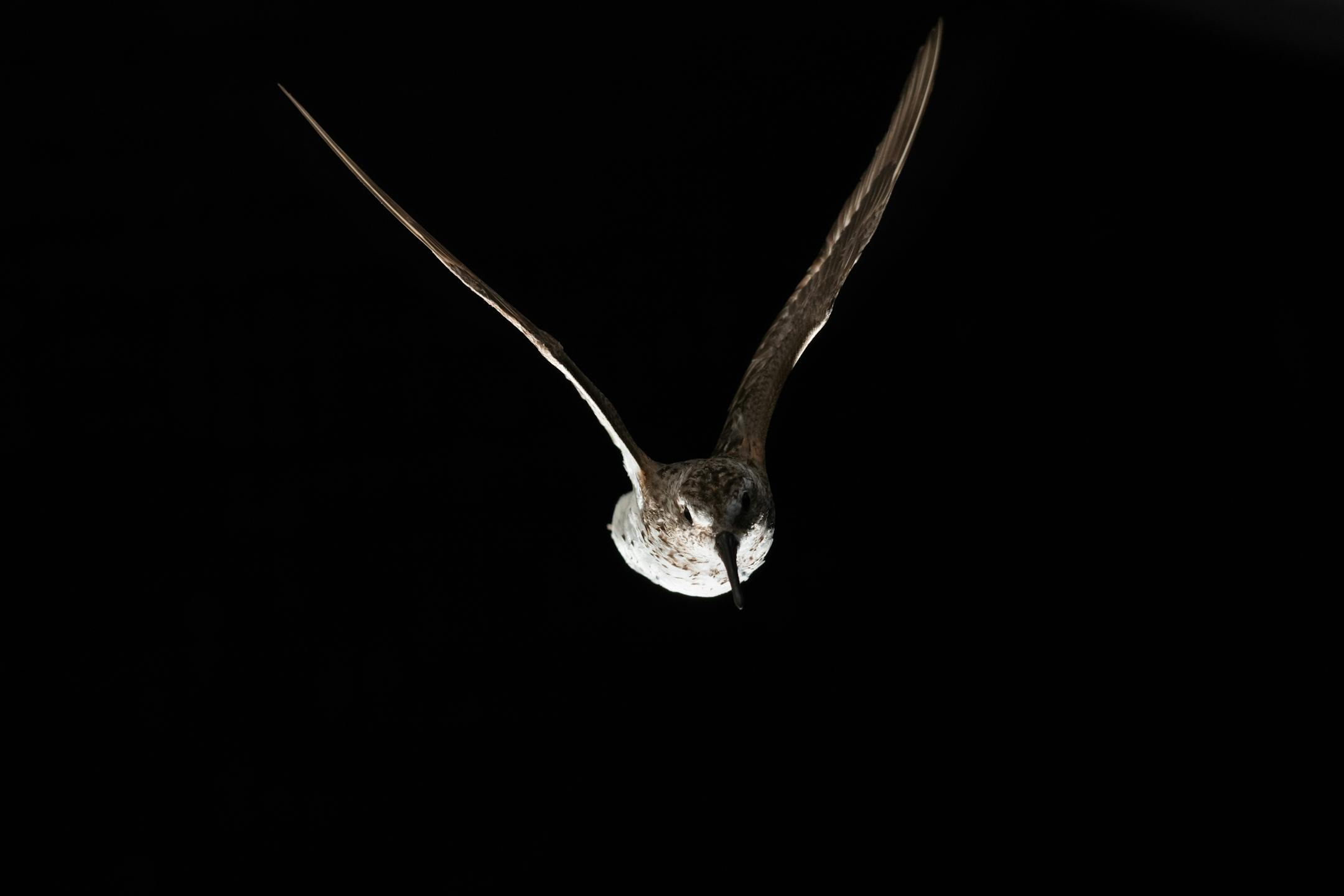
It happens every fall: The days grow colder, the nights grow longer, the birds grow restless, and then they take flight. In North America alone, billions of birds fly south for the winter, sometimes in enormous undulating flocks. It is one of nature’s great spectacles as well as an athletic feat: Some birds regularly migrate thousands of miles or stay aloft for days at a time.
And yet, for a large-scale, annual event, migration remains surprisingly mysterious. Scientists are still seeking answers to basic questions about the costs and benefits of these avian journeys and what it takes to survive them.
“How do you get a bird like a godwit that can fly over the entire Pacific Ocean?” said Christopher Guglielmo, a biologist at Western University in Ontario who studies the physiology of bird flight. “How do they have enough energy?”
And, perhaps more to the point of his own research, he added, “How do you study what’s going on inside a bird?”
It is understandably difficult to monitor the internal workings of a wild bird while it is soaring thousands of feet in the air. So Guglielmo sends his avian test subjects on simulated journeys. At the Advanced Facility for Avian Research, he and his colleagues use a hypobaric wind tunnel, which functions, in essence, as a treadmill for airborne birds.

Scientists can send air through the main test chamber at varying speeds, up to about 40 mph. Not all birds take to the tunnel — “about half of them will be good flyers,” Guglielmo said — but those that do can flap their wings for hours at a time while remaining, conveniently, in one place.
Researchers can adjust not only the wind speed inside the tunnel but also the temperature, humidity and air pressure to simulate different flying conditions and altitudes. They can study the physics of flight, mapping how air flows around the bodies of different birds, or focus on avian physiology: How does a bird’s breathing change at higher altitudes? How does diet affect flight performance?
Answering these questions will help scientists grasp what birds are capable of and what their limits are. It could also help to predict how wide-scale environmental changes from pollution and global warming might affect the ability of birds to survive long-haul journeys.