

The paradox of the NHL's rules for challenging on-ice calls is this: It's the best system in major U.S. pro sports, but it's designed to legislate what is often a completely confusing and subjective offense.
I love that an unsuccessful challenge results in a delay of game penalty. That's fair punishment for stopping the flow of the game and makes it so a coach better be awfully sure of his reasons for doing it.
The NFL takes away a timeout if a call isn't overturned. Let's make it a timeout and a 15-yard penalty. The NBA takes away a timeout, which leaves teams with just 42 timeouts left if they don't succeed. MLB doesn't even bother doing anything except take the challenge away, which is probably why managers initiate challenges for micro-aggressions that trigger replays which take forever.
Because an NHL challenge has such high stakes, the results are huge momentum-swinging plays. I talked about that on Thursday's Daily Delivery podcast after the Wild's 3-0 victory over Vegas forced a Game 7 in that series.
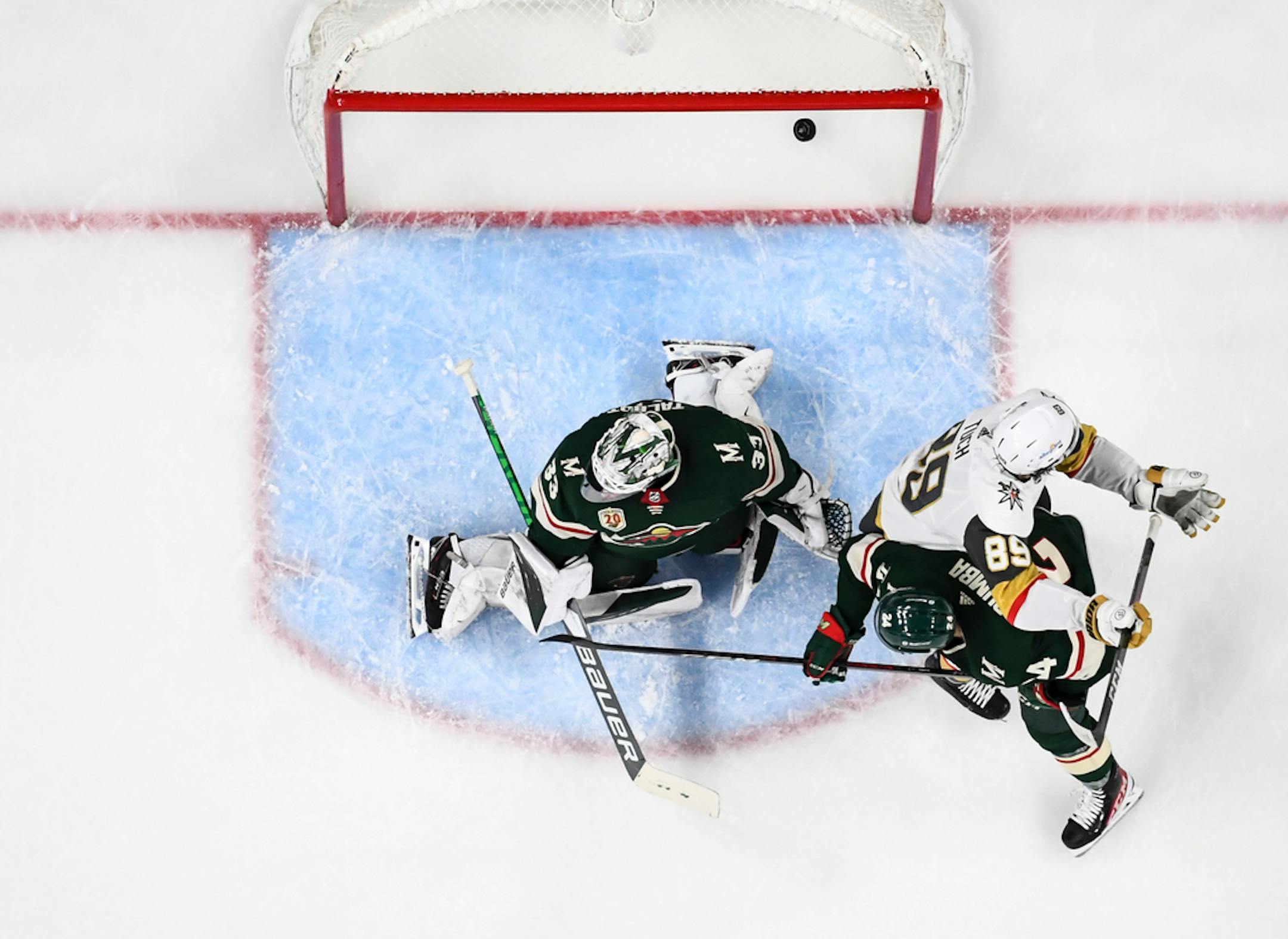
In that game, the Wild led 1-0 in the third period when Vegas scored the apparent tying goal. Officials conferred, determined Alex Tuch interfered with Wild goalie Cam Talbot, and disallowed it. Golden Knights coach Pete DeBoer challenged the call, which was probably a reaction that was half-emotional and half-practical.
Nobody really knows what constitutes goaltender interference, and it was a pivotal play in a game that could have won the series. But it sure looked like interference — and was upheld as such on review.
The Wild not only kept its slim lead but got a power play out of it — with Kevin Fiala's goal on the man advantage staking Minnesota to a 2-0 lead in its eventual victory.
It was the opposite emotion, of course, from Game 3 — when the Wild's Nick Bjugstad was (correctly) found upon review to have entered the zone off-side, nullifying a goal that would have given the Wild a 3-0 lead. Vegas rallied for five consecutive goals after that game-changing moment.


