

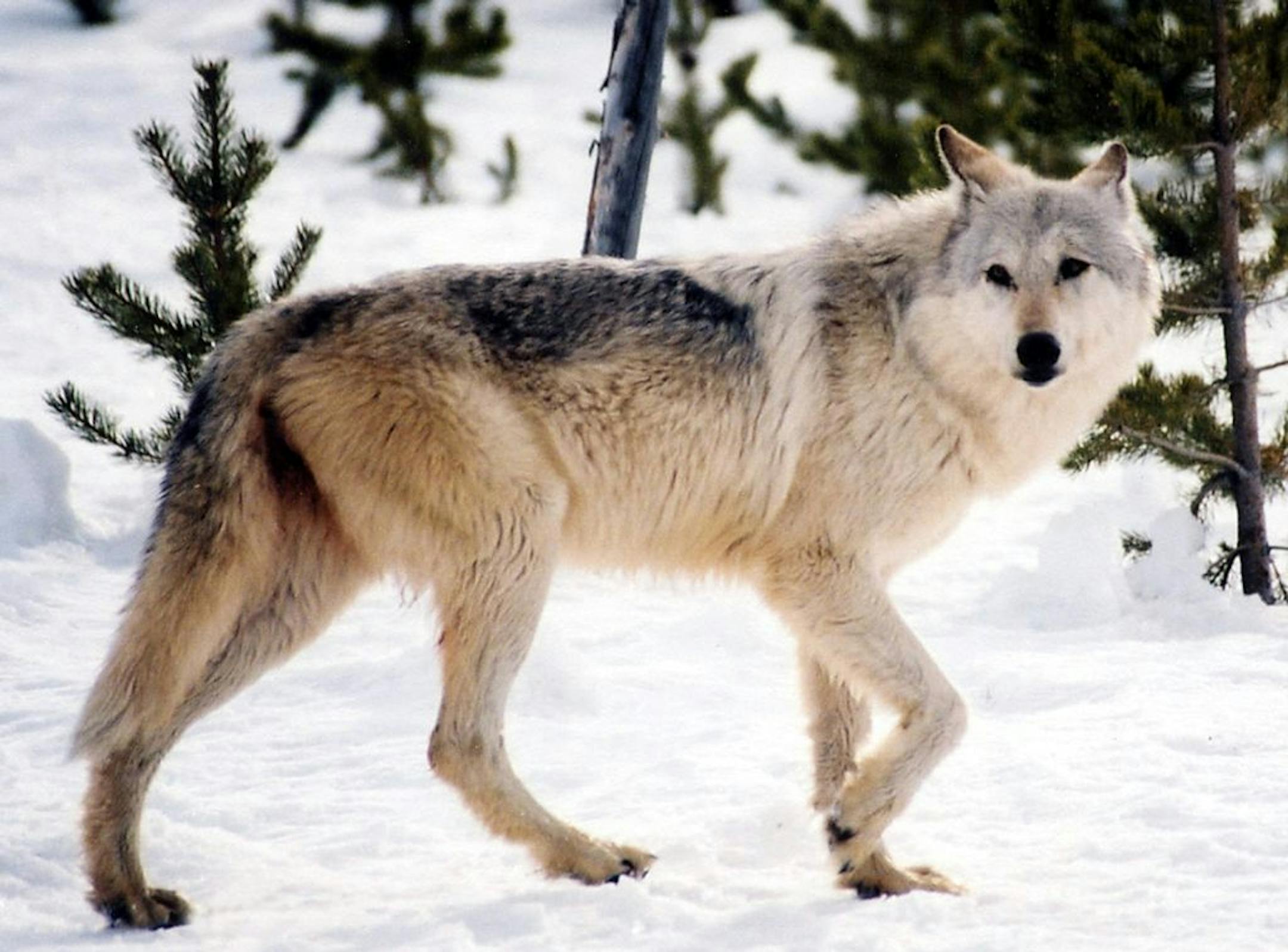
The Great Lakes gray wolf is back in federal court.
Four wildlife advocacy groups filed suit Tuesday against the U.S. Fish and Wildlife Service, seeking to put the predator back on the federal endangered species list less than a year after it was removed.
Actions by Minnesota and Wisconsin -- including the wolf hunts that began last year -- are central to the suit's argument, which asserts that the wolf is not being adequately protected and that its continued survival is in jeopardy.
Placing responsibility for the wolf's survival in the hands of state governments "paves the way for the same state-sponsored eradication policies that pushed this species to the brink of extinction in the first place," said Jonathan Lovvorn, senior vice president at the Humane Society of the United States.
The suit was filed by the Humane Society, Born Free, and two Minnesota organizations, HOWL and FATE.
Officials from the U.S. Fish and Wildlife Service and the Minnesota Department of Natural Resources (DNR) declined to comment on the suit, which had been expected since October, when the Humane Society notified the agency of its intent to challenge the de-listing.
The suit says that already hundreds of wolves have been shot and trapped, and that Wisconsin allows dogs, snares, night hunting and leg-hold traps. Minnesota, it says, failed to implement a five-year hunting moratorium that was part of its wolf-management plan. State wildlife officials have said that it took so long for the wolf to be de-listed after the management plan was crafted that the moratorium wasn't necessary.
State officials have also said that Minnesota's first-year quota of 400 animals is not enough to threaten the population, because wolves can easily replace that number through reproduction.


