
Architectural change may cost bragging rights

May 11, 2012 at 12:58AM
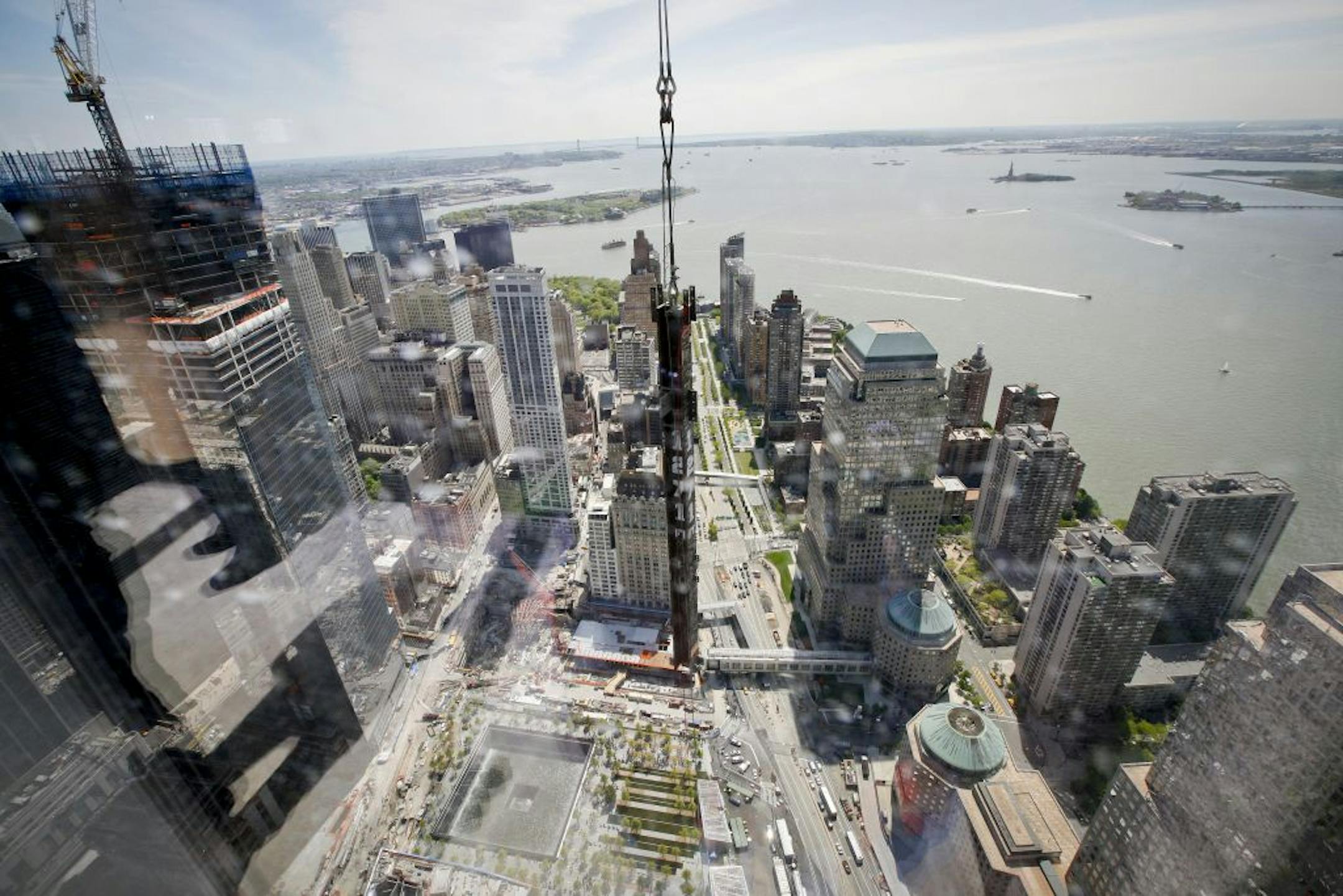
A beam is raised to the top of One World Trade Center, with a World Trade Center tower footprint visible below, in New York, on April 30, 2012. With the beam placed to begin the 100th floor, the tower became the tallest in New York, surpassing the Empire State Building.
A beam is raised to the top of One World Trade Center, with a World Trade Center tower footprint visible below, in New York, on April 30, 2012. With the beam placed to begin the 100th floor, the tower became the tallest in New York, surpassing the Empire State Building. (New York Times/The Minnesota Star Tribune)

A change to the design of a needle that will sit atop One World Trade Center in New York is raising questions about whether the building will still be the nation's tallest when completed. The 408-foot-tall needle, in a rendering at right, will no longer be enclosed in a fiberglass-and-steel shell called a radome because the developer decided it would be impossible to maintain or repair. Without the spire, One World Trade Center would be 1,368 feet -- shorter than the Willis Tower in Chicago, currently the tallest building in the United States at 1,451 feet, not including its antennas. The Council on Tall Buildings and Urban Habitat in Chicago will decide the matter.

about the writer

about the writer

More from No Section

See More
FILE -- A rent deposit slot at an apartment complex in Tucker, Ga., on July 21, 2020. As an eviction crisis has seemed increasingly likely this summer, everyone in the housing market has made the same plea to Washington: Send money — lots of it — that would keep renters in their homes and landlords afloat. (Melissa Golden/The New York Times) ORG XMIT: XNYT58
Melissa Golden/The New York Times

It’s too soon to tell how much the immigration crackdown is to blame.