

WASHINGTON – The temporary truce in the trade war between the United States and China may come too late to reverse damage to Minnesota's critically important agricultural sector from existing tariffs that remain in place.
The Trump administration was set to raise levies from 10 to 25 percent on $200 billion worth of Chinese imports on Jan. 1. That increase is now off the table until March 1 under an agreement the two countries reached over the weekend.
However protective tariffs remain in force on $250 billion worth of Chinese imports to the U.S., as well as retaliatory tariffs on $110 billion worth of U.S. products sold to China, including soybeans.
"There is no question that getting rid of Chinese barriers to U.S. businesses does help," said Robert Kudrle, an international trade specialist at the University of Minnesota. "But businesses demand certainty. The Chinese announcement doesn't mention intellectual property, and they don't talk about deadlines."
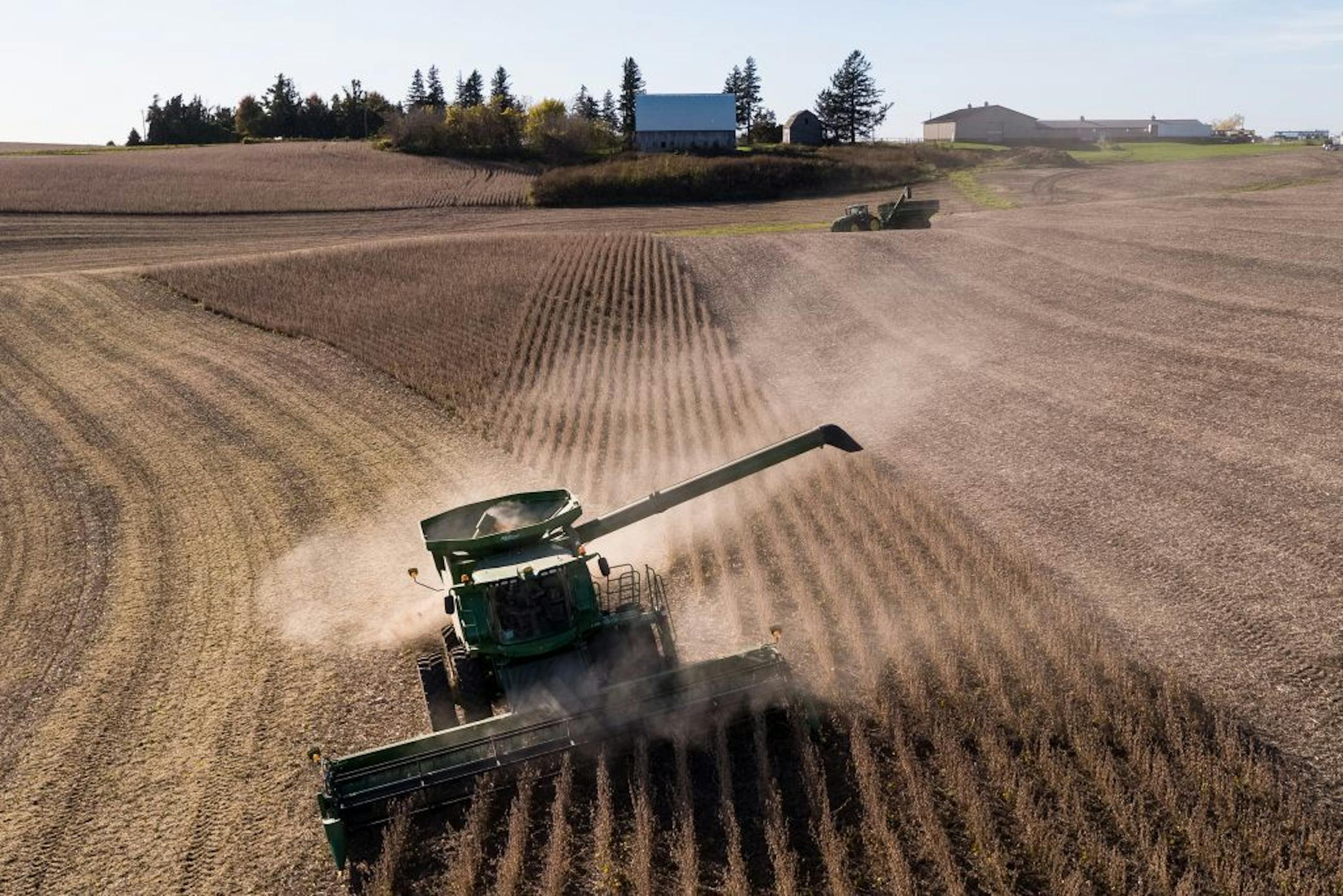
For farmers like Lance Peterson, who right now cannot break even on the sale of a bushel of soybeans because of oversupply, weather and tariffs, time is running out. Through the first seven weeks of the 2018-2019 marketing year, shipments of soybeans from the U.S. to China are down 97 percent from last marketing year.
"The damage is already done in a lot of sectors," Peterson said from his farm in west-central Minnesota. "A large number of farmers, including me, are looking to refinance. Suspension [of new tariffs or increases in existing tariffs] does nothing. I'm not making money. I'm just trying to control my losses."
For agricultural lenders looking at projected soybean prices below break-even levels, the truce "doesn't really change anything," said Kent Thiesse, a vice president and farm loan specialist at MinnStar Bank in Lake Crystal. "It puts things on hold."
The U.S. stock market rallied Monday on the U.S.-China trade news, with the Dow Jones industrial average rising 287 points. Russell Price, chief economist for Minnesota-based Ameriprise Financial, said the market was responding to the effort to give both sides time to address tangible issues.


