

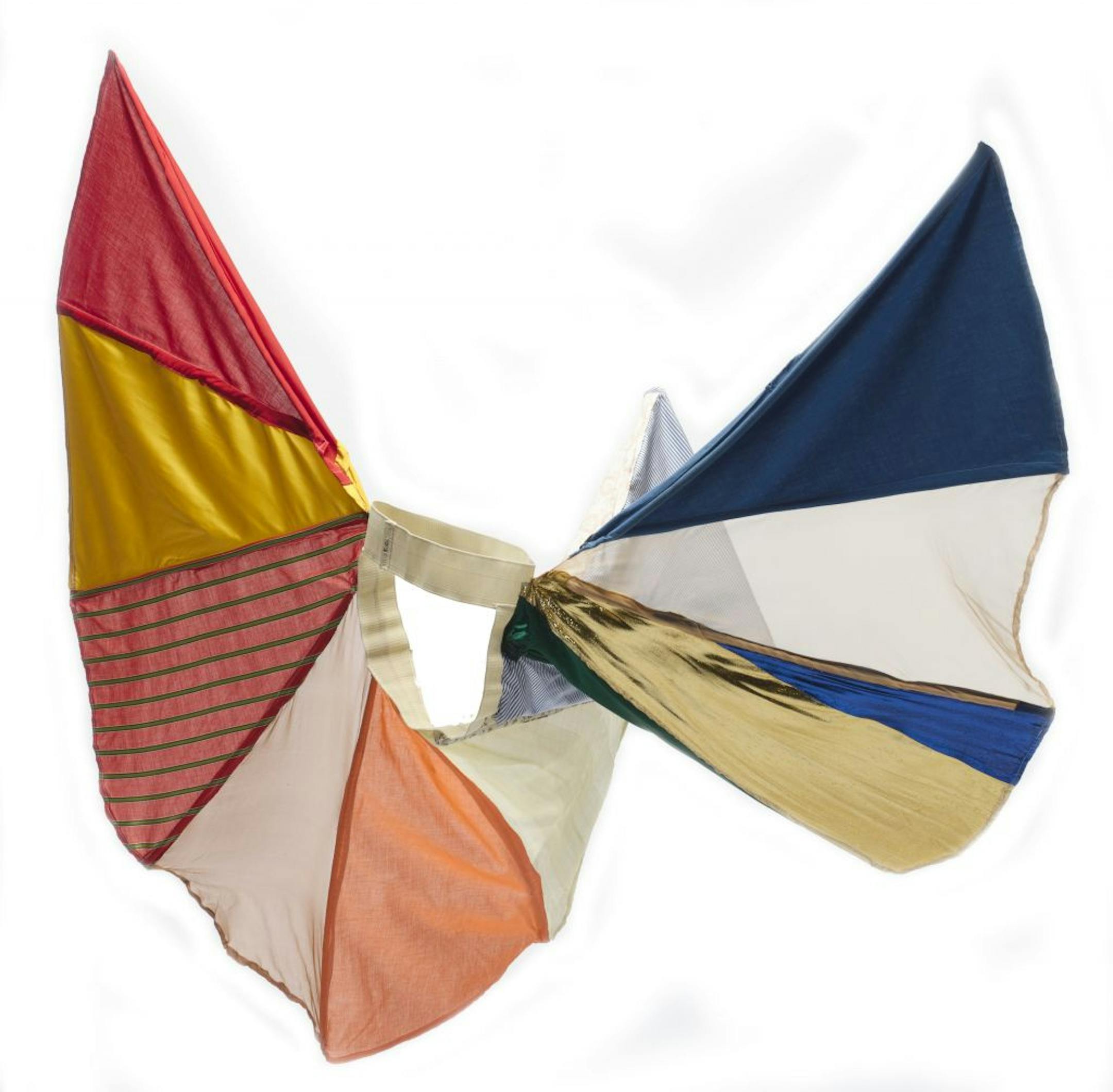
Robert Rauschenberg's costumes for the Merce Cunningham Dance Company never had it so good. Instead of covering sweaty bodies as they leap and pirouette, the leotards and tights he hand-painted 50 years ago are now lodged between sheets of acid-free paper in a vast, climate-controlled storage room at Walker Art Center.
"Yes, they're art now," laughed Darsie Alexander, the Walker's chief curator, referring to the late Rauschenberg's designs for the Cunningham Company. Alexander organized the works into a show that opened this week.
The exhibit, which runs through April 8, features costumes, props, stage curtains and other art by Rauschenberg, along with videos of performances and interviews about Cunningham and his company. The Walker acquired the dance material in March from the Cunningham Foundation, which was established after the dancer's death in 2009. This is the first of several small "dance works" exhibits the Walker has planned leading up to a major Cunningham show in 2015.
The curatorial fussing is a far cry from the way Alexander found the costumes in the basement of a New York warehouse.
"I don't want to use the word decrepit, but it was definitely a well-used environment," Alexander said. "There were things in duffle bags, and that amazing sailcloth that Rauschenberg made was folded up in a suitcase. There were sad moments as we were excavating when I was afraid that some important things might have been lost."
To be clear, the stuff wasn't exactly entombed in an archeological dig.
The Cunningham troupe shares a building near Greenwich Village in lower Manhattan. Dancers rehearse on the top floor while administrators work on the main floor. A basement prop shop houses most of the artifacts and costumes. The company plans to disband in December at the end of a two-year farewell tour, but the offices and foundation will continue as a resource for dance scholars.
"The shop has racks filled with every imaginable article, from props to painted drops and several generations of costumes, because new costumes needed to be made to fit each new dancer's body," Alexander said. "Everything was all jumbled together, though sometimes initials in the neck of a jersey would say M.C. or C.B. for Merce or Carolyn Brown [a principal dancer]."


