

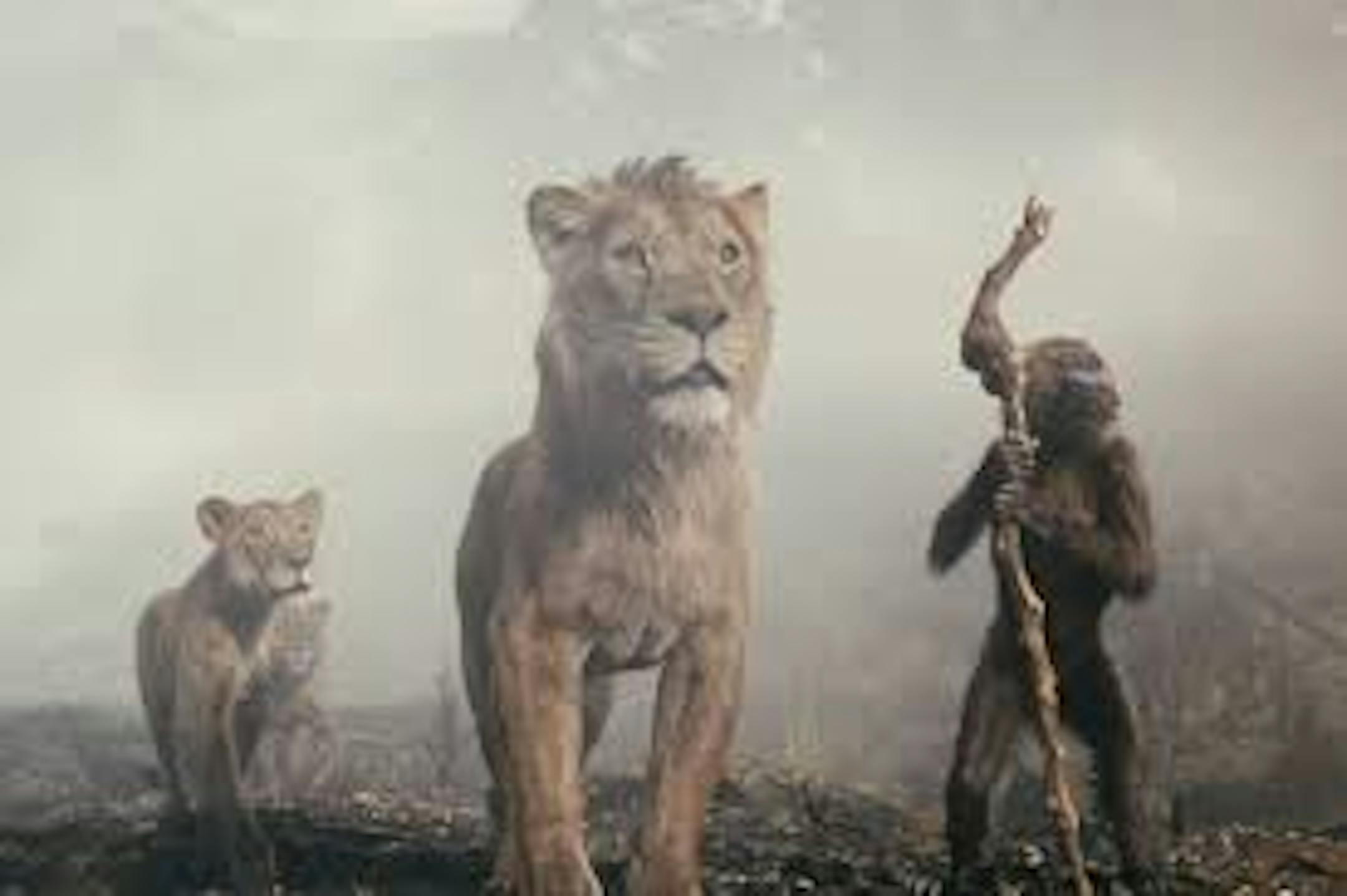
Barry Jenkins truly is a miracle worker.
The Oscar-winning director of the intimate indie “Moonlight,” the romantic period drama “If Beale Street Could Talk” and the Amazon series “The Underground Railroad” isn’t the first filmmaker who comes to mind to tackle the prequel to Jon Favreau’s poorly received 2019 remake of the beloved animated feature “The Lion King.”
And yet, somehow, Jenkins and his creative team — including his longtime collaborators, cinematographer James Laxton and editor Joi McMillon — make magic with “Mufasa: The Lion King,” offering up a visually dazzling and emotionally affecting coming-of-age story about Simba’s father, whose death traumatized an entire generation of kids in 1994.
There were elements of the 2019 “The Lion King” that were traumatizing, too, having to do with the conceit of transposing this familiar story onto photorealistic animals, who then sang. That mental hurdle still presents as an obstacle.
In “Mufasa,” as we’re jarred into the reality of this cinematic world where stunningly accurate representations of African wildlife speak — nay, elocute — and of course, sing (songs by Lin-Manuel Miranda). It’s a big leap to make, but it’s a testament to the absorbing story and the gorgeous and beautifully staged visuals that the leap isn’t so difficult to land.
The script is also by 2019 “The Lion King” writer Jeff Nathanson, but he’s been liberated from making a line-for-line remake of the original. He is able to imagine the story of how Mufasa and Scar became brothers, and then how they became enemies.
We’re plunged into the action right away, as we keep up with the harrowing journey of the tiny lion cub Mufasa (Braelyn Rankins; Aaron Pierre voices the grown Mufasa).
Mufasa’s coming of age is framed by Rafiki (John Kani), the mystical mandarin, imparting the tale to Kiara (Blue Ivy Carter), the cub of Simba (Donald Glover) and Nala (Beyoncé Knowles-Carter).


