

Coconut bras. Grass skirts. Smiling Hawaiian women.
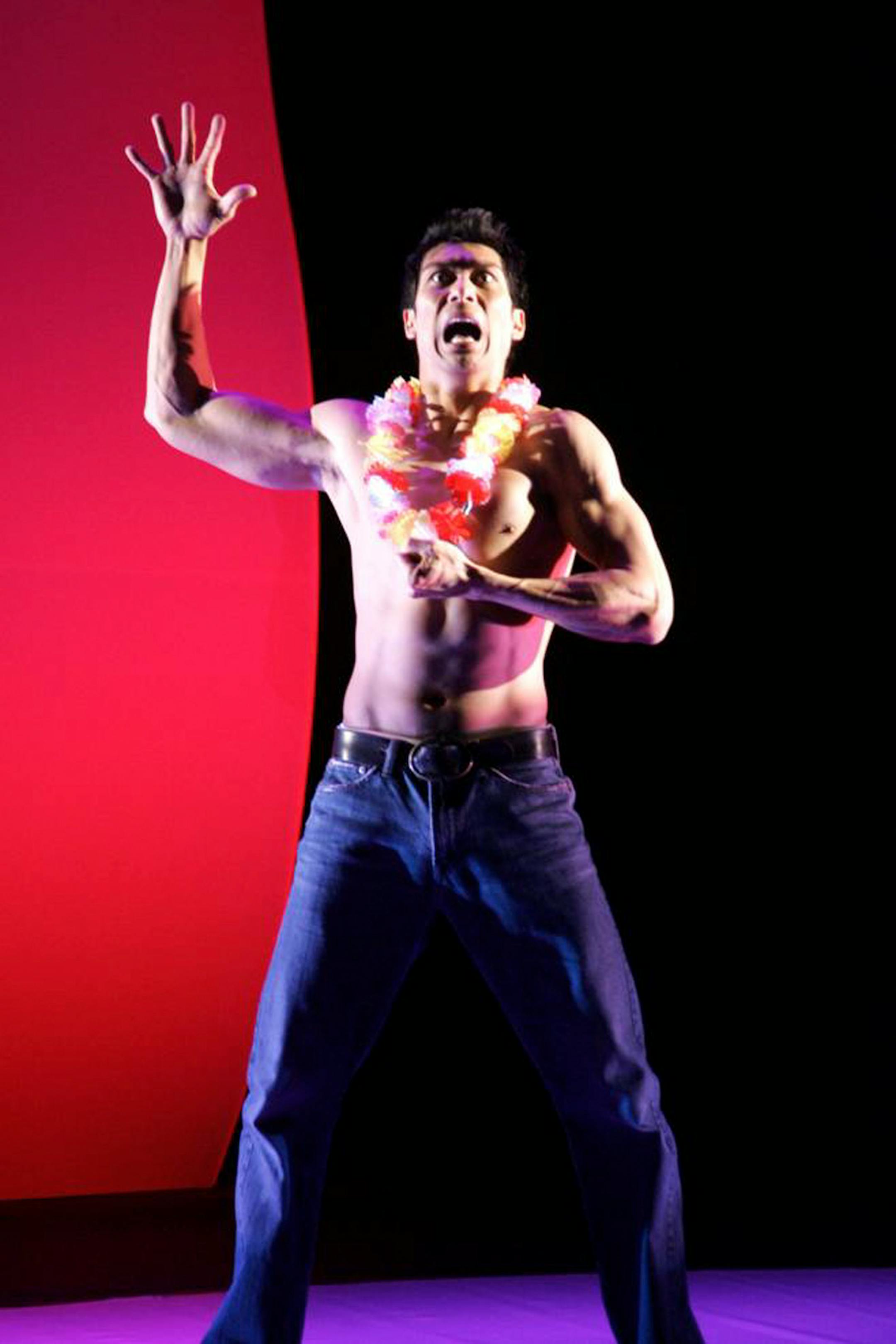
That's the Western version of hula dancing -- which gets blown out of the water in this weekend's stage show called "I Land."
The touring one-man play is the autobiographical story of its writer and star, Hawaiian native Keo Woolford. In the tale, which follows him from boy to man, he exudes a hip-hop attitude as he searches for identity in a homeland transformed by decades of Western tourism.
His vehicle for self-discovery? Hula dancing. But for a buff football player and wannabe hip-hop dancer growing up in Honolulu, hula wasn't exactly the "manly" thing to do.
Luckily, Woolford's first hula teacher (he calls him "hula god") told him different.
"The way we were taught is that hula came from the Hawaiian martial art called Lua, which is a bone-breaking martial art," Woolford said by phone from Los Angeles.
It was also spiritual, a sacred dance performed for Hawaiian royalty.
"I Land" comes to Minneapolis as part of Pangea World Theater's Indigenous Voices series (playing at Intermedia Arts). Like American Indians on the mainland, Hawaii's indigenous people were overcome by European and American colonizers who came to the islands in the 1800s. Missionaries persuaded Hawaii's rulers to ban hula dancing, Woolford said. Seeing hula's economic potential in the 20th century, however, American businessmen "watered it down and it started to morph into that touristy thing."


