

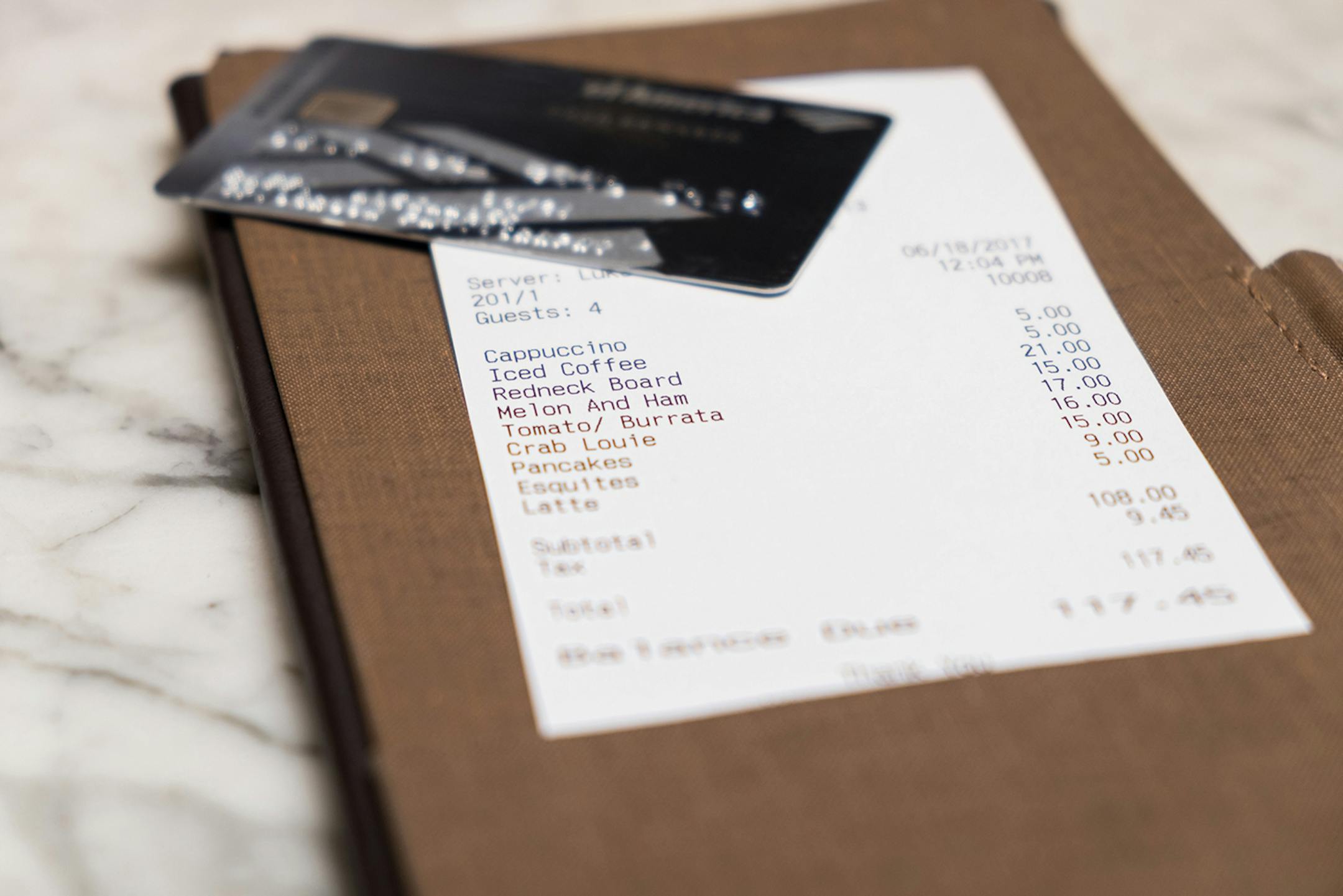
A recent Wall Street Journal article on the evolving credit card market sent me checking to see which card I actually carried. Credit cards are so boring I had no real idea, despite being urged repeatedly on TV to check what's in my wallet.
This card turned out to be so fancy it had to have two registered trademarks — the U.S. Bank FlexPerks® Travel Rewards Visa Signature® Card. I also had to look up the current interest rate, and it's not bad, at just 11.74 %.
It was surprising that it was not closer to the industry average, something like 17%. That's what got me thinking about who might be benefiting the most with changes in the credit card market. It might be me. It's certainly not our kids.
One of the main points of the Journal's article is that a segment of bank customers has grown very fond of grabbing the rewards points generated by using their credit cards. Paying for these rewards is costing the banks more, so banks that were already charging very high interest rates have been increasing them.
This is happening in a very low interest rate environment, when the money banks are lending out via these credit cards costs them very little. The difference between those rates, the net interest margin on credit cards, has never been higher, as reported by the consumer finance site WalletHub.
About 20 years ago, when the average rate on charge cards was not quite 15%, the industry's net interest margin was 6.4%. As of the most recent data, that rate has jumped to 11.7%.
A lot of consumers understand how costly these things are, as the Fed reports, from its look into consumer finances, that at least half of cardholders report trying to pay off the balance every month. The Fed data also show an interesting divergence in two lines that in the past were always more or less the same: the average rate, and the average rate on accounts that incurred finance charges.
More recently, the average rate paid on accounts that had balances is quite a bit higher than the average rate for the industry.


