

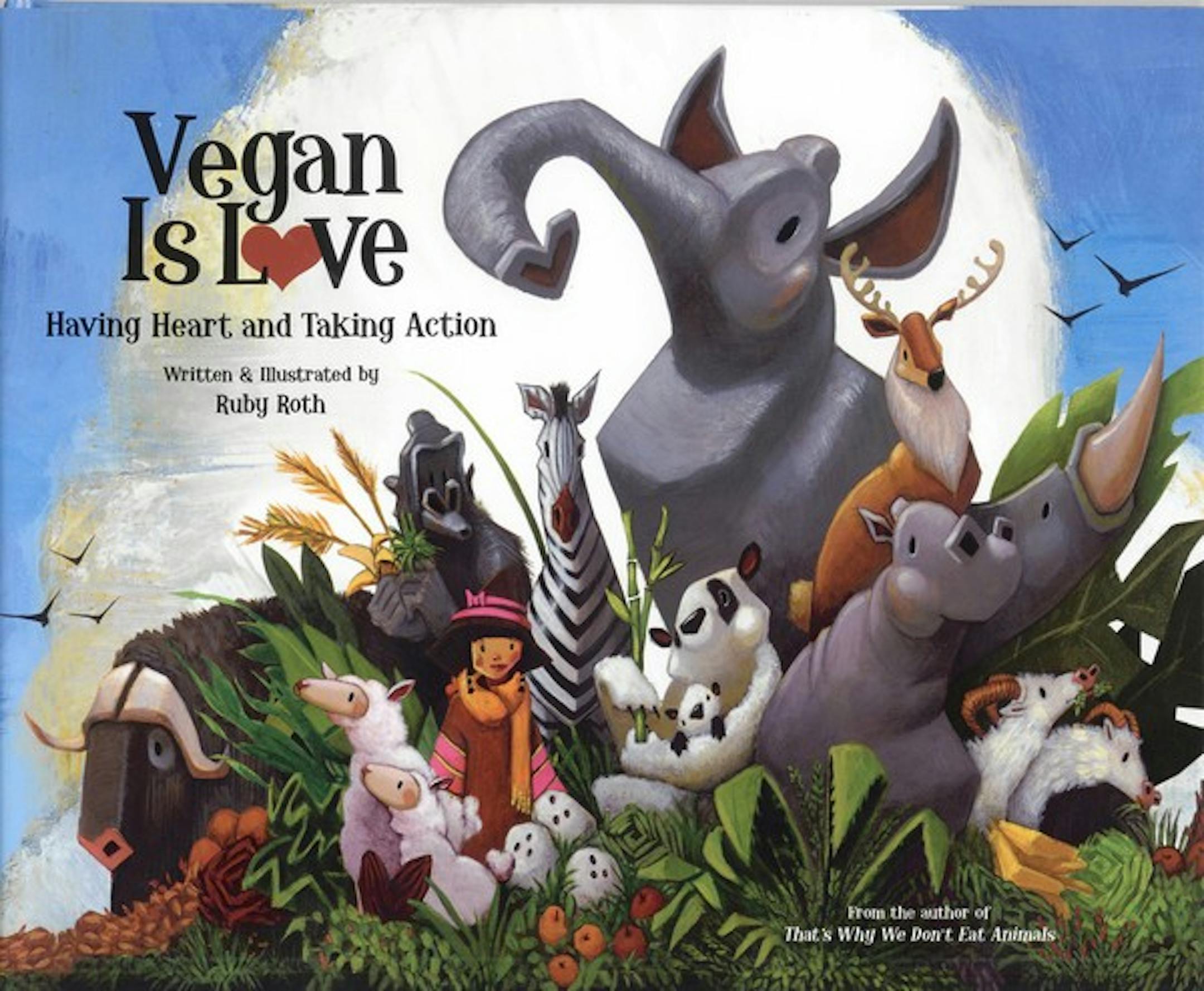
Getting kids to eat healthfully and well is a perennial challenge for parents, especially when the younger set begins to make table choices at odds with the familial norm or, to put it more starkly, flatly refuse to eat what mom and dad have made for dinner. Now comes a new children's book, "Vegan is Love: Having Heart and Taking Action" (North Atlantic Books, $16.95), which may raise tensions in some households.
Written and illustrated by Ruby Roth, the Los Angeles-based author of "That's Why We Don't Eat Animals," this beautifully rendered book offers some ugly observations about how humans often use other species -- as lab animals, clothing, entertainment, food -- and why vegans choose not to do so.
"As vegans, we live this way because it is best for our health, for animals, and for the earth ... and that is love," Roth writes.
But is it "love" to offer this viewpoint in a full-color illustrated children's book? A debate is erupting.
"This is the most disturbing children's book I've ever seen," says Robert Epstein, a psychologist, author and former editor-in-chief of "Psychology Today." He doesn't like anything about the book except Roth's illustrations. "Vegan is Love," he insists, "lays guilt trips on young children. It's a bad way to parent."
"In calling my books 'controversial,' people are admitting what we do to animals is scary, too scary to talk to children about," Roth says. She believes people today stick to a "wealthy Victorian" view of childhood, where children must be protected from the adult world and the harshness found in life.
"In doing this, we're hindering what children are capable of," Roth adds. "This book is for anyone and everyone who want children to love deeply, think critically and act responsibly. You don't have to be vegan to make vegan choices, so there should be no fear."
Marian Nestle, an influential nutritionist and New York University professor, didn't want to comment specifically on the merits of "Vegan is Love" because she hasn't seen it. But she could imagine the scenario that might follow after the book is read by some children.


