The U.S. Supreme Court unexpectedly handed a major victory Monday to supporters of same-sex marriage by letting stand lower court rulings that had struck down bans in Wisconsin, Virginia, Indiana, Oklahoma and Utah.
The court's decision not to hear the gay marriage issue effectively shuts down legal challenges in 11 states and strengthens the likelihood that a majority of Americans soon will live in states where gay marriage is legal.
"I would not say this is the end of the struggle for gay marriage, but it is the beginning of the end," said Dale Carpenter, a University of Minnesota law professor and national expert on the issue. Considering that thousands more gay couples will get married as a result of Monday's court action, Carpenter said it would be that much more shocking if the Supreme Court later reversed course. Minnesota acted in 2013 to legalize such unions.
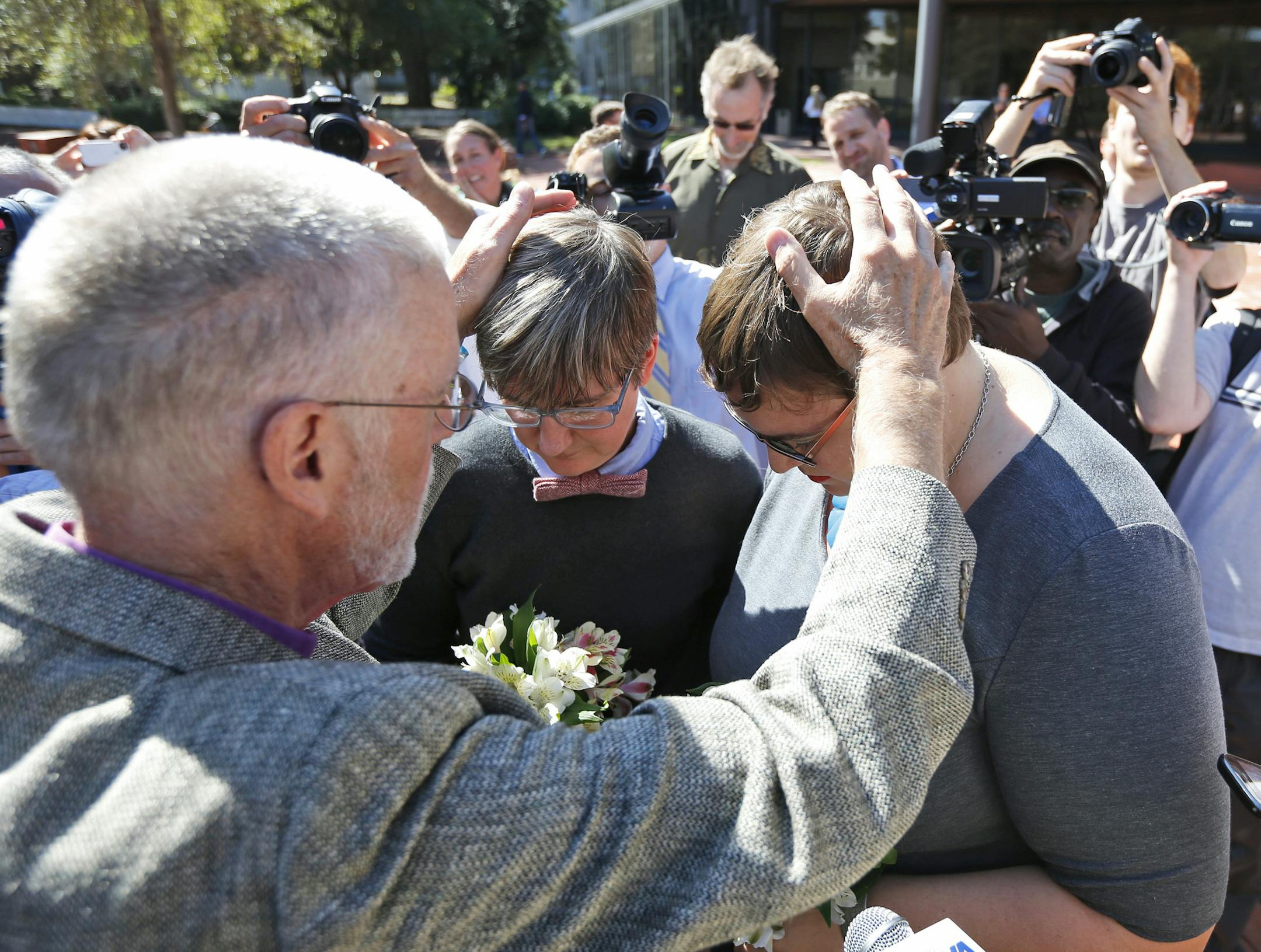
The response to the decision in Wisconsin was immediate. County clerks across the state — including several western counties bordering Minnesota — promptly started issuing marriage licenses to same-sex couples. The state's five-day waiting period means couples could wed as early as Friday.
Wisconsin's constitutional ban on gay marriage, enacted in 2006, was overturned by a federal judge in June. An appellate court stayed ruling until the Supreme Court weighed in.
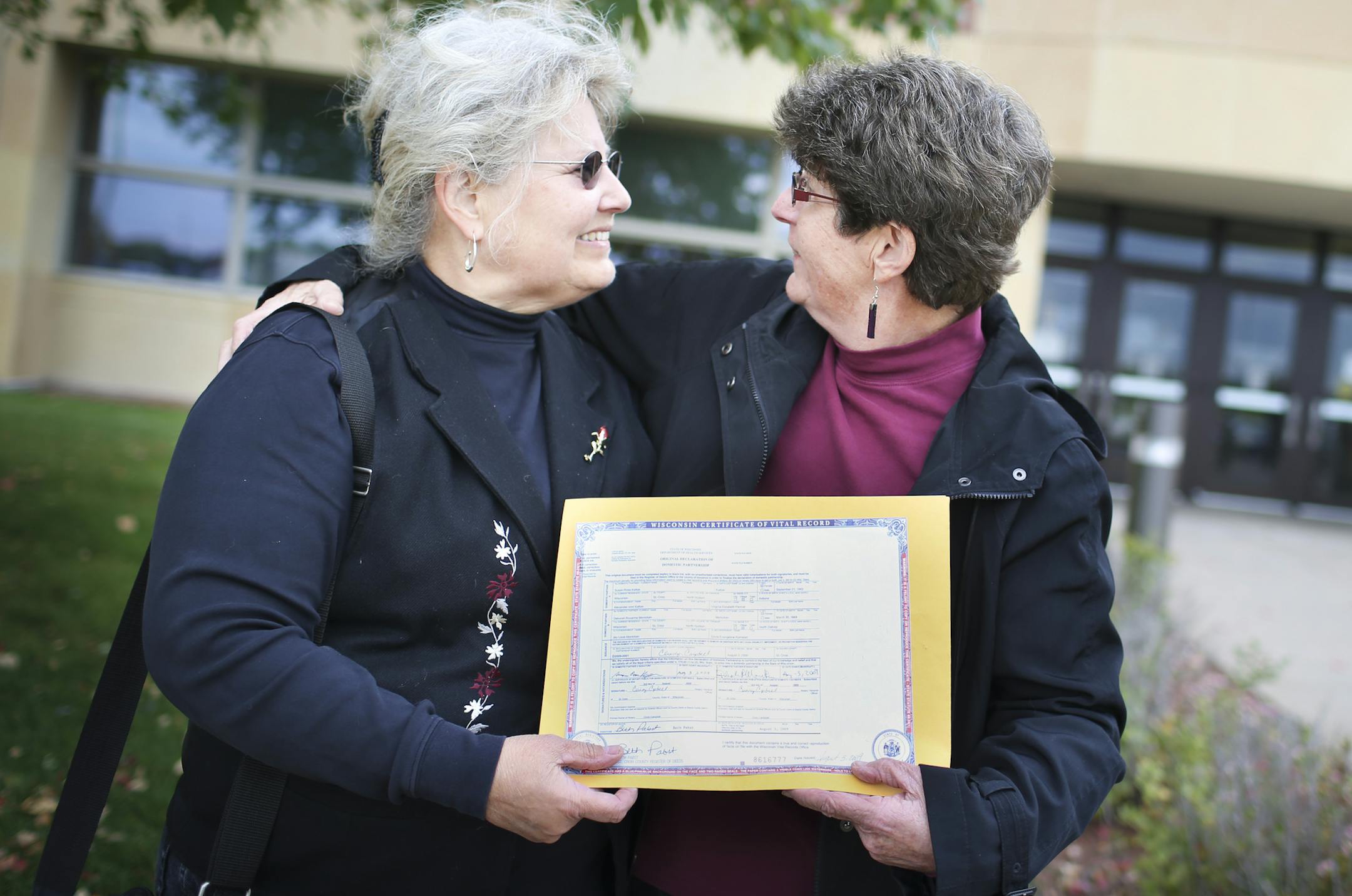
"It's been on again off again on again, so it's been a bit of a roller-coaster," said Wanda Brown, 63, who married longtime partner Phyllis Goldin, 72, in Canada in 2004. The River Falls couple said the court's decision means they can stay in Wisconsin. They planned to celebrate their newly legal status Monday night at a performance of an LGBT chorus in St. Paul.
Within hours of the decision, Wisconsin's Republican governor and attorney general surrendered in their battle to uphold the state's ban. Gov. Scott Walker publicly declared the fight over, and Attorney General J.B. Van Hollen, who led the defense of the '06 ban, urged county clerks to "respect the court's action."
Feeling safer
An Eau Claire couple, Carol Schumacher and Virginia Wolf, were lead plaintiffs in the federal lawsuit to overturn Wisconsin's ban. "It's been a long, long journey," said Schumacher, a retired city employee. "We both feel a little safer today."