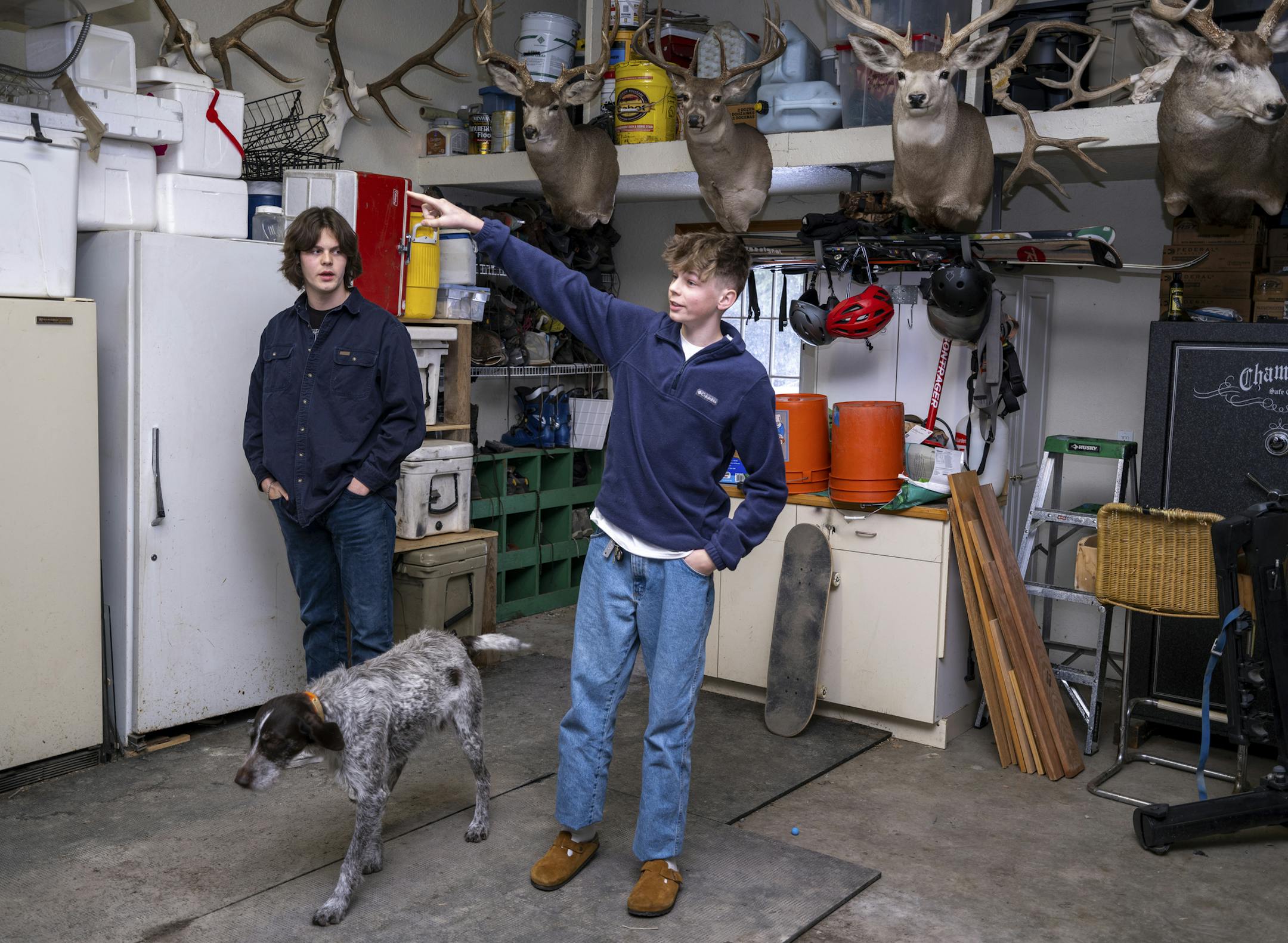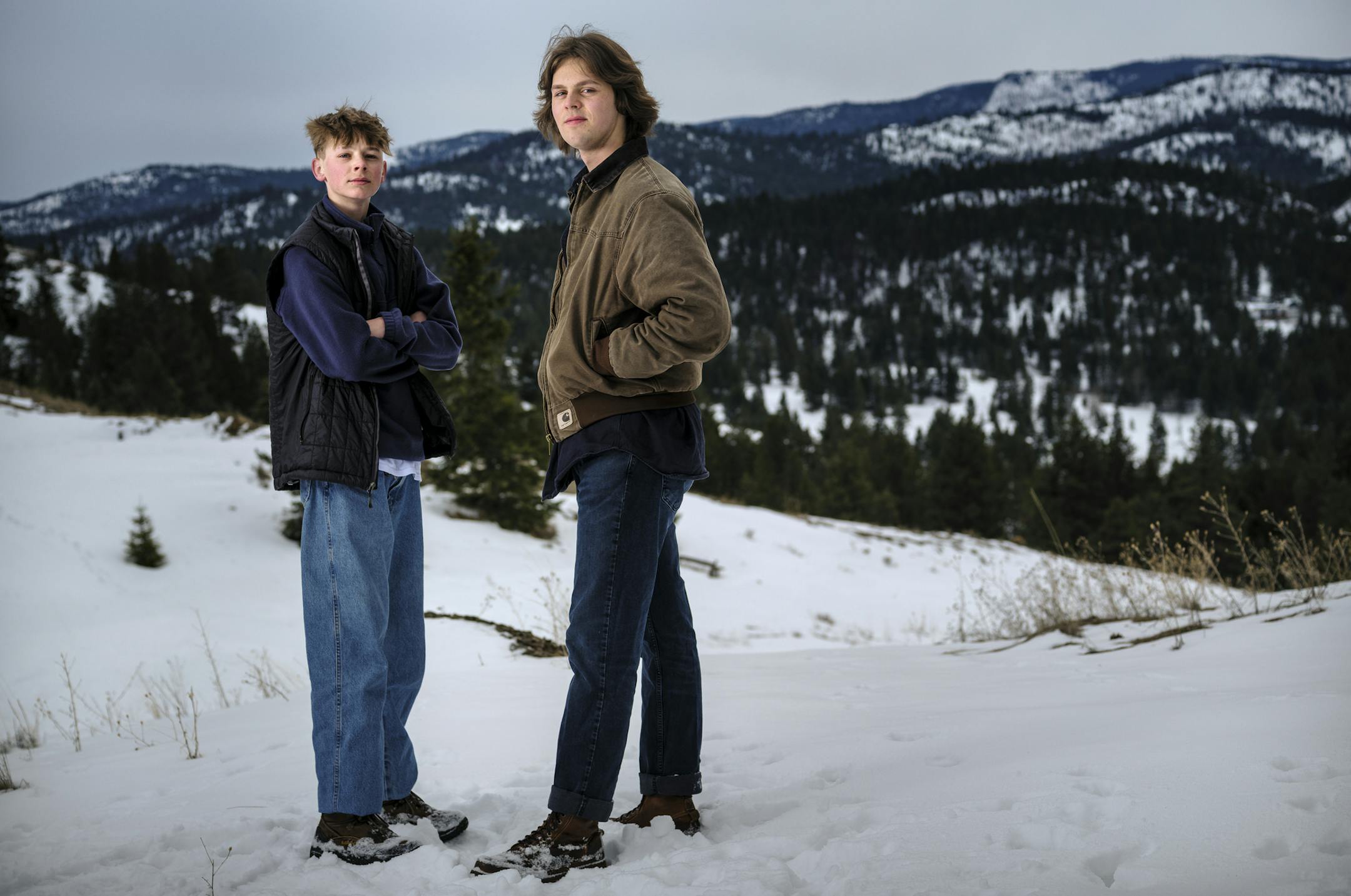
KALISPELL, Mont. – Badge and Lander Busse tromped into the forest behind their house on a snowy Sunday in March, their three hunting dogs in tow. It was in these woods, just outside Glacier National Park, that the teenage boys learned to hunt, fish, dress a deer and pick birdshot from Hungarian partridges.
It was also here that the Busse boys grew attuned to the signals of a rapidly warming planet — torrential rains that eroded their hiking trails, wildfires that scarred the land, smoke so thick it forced them indoors.
Watching their cherished wilderness succumb to the effects of climate change enraged the Busse boys, and three years ago they decided to do something about it. Along with 14 other local youth, they joined with an environmental legal group and sued the state.
In their complaint, filed in 2020, the young activists seized on language in the Montana Constitution that guarantees residents "the right to a clean and healthful environment," and stipulates that the state and individuals are responsible for maintaining and improving the environment "for present and future generations."
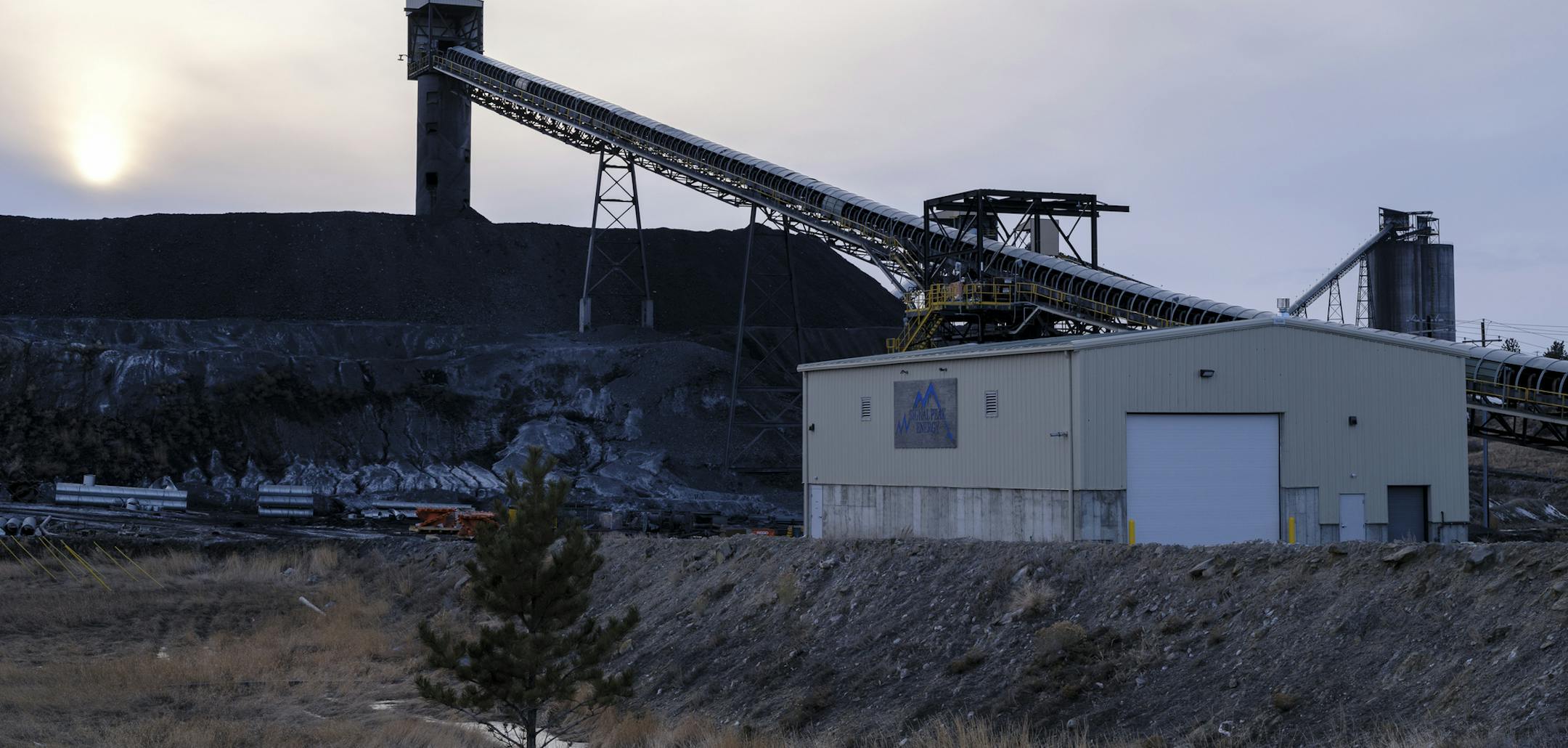
By virtue of those few words, they argue, Montana's extensive support for fossil fuels like coal, oil and gas is unconstitutional because the resulting pollution is dangerously heating the planet and has robbed them of a healthy environment.
It is a concise but untested legal challenge to a state government that is aggressively defending itself. The trial, which legal experts say is the first involving a constitutional climate case, begins June 12 in Helena, the state capital.
"This is the first that will get into the merits of climate change and what needs to be done, and how the state may have to change its policies," said Michael Gerrard, director of the Sabin Center for Climate Change Law at Columbia Law School.
The origins of the case stretch back nearly a decade. In 2011, a nonprofit called Our Children's Trust petitioned the Montana Supreme Court to rule that the state has a duty to address climate change. The court declined to weigh in, effectively telling the group to start in the lower courts.