

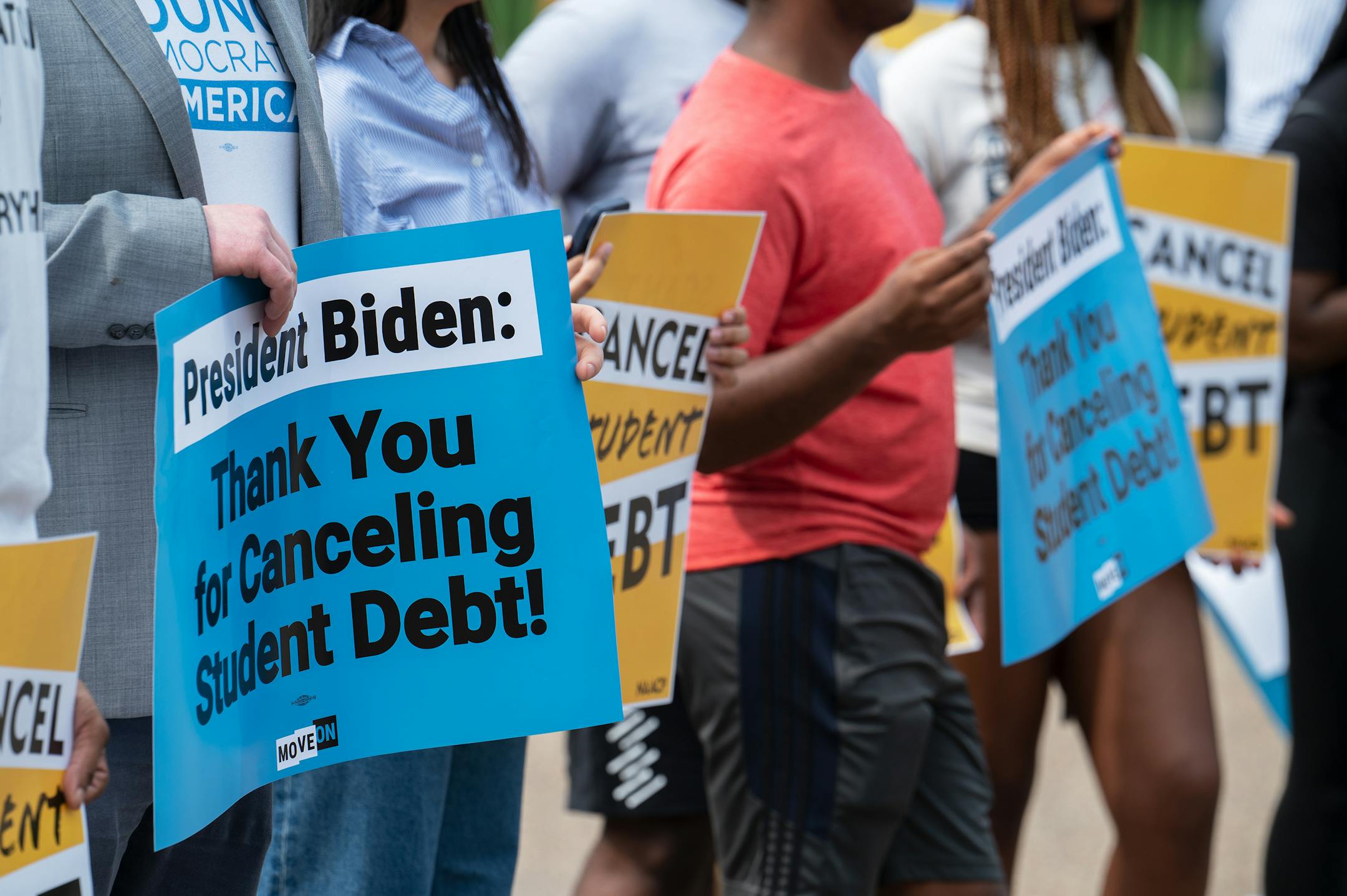
President Joe Biden recently announced his student loan forgiveness plan. People making under $125,000, or married couples making less than $250,000, can have up to $10,000 in loans forgiven. Borrowers who qualified for Pell Grants can have up to $20,000 forgiven.
If all borrowers claim the benefit they're entitled to, some 43 million will get relief, including canceling the full remaining balance for roughly 20 million. Most of these borrowers took on debts without graduating, or loans to attend for-profit colleges and community college.
Debt forgiveness fulfills a campaign promise. It also sparked plenty of controversy.
To make my position clear, I expect the macroeconomic impact will be minimal, while the effect of debt relief for many borrowers will be profound. The loan forgiveness plan is an acknowledgement that the current system is badly broken and failing too many students. (Major reforms are still called for; forgiveness is only a first step.)
Whatever you think of the initiative, the personal finance question for qualifying borrowers is this: How are you going to take advantage of the opportunity created by loan forgiveness?
You might be carrying too much credit card debt. Well, start paying your credit card debt off.
Perhaps you've been trying to save for the down payment on a home. You can now regularly add more to your home-purchase nest egg.
Maybe you felt you were too close to the financial edge to take full advantage of your employer's retirement savings plan. Hike your contributions.



